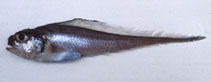
| Family: |
Ophidiidae (Cusk-eels), subfamily: Neobythitinae |
| Max. size: |
22 cm SL (male/unsexed) |
| Environment: |
bathydemersal; marine; depth range 200 - 565 m |
| Distribution: |
Western Pacific: Japan to the northern Philippines. Probably from off Madagascar (Ref. 34024). |
| Diagnosis: |
Dorsal soft rays (total): 127-134; Anal soft rays: 100-104. Prominent head and body with an attenuate caudal part; head bones with large, thin crests; eye equal to or greater than length of snout; opercular spine broad, flat and weak; basibranchial with 2 median and a pair of tooth patches; long gill rakers on anterior arch 21 to 33(Ref. 34024). Caudal fin rays 8-10; stem of pseudobranchial filament pale, filaments 10-15; anterior anal fin ray below 31st-34th dorsal fin rays (Ref. 34024). |
| Biology: |
Common species (Ref. 34024). Oviparous, with oval pelagic eggs floating in a gelatinous mass (Ref. 205). |
| IUCN Red List Status: |
Least Concern (LC); Date assessed: 16 August 2019 Ref. (130435)
|
| Threat to humans: |
harmless |
Source and more info: www.fishbase.org. For personal, classroom, and other internal use only. Not for publication.