
|
Omobranchus fasciolatoceps (Richardson, 1846) |
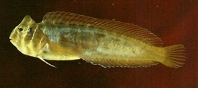
|
|
photo by
Shao, K.T. |
| Family: | Blenniidae (Combtooth blennies), subfamily: Blenniinae | |||
| Max. size: | 5.3 cm SL (male/unsexed) | |||
| Environment: | demersal; marine | |||
| Distribution: | Northwest Pacific: southern Japan and the coast of China. | |||
| Diagnosis: | Dorsal spines (total): 12-12; Dorsal soft rays (total): 19-22; Anal spines: 2-2; Anal soft rays: 21-24. Head without cirri. Both sexes with a fleshy blade-like crest on occiput. Lower end of gill opening above posterior fin base. Sensory pores in infraorbital and interorbital canals usually 8 and 2 respectively | |||
| Biology: | Adults rarely enter brackish water. Attain less than 8 cm TL. Oviparous. Eggs are demersal and adhesive (Ref. 205), and are attached to the substrate via a filamentous, adhesive pad or pedestal (Ref. 94114). Larvae are planktonic, often found in shallow, coastal waters (Ref. 94114). | |||
| IUCN Red List Status: | Least Concern (LC); Date assessed: 27 March 2009 Ref. (130435) | |||
| Threat to humans: | harmless | |||