
|
Squatina oculata Bonaparte, 1840 Smoothback angelshark |
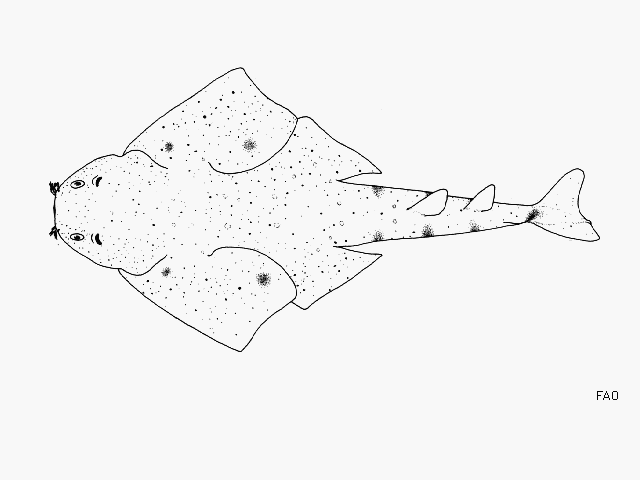
|
|
photo by
FAO |
| Family: | Squatinidae (Angel sharks) | |||
| Max. size: | 160 cm TL (male/unsexed) | |||
| Environment: | demersal; marine; depth range 5 - 500 m | |||
| Distribution: | Eastern Atlantic: Mediterranean and Morocco to Angola. | |||
| Diagnosis: | Dorsal spines (total): 0-0; Dorsal soft rays (total): 0-0. An angelshark with large thorns on snout and above eyes but not on midback, weakly bifurcated nasal barbels and weakly fringed anterior nasal flaps, the first dorsal-fin origin usually well behind the rear tips of pelvic fin, and prominent white spots on body (Ref. 247) | |||
| Biology: | Found on sand and mud bottom (Ref. 26999) of continental shelves and upper slopes (Ref. 247). Mostly between 50 and 100 m but deeper in the tropics (Ref. 247). Feeds on small fishes (Ref. 247). Ovoviviparous (Ref. 50449). Utilized fresh and dried salted for human consumption; liver oil and hide also used (Ref. 247). | |||
| IUCN Red List Status: | Critically Endangered (CR); Date assessed: 19 June 2017 (A2bcd+3cd) Ref. (130435) | |||
| Threat to humans: | traumatogenic | |||