| Family: |
Mochokidae (Squeakers or upside-down catfishes), subfamily: Mochokinae |
| Max. size: |
27.5 cm TL (male/unsexed) |
| Environment: |
benthopelagic; freshwater; dH range: 15 - 35 |
| Distribution: |
Africa: Lake Tanganyika (Ref. 59365, 82238). |
| Diagnosis: |
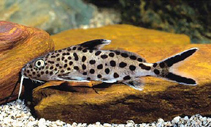
Dorsal spines (total): 2-2; Dorsal soft rays (total): 7-7; Anal spines: 0-0; Anal soft rays: 9-12. Axillary pore present; mandibular teeth 13-29; body with large spots; fin spines dark; 8 pectoral-fin rays; black triangles at base of pelvic and anal fins absent or poorly developed; eye 44.9-62.0% snout length; premaxillary toothpad uninterrupted; secondary branches on medial mandibular barbel absent; occipito-nuchal shield usually covered with skin; papillae on skin of body absent; hindgut chamber absent (Ref. 59365). |
| Biology: |
Inhabits the muddy bottoms down to at least 100 m in lake (Ref. 4967). Feeds on the snail, Neothauma (Ref. 6770). Zoobenthos feeder (Ref. 52177). Oviparous (Ref. 205). Only fish known to practice brood parasitism: it manages to mix it eggs with those of mouthbrooding cichlids. Its larvae grow faster than those of the host and feed on them. |
| IUCN Red List Status: |
Least Concern (LC); Date assessed: 28 February 2025 Ref. (130435)
|
| Threat to humans: |
harmless |
Source and more info: www.fishbase.org. For personal, classroom, and other internal use only. Not for publication.