Klassifizierung / Names
Namen | Synonyme | Catalog of Fishes(Gattung, Arten) | ITIS | CoL | WoRMS | Cloffa
Environment: milieu / climate zone / Tiefenbereich / distribution range
Ökologie
; süßwasser benthopelagisch. Temperate; 44°N - 35°N
North America: Columbia River drainage in Washington, Oregon and Idaho, south in Klamath and upper Pit River (Sacramento River drainage) and interior drainages of Nevada and California to Mohave River in south California, USA. Distinctive subspecies were recognized: Gila bicolor snyderi (protected) in Owens River, California; Gila bicolor mohavensis (protected) in Mojave River, California; Gila bicolor bicolor in Klamath River system in Oregon and California; Gila bicolor obesa, a stream and spring-inhabiting form; and G. bicolor pectinifer, a lake-inhabiting form, both in Lake Lahontan basin in Nevada.
Size / Gewicht / Alter
Geschlechtsreife: Lm ? range ? - ? cm
Max length : 45.0 cm TL Männchen/unbestimmt; (Ref. 86798)
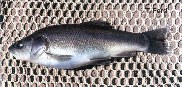
Rückenflossenweichstrahlen (insgesamt) : 8; Afterflossenweichstrahlen: 7 - 8. Siphateles bicolor can be distinguished by the following characters: lateral line with 41-64 scales; dorsal fin usually with 8 rays; anal fin with 7-8 rays; pharyngeal teeth 0,5-5,0; deep, compressed body; dorsal-fin origin over pelvic- fin origin; fairly deep caudal peduncle; small, rounded fins; small, terminal to slightly subterminal mouth; does not extend to eye; dusky olive to dark green above; brassy brown side, often mottled in adult; silver white to yellow below; clear to dusky olive fins; young with dusky stripe along side; large individuals may have yellow to copper fins with pink, red, or orange bases, red-orange lower side (Ref. 86798).
Body shape (shape guide): fusiform / normal.
Inhabits lakes and quiet, vegetated, mud or sand-bottomed pools of headwaters, creeks and small to large rivers (Ref. 86798).
Life cycle and mating behavior
Geschlechtsreife | Fortpflanzung | Ablaichen | Eier | Fecundity | Larven
Page, L.M. and B.M. Burr, 2011. A field guide to freshwater fishes of North America north of Mexico. Boston : Houghton Mifflin Harcourt, 663p. (Ref. 86798)
IUCN Rote Liste Status (Ref. 130435: Version 2025-1)
Bedrohung für Menschen
Harmless
Nutzung durch Menschen
Tools
Zusatzinformationen
Download XML
Internet Quellen
Estimates based on models
Phylogenetic diversity index (Ref.
82804): PD
50 = 0.6250 [Uniqueness, from 0.5 = low to 2.0 = high].
Bayesian length-weight: a=0.01202 (0.00494 - 0.02925), b=3.03 (2.81 - 3.25), in cm total length, based on LWR estimates for this species & (Sub)family-body (Ref.
93245).
Trophic level (Ref.
69278): 2.0 ±0.2 se; based on size and trophs of closest relatives
Generation time: 5.8 ( na - na) years. Estimated as median ln(3)/K based on 2
growth studies.
Widerstandsfähigkeit (Ref.
120179): mittel, Verdopplung der Population dauert 1,4 - 4,4 Jahre. (K=0.19-0.33).
Fishing Vulnerability (Ref.
59153): Moderate to high vulnerability (49 of 100).
🛈