This website uses cookies to enhance your browsing experience and ensure the functionality of our site. For more detailed information about the types of cookies we use and how we protect your privacy, please visit our Privacy Information page.
×
Cookie Settings
This website uses different types of cookies to enhance your experience. Please select your preferences below:
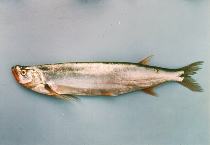
Macrochirichthys macrochirus, Long pectoral-fin minnow : fisheries
Macrochirichthys macrochirus
Picture by
Baird, I.G.
Indonesia territory information
Common names:
Abang, Belantau, Timah-timah
Occurrence:
native
Salinity:
freshwater
Abundance:
scarce (very unlikely)
|
Ref: Kottelat, M. and E. Widjanarti, 2005
Importance:
commercial
|
Ref: Kottelat, M. and E. Widjanarti, 2005
Aquaculture:
|
Ref:
Regulations:
|
Ref:
Uses:
no uses
Comments:
Known from Sumatra (Palembang, Batang Hari, Danau Sialong Iotong), Borneo (Kapuas, Kahajan, Pengaron, Barito, Mahakam, Baram), and Java (Ref. 2091). Found in the Kapuas Lakes Area in western Borneo. This is reported by fishermen to occur in lakes and rivers throughout the year although it is more common during the dry season and that it returns to the Kapuas in the wet season to breed. Recorded from Danau Sentarum National Park in the Kapuas basin of Borneo, Kalimantan Barat (Ref. 56749). Museum: Kapuas, CAS 49233. Also Ref. 26580, 36654.
National Checklist:
Territory Information:
https://www.cia.gov/library/publications/resources/the-world-factbook/geos/id.html
National Fisheries Authority:
Occurrences:
OccurrencesPoint map
Main Ref:
Kottelat, M., A.J. Whitten, S.N. Kartikasari and S. Wirjoatmodjo, 1993
National Database:
Dorsalsoft rays (total): 10; Analsoft rays: 25 - 27. Head upturned; no barbels; belly with sharp keel from throat to anus (Ref. 43281). Body strongly compressed; dorsal profile flat except concave nape. Mouth directed upward. Pectoral fins elongated. Base of caudal fin with black blotch (Ref. 4792). Lower jaw protruded, tip of it hooked and inlaid into gap of upper jaw; scales minute and irregularly arranged (Ref. 45563). Body shape (shape guide): elongated.
Found in large rivers and lakes at medium to shallow depths. Juveniles feed on insects while adults on fish (Ref. 12693). Move towards the flooded forest when the water is high and returns to the river as soon as the water level starts to subside (Ref. 12693). Good flesh but fairly soft and with numerous bones. In Laos, it is usually grilled, simmered with padek and made into Ponne pa. Usually marketed fresh and probably exported to Thailand (Ref. 12693). Widely distributed but greatly reduced in numbers probably throughout its range. Extremely sensitive to gillnetting and perhaps also to pollution (Ref. 12369).
Life cycle and mating behavior Maturity | Reproduction | Spawning | Eggs | Fecundity | Larvae
Phylogenetic diversity index (Ref. 82804): PD50 = 1.0000 [Uniqueness, from 0.5 = low to 2.0 = high].
Bayesian length-weight: a=0.00631 (0.00298 - 0.01335), b=3.07 (2.90 - 3.24), in cm total length, based on LWR estimates for this (Sub)family-body shape (Ref. 93245).
Trophic level (Ref. 69278): 3.7 ±0.57 se; based on food items.
Resilience (Ref. 120179): Very Low, minimum population doubling time more than 14 years (Preliminary K or Fecundity.).
Fishing Vulnerability (Ref. 59153): High vulnerability (60 of 100). 🛈