Galeorhinus galeus, Tope shark : fisheries, gamefish, aquarium

You can sponsor this page

Galeorhinus galeus (Linnaeus, 1758)

Tope shark
Masukkan pemerhatian anda di Fish Watcher
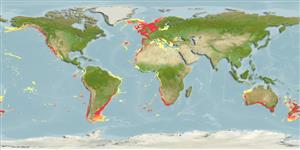
Native range | All suitable habitat | Point map | Year 2050
This map was computer-generated and has not yet been reviewed.
Galeorhinus galeus   AquaMaps   Data sources: GBIF OBIS
muatnaik fotos/gambar dan video
Gambar | video | imej Google
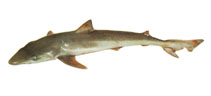
Image of Galeorhinus galeus (Tope shark)
Galeorhinus galeus
foto/gambar oleh SeaFIC


Spain territory information

Common names: Aceitero, Bostrich, Bostrio
Occurrence: native
Salinity: marine
Abundance: | Ref:
Importance: | Ref:
Aquaculture: | Ref:
Regulations: | Ref:
Uses: no uses
Comments: Found in Galicia (Ref. 86578).
National Checklist:
Territory Information: https://www.cia.gov/library/publications/resources/the-world-factbook/geos/sp.html
National Fisheries Authority:
Occurrences: Occurrences Point map
Main Ref: Compagno, L.J.V., 1984
National Database: ICTIMED

Common names from other countries

klasifikasi / Nama Nama-nama umum | Sinonim (persamaan) | Catalog of Fishes(Marga, Jenis) | ITIS | CoL | WoRMS | Cloffa

Ikan bertulang rawan (sharks and rays) > Carcharhiniformes (Ground sharks) > Triakidae (Houndsharks) > Galeorhininae
Etymology: Galeorhinus: galeo, probably based on G. galeus (see below); rhinus, an ancient name for sharks, from rhine (Gr.), rasp, alluding to their rasp-like skin (See ETYFish)galeus: From galeos, a small shark or dogfish per Aristotle (sometimes translated as weasel), possibly referring to the pointed snouts, swift movements and/or rapacious feeding behavior of smaller predatory sharks1 (See ETYFish).
More on author: Linnaeus.

Lingkungan: lingkungan / zona iklim / kisaran kedalaman / jangkauan distribusi Ekologi

laut bentopelagis; oceanodromus (Ref. 51243); kisaran kedalaman 0 - 1100 m (Ref. 26346), usually 2 - 471 m (Ref. 43939). Subtropical; 70°N - 58°S, 111°E - 37°E

Penyebaran Wilayah | Daerah-daerah FAO | Ekosistem | Kemunculan | peta titik | Introduksi | Faunafri

World-wide in cold to warm temperate waters.

Panjang pada saat jatuh tempo pertama / Ukuran / Berat / umur

Kematangan: Lm 144.1, range 120 - 185 cm
Max length : 193 cm TL jantan/; (Ref. 40637); 195.0 cm TL (female); common length : 160 cm TL jantan/; (Ref. 9258); Berat maksimum terpublikasi: 44.7 kg (Ref. 40637); Umur maksimum dilaporkan: 55 Tahun (Ref. 6871)

deskripsi pendek Kunci identifiaksi (pengenalan) | Morfologi | Morfometrik

Duri punggung (Keseluruhan (total)) : 0; Duri dubur: 0. A large houndshark with a long, pointed snout, a large mouth, and small blade-like teeth; 2nd dorsal about as large as anal fin and terminal caudal lobe as long as rest of fin (Ref. 5578). Greyish above, white below; young with black markings on fins (Ref. 5578).
Body shape (shape guide): elongated.

Biologi     Daftar kata (contoh epibenthic)

Mainly demersal on continental and insular shelves, but also on the upper slopes, at depths from near shore to 550 m (Ref. 6871), but has been shown to be pelagic in the open ocean (frequently caught on floating tuna longlines over deep water, and many New Zealand-tagged specimens have been recaptured in Australia) (Ref. 26346). Occurs in small schools that are highly migratory in higher latitudes in their range (Ref. 244). There is pronounced partial segregation by size and sex in some areas (Ref. 244). Feeds on fishes (bottom as well as pelagic species, Ref. 26346), crustaceans, cephalopods, worms, and echinoderms (Ref. 244). Ovoviviparous (Ref. 50449). Targeted for human consumption, liver for squalene oil, fins for soup (Ref. 244); also utilized as fishmeal (Ref. 13563). Marketed fresh, dried-salted, and frozen (Ref. 9987). Adapts well in captivity if carefully captured and handled (Ref. 12951).

Siklus hidup dan perilaku kawin Kematangan | Reproduksi, perkembang biakan | Pemijahan | telur-telur | Fekunditas | Larva

Ovoviviparous, without a yolk-sac placenta (Ref. 244). Embryos feed solely on yolk (Ref. 50449). 6 to 52 young in a litter (Ref. 26346). Litter size increases with the size of the mother. Embryos reach 30-36 cm TL at birth (Ref. 6080). In the southern waters of Australia, newly born and older juveniles (30-70 cm long) aggregate in 'nursery areas' found in shallow waters.They move to deeper coastal waters to over-winter. The following spring finds most of these young returning to their nursery areas. The older ones, aged 2 years and over move instead to eastern Bass Strait where most of the immature stock are found. The length of an average full-term embryo is 32 cm. Spawning frequency is once every year, ovulation occurring in early summer and parturition is completed by January of the following year. Gestation period lasts for about 12 months (Ref. 6390, 6871).

rujukan utama Unggah referensi Anda | Acuan | Koordinator : Compagno, Leonard J.V. | mitra

Compagno, L.J.V., 1984. FAO Species Catalogue. Vol. 4. Sharks of the world. An annotated and illustrated catalogue of shark species known to date. Part 2 - Carcharhiniformes. FAO Fish. Synop. 125(4/2):251-655. Rome: FAO. (Ref. 244)

Status IUCN Red List (Ref. 130435: Version 2025-2 (Global))

  sangat terancam (CR) (A2bd); Date assessed: 14 February 2020

CITES

Not Evaluated

ancaman kepada manusia

  Harmless (Ref. 13563)


penggunaan manusia

Perikanan: bernilai komersial tinggi; Ikan buruan: ya; Akuarium: Akuarium publik
FAO - Perikanan: pendaratan, profail spesis; Publication: search | FishSource | Laut di Sekitar Kita

informasi lanjut

Siklus hidup
Reproduksi, perkembang biakan
Kematangan
Kedewasaan / insang rel.
Fekunditas
Pemijahan
Agregasi pemijahan
telur-telur
pekembangan telor
Larva
Dinamika larva
Penyebaran
Wilayah
Daerah-daerah FAO
Ekosistem
Kemunculan
Introduksi
BRUVS - Video
Anatomi
Area insang
Otak
Otolith
Fisiologi
Komposisi tubuh
Nutrisi
Konsumsi oksigen
Jenis renang
Kecepatan berenang
Pigmen visual
Suara ikan
Penyakit & Parasit
Toksisitas (LC50)
Genetika
genom
Genetika
Heterozigositas
Diturunkan
Yang berhubungan dengan manusia
Sistem akuakultur
profil budidaya air
Strain
Kasus Ciguatera
Perangko, koin, dll.
Penjangkauan
mitra
Acuan
Acuan

Alat, peralatan

laporan khas

muat turun XML

Sumber internet

AFORO (otoliths) | Aquatic Commons | BHL | Cloffa | Websites from users | semak peneliti ikan | CISTI | Catalog of Fishes: Marga, Jenis | DiscoverLife | ECOTOX | FAO - Perikanan: pendaratan, profail spesis; Publication: search | Faunafri | Fishipedia | Fishtrace | GloBI | Google Books | Google Scholar | Google | IGFA World Record | Pangkalan data nasional | OceanAdapt | OneZoom | Open Tree of Life | Otolith Atlas of Taiwan Fishes | Akuarium publik | PubMed | Reef Life Survey | Socotra Atlas | TreeBase | Tree of Life | Wikipedia: pergi, Cari | World Records Freshwater Fishing | Catatan Zoologi

Estimasi berdasarkan model

Suhu yang disukai (Acuan 123201): 6.7 - 23.2, mean 12.3 °C (based on 7314 cells).
Indeks keanekaragaman filogenetik (Acuan 82804):  PD50 = 1.0000   [Uniqueness, from 0.5 = low to 2.0 = high].
Bayesian length-weight: a=0.00479 (0.00363 - 0.00631), b=2.99 (2.91 - 3.07), in cm total length, based on LWR estimates for this species (Ref. 93245).
Tingkat Trofik (Acuan 69278):  4.3   ±0.1 se; based on diet studies.
Generation time: 11.9 (6.9 - 14.7) years. Estimated as median ln(3)/K based on 12 growth studies.
Daya lenting (Acuan 120179):  Rendah, Waktu penggandaan populasi minimum 4.5 - 14 tahun (rm=0.033; tmax=55; Fec=6-52).
Prior r = 0.06, 95% CL = 0.04 - 0.09, Based on 2 full stock assessments.
Kerentanan Penangkapan Ikan (Ref. 59153):  Very high vulnerability (76 of 100). 🛈
Kerentanan Iklim (Ref. 125649):  High vulnerability (62 of 100). 🛈
kategori harga (Ref. 80766):   Medium.
Nutrisi (Ref. 124155):  Calcium = 8.56 [1.46, 48.15] mg/100g; Iron = 0.465 [0.128, 1.502] mg/100g; Protein = 20 [18, 22] %; Omega3 = 0.18 [0.11, 0.30] g/100g; Selenium = 44.2 [13.5, 139.5] μg/100g; VitaminA = 13.1 [4.2, 44.7] μg/100g; Zinc = 0.409 [0.194, 0.769] mg/100g (wet weight); based on nutrient studies.