This website uses cookies to enhance your browsing experience and ensure the functionality of our site. For more detailed information about the types of cookies we use and how we protect your privacy, please visit our Privacy Information page.
×
Cookie Settings
This website uses different types of cookies to enhance your experience. Please select your preferences below:
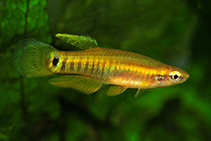
Teleostei (teleosts) > Cyprinodontiformes (Rivulines, killifishes and live bearers) > Fundulidae (Topminnows and killifishes)
Etymology: Leptolucania:Greek, leptos = thin + Lucania, an Italian region, near Tarento (Ref. 45335). More on author: Jordan.
Environment: milieu / climate zone / depth range / distribution range Ecology
North America: occurs only in the USA from Georgia in Ogeechee River to Alabama in Perdido River, south to central Florida. One record from Escatawpa River drainage in southeastern Mississippi.
Size / Weight / Age
Maturity: Lm? range ? - ? cm Max length : 3.0 cm TL male/unsexed; (Ref. 27139); common length : 2.0 cm TL male/unsexed; (Ref. 12193); max. reported age: 2.00 years (Ref. 12193)
Adults inhabit surface waters of swamps, vegetated sloughs, and quiet water areas of creeks and small rivers. Not a seasonal killifish. Is difficult to maintain in aquarium (Ref. 27139).
Life cycle and mating behavior Maturity | Reproduction | Spawning | Eggs | Fecundity | Larvae
Page, L.M. and B.M. Burr, 1991. A field guide to freshwater fishes of North America north of Mexico. Houghton Mifflin Company, Boston. 432 p. (Ref. 5723)
IUCN Red List Status (Ref. 130435: Version 2025-2 (Global))