



Alburnus chalcoides (Güldenstädt, 1772)
Danube bleak
アップロード 写真 そして ビデオ
画像 | グーグルの画像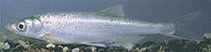 Alburnus chalcoides
画像によって Naseka, A.M.
画像 | グーグルの画像
画像によって Naseka, A.M.
分類 / 名前 共通名の | 類義語 | Catalog of Fishes(部類, 種) | ITIS | CoL | WoRMS | Cloffa
> Cypriniformes (Carps) > Leuciscidae (Minnows) > Leuciscinae
Etymology: Alburnus: From the city of Al Bura, where the fish was known (Ref. 45335).
Etymology: Alburnus: From the city of Al Bura, where the fish was known (Ref. 45335).
環境:環境 / 気候帯 / 深さの範囲 / 分布範囲 生態学
; 新鮮な水; 汽水性の 底生の漂泳性; potamodromous (Ref. 51243). Temperate; 5°C - 20°C (Ref. 12468); 61°N - 38°N, 9°E - 55°E
分布 領土 | 国連食糧農業機関の区域 | エコシステム | 事件 | 目的のマップ | 導入 | Faunafri
Europe and Asia: Caspian (mostly western to southern coast, rarely found in Ural and Volga). Populations from Aral Sea basin might belong to this species (Ref. 59043). Reported from the Black Sea basin (Ref. 58342).
サイズ / 重さ / 年齢
成熟: Lm ? range ? - ? cm
Max length : 40.0 cm TL オス/雌雄の選別がない; (Ref. 556); common length : 20.0 cm TL オス/雌雄の選別がない; (Ref. 1441); common length :28 cm TL (female)
Max length : 40.0 cm TL オス/雌雄の選別がない; (Ref. 556); common length : 20.0 cm TL オス/雌雄の選別がない; (Ref. 1441); common length :28 cm TL (female)
簡単な記述 検索表 | 形態学 | 形態計測学
脊つい: 42 - 45. Diagnosed from its congeners in Caspian and Black Sea basin by having the following characters: anal fin origin about 1½ -2½ scales behind last branched dorsal ray; lateral line with 54-65 + 4-5 scales; anal fin rays with 13-15½ branched rays; 18-23 gill rakers; ventral keel exposed for 8-12 scales in front of anus (up to almost 80% of distance between anus and pelvic base); head length 20-24% SL; predorsal length 52-56% SL; caudal peduncle depth 1.9-2.4 times in its length; nuptial males with few, large tubercles; lacking dark midlateral stripe. Morphology is variable which has been considered to be an adaptation to different habitats, but data suggest that this is probably due to several species being confused under this species (Ref. 59043).
Body shape (shape guide): fusiform / normal.
Body shape (shape guide): fusiform / normal.
Inhabit lower reaches of rives, coastal lakes, estuaries, and brackish areas of sea. Occur close to surface and tolerate salinities up to 14 ppt. Adults predominantly prey on planktonic crustaceans, terrestrial insects and small fish while larvae and young juveniles feed on zooplankton, algae and insect larvae. Spawn in small rivers or streams with heavy current on gravel bottom. Landlocked populations found in reservoirs spawn in reservoir tributaries (Ref. 59043). Eastern populations migrate upstream for spawning (Ref. 13696). Males assemble and wait at the spawning grounds for ripe females, which arrive later. Deposit sticky eggs which adhere on pebbles or stones. Embryonic development lasts 2-3 days, with larvae first staying among gravel for 8-11 days, then actively migrating to shallows and backwaters. Adults migrate back to sea, lakes or estuaries soon after spawning to forage. Young juvenile undertake downriver migration in autumn of same year or next spring. Due to dam constructions, almost all long-distance migrating populations lost as they were unable to reach spawning sites. Survive in small water courses and as landlocked populations in some reservoirs. Populations are expected to decline and to further decline due to expanding hydroelectric development and strong ecological impacts on Caspian sea (Ref. 59043).
ライフサイクルと交尾行動 成熟 | 繁殖 | 放精 | 卵 | 生産力 | 幼生
Males assemble and wait at the spawning grounds for ripe females, which arrive later. Deposit sticky eggs which adhere on pebbles or stones. Embryonic development lasts 2-3 days, with larvae first staying among gravel for 8-11 days, then actively migrating to shallows and backwaters. Adults migrate back to sea, lakes or estuaries soon after spawning to forage. Young juvenile undertake downriver migration in autumn of same year or next spring (Ref. 59043).
主な参考文献
参考文献のアップロード | 参考文献 | コーディネーター | 協力者
Kottelat, M. and J. Freyhof, 2007. Handbook of European freshwater fishes. Publications Kottelat, Cornol and Freyhof, Berlin. 646 pp. (Ref. 59043)
CITES
Not Evaluated
人間に対する脅威
Harmless
人間の用途
水産業: 商業; 水産養殖: 商業
FAO - 水産業: 着陸; Publication: search | FishSource |
より多くの情報
解剖学
カマ
脳
オトリス
カマ
脳
オトリス
遺伝子の
ゲノム
遺伝子の
ヘテロ接合性
遺伝
遺伝的多様性
ゲノム
遺伝子の
ヘテロ接合性
遺伝
遺伝的多様性
用具
特記事項
XMLをダウンロードして下さい
インターネットの情報源
AFORO (otoliths) | Alien/Invasive Species database | Aquatic Commons | BHL | Cloffa | Websites from users | Check FishWatcher | CISTI | Catalog of Fishes: 部類, 種 | DiscoverLife | ECOTOX | FAO - 水産業: 着陸; Publication: search | Faunafri | Fishipedia | Fishtrace | GloBI | Google Books | Google Scholar | Google | IGFA World Record | 国のデーターベース | OneZoom | Open Tree of Life | Otolith Atlas of Taiwan Fishes | 公共の水族館 | PubMed | Reef Life Survey | Socotra Atlas | TreeBase | 生命の木 | Wikipedia: 行く, 検索する | World Records Freshwater Fishing | 動物に関する記録
モデルに基づく推定値
系統多様性指数 (参照 82804): PD50 = 0.5000 [Uniqueness, from 0.5 = low to 2.0 = high].
Bayesian length-weight: a=0.00617 (0.00515 - 0.00738), b=3.12 (3.09 - 3.15), in cm total length, based on LWR estimates for this species (Ref. 93245).
栄養段階 (参照 69278): 3.4 ±0.41 se; based on food items.
回復力 (参照 120179): 手段, 1.4年~4.4年の倍増期間の最小個体群 (tm=2-5; tmax=9; K=0.10).