>
Eupercaria/misc (Various families in series Eupercaria) >
Moronidae (Temperate basses)
Etymology: Dicentrarchus: Greek, di = two + Greek, kentron = sting + Greek, archos = anus (Ref. 45335).
More on author: Bloch.
Environment: milieu / climate zone / ລະດັບຄວາມເລິກ / distribution range
ນິເວດວິທະຍາ
ສັດທະເລ; ນ້ຳກ່ອຍ pelagic-neritic; ລະດັບຄວາມເລິກ 30 - ? m (Ref. 5990). Subtropical; 51°N - 10°N
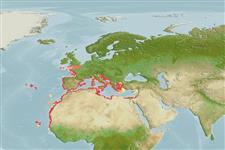
Eastern Atlantic: English Channel (occasional) southward along the coasts of Europe and Morocco to Senegal and the Canary Islands; also southern Mediterranean and the Gulf of Suez.
Length at first maturity / ຂະໜາດ / ນ້ຳໜັກ / Age
ການຈະເລີນເຕັມໄວ: Lm 21.6 range ? - ? cm
Max length : 70.0 cm TL ຕົວຜູ້/ບໍ່ມີເພດ; (Ref. 57391); common length : 30.0 cm TL ຕົວຜູ້/ບໍ່ມີເພດ; (Ref. 3397)
ຄີ (ໜາມ)ແຂງຢູ່ຫຼັງປາ (ທັງໝົດ) : 9 - 10; ຄີຫຼັງຂອງປາ (ຄີອ່ອນ) (ທັງໝົດ) : 12 - 14; ຄີ(ໜາມ) ແຂງຢູ່ຄີກົ້ນປາ
ກຸ່ມປາກະດູກແຂງ
ຄວາມຖີ່ຂອງກຸ່ມຖ່າຍທອດພັນ
ປາທີ່ມີການເຄື່ອນຍ້າຍຈາກທະເລໄປຫານ້ຳຈືດ ແລະນ້ຳຈືດຫາທະເລ
ປາທີ່ມີການເຄື່ອນຍ້າຍຈາກທະເລແລະໄປໄຂ່ຢູ່ນ້ຳຈືດ
ຄີກົ້ນຂອງປາ
ສັດທີ່ມີກະດູກສັນຫັຼງ
ການຖ່າຍທອດທາງກຳມະພັນຈາກພໍ່ແມ່ຫາລູກ: 3; ຄີກົ້ນຂອງປາ: 10 - 12. Diagnosis: elongate fish with 2 separate dorsal fins and a rather deep caudal peduncle; vomerine teeth patch anchor-shaped, with the posterior teeth extending to the midline of palate; scales on interorbital space ctenoid; opercle with 2 flat spines; lower preopercular margin with large, forward-pointing spines; caudal fin moderately forked; scales small (Ref. 57391).
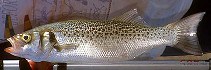
Coloration: silvery grey, back bluish in life; juveniles and adults with small dark markings scattered over back and sides; a very distinct black spot on opercle (Ref. 57391).
Body shape (shape guide): fusiform / normal.
Coastal species (Ref. 4197), found in coastal marine and brackish waters (Ref. 57391). Occurs on various kinds of bottoms, including sand, muddy sand and rocks; occasionally occurring in rivers (Ref. 6916, 57391). Also capable of living in hypersaline habitats (Sine Saloum in Senegal)(Ref. 57391). Feeds mainly on shrimps and mollusks, also fishes (Ref. 5990).
Smith, C.L., 1990. Moronidae. p. 692-694. In J.C. Quero, J.C. Hureau, C. Karrer, A. Post and L. Saldanha (eds.) Check-list of the fishes of the eastern tropical Atlantic (CLOFETA). JNICT, Lisbon; SEI, Paris; and UNESCO, Paris. Vol. 2. (Ref. 6916)
IUCN Red List Status (Ref. 130435: Version 2025-1)
Threat to humans
Harmless
Human uses
ການປະມົງ: ທີ່ເປັນການຄ້າໜ້ອຍ; ຊະນິດປາທີ່ຖືກນຳໃຊ້ເຂົ້າໃນການຫາເພື່ອເປັນເກມກິລາ: ແມ່ນ
ເຄື່ອງມື
Special reports
Download XML
ແຫຼ່ງອີນເຕີເນັດ
Estimates based on models
Preferred temperature (ເອກະສານອ້າງອີງ
123201): 13.3 - 20.7, mean 17.3 °C (based on 39 cells).
Phylogenetic diversity index (ເອກະສານອ້າງອີງ
82804): PD
50 = 0.7656 [Uniqueness, from 0.5 = low to 2.0 = high].
Bayesian length-weight: a=0.00813 (0.00636 - 0.01039), b=3.03 (2.96 - 3.10), in cm total length, based on LWR estimates for this species (Ref.
93245).
ຊັ້ນເຂດຮ້ອນ (ເອກະສານອ້າງອີງ
69278): 3.9 ±0.65 se; based on food items.
ຄວາມຢືດຢຸ່ນ (ເອກະສານອ້າງອີງ
120179): ຂະໜາດກາງ, ປະຊາກອນຕຳ່ສຸດທີ່ໃຊ້ເວລາສອງເທົ່າ 1.4 - 4.4 ປີ (K=0.07-0.16).
Prior r = 0.25, 95% CL = 0.16 - 0.37, Based on 1 full stock assessment.
Fishing Vulnerability (Ref.
59153): Moderate vulnerability (36 of 100).
🛈
Climate Vulnerability (Ref.
125649): High to very high vulnerability (74 of 100).
🛈
Nutrients (Ref.
124155): Calcium = 35.4 [3.9, 188.9] mg/100g; Iron = 0.815 [0.282, 2.003] mg/100g; Protein = 20.5 [19.2, 21.9] %; Omega3 = 0.345 [0.187, 0.624] g/100g; Selenium = 10.5 [3.3, 29.4] μg/100g; VitaminA = 9.83 [2.35, 42.99] μg/100g; Zinc = 0.716 [0.328, 1.624] mg/100g (wet weight); based on
nutrient studies.