This website uses cookies to enhance your browsing experience and ensure the functionality of our site. For more detailed information about the types of cookies we use and how we protect your privacy, please visit our Privacy Information page.
×
Cookie Settings
This website uses different types of cookies to enhance your experience. Please select your preferences below:
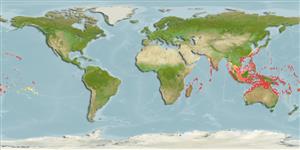
Indo-Pacific: East Africa, including the Mascarene Islands (Ref. 37792) to the Hawaiian, Marquesan, and Tuamoto islands, north to southern Japan, south to Lord Howe Island.
Size / Weight / Age
Maturity: Lm? range ? - ? cm Max length : 100.0 cm TL male/unsexed; (Ref. 2334); max. reported age: 23 years (Ref. 52229)
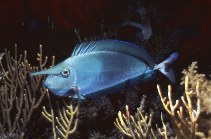
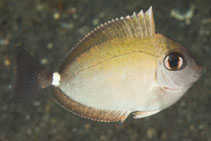
Dorsalspines (total): 5; Dorsalsoft rays (total): 28 - 29; Analspines: 2; Analsoft rays: 27 - 28. Plain brown or olivaceous in color, paler below; subadults with black caudal rays, narrow margins and white caudal filaments; pectoral fins with white distal margins (Ref. 3145).
Body shape (shape guide): fusiform / normal; Cross section: compressed.
Juveniles occur in clear, shallow lagoon reefs at depths as little as 1 m; adults rarely seen in less than 25 m, encountered off outer reef drop-offs in small schools (Ref. 30573, 48637). Benthopelagic (Ref. 58302). Feeds on large zooplankton during the day and shelter within the reef during the night; also benthic algae (Ref. 30573, 48637).
Life cycle and mating behavior Maturity | Reproduction | Spawning | Eggs | Fecundity | Larvae
Preferred temperature (Ref. 123201): 23.5 - 28.3, mean 27.1 °C (based on 335 cells).
Phylogenetic diversity index (Ref. 82804): PD50 = 0.5000 [Uniqueness, from 0.5 = low to 2.0 = high].
Bayesian length-weight: a=0.02455 (0.01384 - 0.04354), b=2.93 (2.78 - 3.08), in cm total length, based on LWR estimates for this species & Genus-body shape (Ref. 93245).
Trophic level (Ref. 69278): 2.1 ±0.09 se; based on food items.
Generation time: 5.2 ( na - na) years. Estimated as median ln(3)/K based on 1 growth studies.
Resilience (Ref. 120179): Low, minimum population doubling time 4.5 - 14 years (K=0.213; tmax=23).
Fishing Vulnerability (Ref. 59153): Moderate to high vulnerability (45 of 100). 🛈