



Mobula mobular (Bonnaterre, 1788)
Spinetail devil ray
Waarneming toevoegen in Fish Watcher
| Native range | All suitable habitat | Point map | Year 2050 |

|
| This map was computer-generated and has not yet been reviewed. |
| Mobula mobular AquaMaps Data sources: GBIF OBIS |
Uploaden van uw Foto's en video's
Afbeeldingen | video's | Postzegels, munten, diversen. | Google afbeelding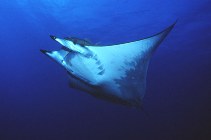 Mobula mobular
Afbeelding van Minguell, C.
Afbeeldingen | video's | Postzegels, munten, diversen. | Google afbeelding
Afbeelding van Minguell, C.
Classificatie / Namen Lokale namen | Synoniemen | Catalog of Fishes(Genus, Soort(en)) | ITIS | CoL | WoRMS | Cloffa
Elasmobranchii (haaien en roggen) (sharks and rays) > Myliobatiformes (Stingrays) > Mobulidae (Devilrays)
More on author: Bonnaterre.
More on author: Bonnaterre.
Milieu: milieu / Klimaatzone / Diepte / verspreidingsgebied Ecologie
marien pelagic-neritic; oceanodroom (Ref. 51243); diepte 0 - 700 m (Ref. 106604), usually 0 - 200 m (Ref. 89423). Subtropical; 53°N - 13°N
Verspreiding Gebieden | FAO regio's | Ecosystemen | Voorkomen | Verspreidingskaart | Introducties | Faunafri
Circumglobal.
Lengte bij maturiteit / Grootte / Gewicht / Leeftijd
Maturiteit: Lm 217.8, range 204 - ? cm
Max length : 520 cm WD mannelijk / geslacht onbekend; (Ref. 4442); 240.0 cm WD (female); common length : 225 cm WD mannelijk / geslacht onbekend; (Ref. 9256); max. gepubliceerd gewicht: 1.5 t (Ref. 115943)
Max length : 520 cm WD mannelijk / geslacht onbekend; (Ref. 4442); 240.0 cm WD (female); common length : 225 cm WD mannelijk / geslacht onbekend; (Ref. 9256); max. gepubliceerd gewicht: 1.5 t (Ref. 115943)
Korte beschrijving Determinatiesleutels | Morfologie | Morfometrie
Larger than M. hypostoma, tail with spine and prickles (Ref. 6902).
Body shape (shape guide): other.
Body shape (shape guide): other.
An epipelagic species (Ref. 6808, 58302) found over continental shelves and near oceanic islands (Ref. 6679). Occurs singly or in groups (Ref. 9911). Feeds mainly on euphausiids (mainly Nictiphanes simplex), and to a lesser extent on copepods and crustacean larvae; also on small pelagic fishes and crustaceans (Ref. 6679, 6871), by funnelling using their cephalic fins and then trapping or filtering the food through their specialised gill plates (Ref. 115943). Acoustic tracks record the species to spend time above the thermocline at night to feed on krill (H. Dewar, pers.comm. 05/2000). Max length of female from Ref. 50641. Ovoviviparous (Ref. 50449). Bycatch mortalities have been reported from Mediterranean fisheries - large-scale driftnets, purse seines and trawls, bottom set nets, trammel nets, longlines and even fixed traps for tuna. Very common by-catch of the gillnet fisheries targeting skipjack tuna (Katsuwonus pelamis). It is utilized for its meat as protein source (except the head), its gill filter plates (of very high value and as an ingredient in Chinese medicine, Ref. 115943), its cartilage and skin (Ref. 58048).
Levenscyclus en paargedrag Maturiteit | Voortplanting | Paaien | Eieren | Fecunditeit | Larven
Exhibit ovoviparity (aplacental viviparity), with embryos feeding initially on yolk, then receiving additional nourishment from the mother by indirect absorption of uterine fluid enriched with mucus, fat or protein through specialised structures (Ref. 6679, 50449). With one in a litter (Ref. 12951). Size at birth 85-92 cm WD (Ref. 12951, Ref. 58048).
Hoofdreferentie
Upload uw referenties | Referenties | Coördinator | Medewerkers
McEachran, J.D. and B. Séret, 1990. Mobulidae. p. 73-76. In J.C. Quero, J.C. Hureau, C. Karrer, A. Post and L. Saldanha (eds.) Check-list of the fishes of the eastern tropical Atlantic (CLOFETA). JNICT, Lisbon; SEI, Paris; and UNESCO, Paris. Vol. 1. (Ref. 4442)
Status op de Rode Lijst van het IUCN (Ref. 130435: Version 2025-2 (Global))
Ernstig bedreigd (CR) (A2bd+3d); Date assessed: 19 June 2025
Gevaar voor de mens
Harmless
Gebruik door de mens
Visserij: commercieel
FAO - visserij: aanvoer; Publication: search | FishSource | Sea Around Us
Meer informatie
Trofische ecologie
Voedsel (prooien)
Dieetsamenstelling
Voedselconsumptie
Voedselrantsoenen
Predatoren
Voedsel (prooien)
Dieetsamenstelling
Voedselconsumptie
Voedselrantsoenen
Predatoren
Populatiedynamica
Groeiparameters
Max. leeftijden / maten
Lengte-gewicht rel.
Lengte-lengte rel.
Lengtefrequenties
Massaconversie
Rekrutering
Abundantie
Groeiparameters
Max. leeftijden / maten
Lengte-gewicht rel.
Lengte-lengte rel.
Lengtefrequenties
Massaconversie
Rekrutering
Abundantie
Levenscyclus
Voortplanting
Maturiteit
Rijpheid/kieuwen rel.
Fecunditeit
Paaien
Paaibestanden
Eieren
Ontwikkeling van de eieren
Larven
Larvale populatiedynamiek
Voortplanting
Maturiteit
Rijpheid/kieuwen rel.
Fecunditeit
Paaien
Paaibestanden
Eieren
Ontwikkeling van de eieren
Larven
Larvale populatiedynamiek
Fysiologie
Lichaamssamenstelling
Voedingsstoffen
Zuurstofverbruik
Type zwemmen
Zwemsnelheid
Visuele pigmenten
Vis geluid
Ziekten en parasieten
Toxiciteit (LC50)
Lichaamssamenstelling
Voedingsstoffen
Zuurstofverbruik
Type zwemmen
Zwemsnelheid
Visuele pigmenten
Vis geluid
Ziekten en parasieten
Toxiciteit (LC50)
Menselijk gerelateerd
Aquacultuursystemen
Aquacultuurprofielen
Kweeklijnen
Ciguatera gevallen
Postzegels, munten, diversen.
Aquacultuursystemen
Aquacultuurprofielen
Kweeklijnen
Ciguatera gevallen
Postzegels, munten, diversen.
Tools
Biologische quiz | E-boek | Veldgids | Lengtefrequentie Tool | Levenscyclus tool | Verspreidingskaart |
Vangst-MSY |
Speciale rapporten
Bekijk gegevens voor het houden in een aquarium | Bekijk Fact Sheets voor de soort | Bekijk Aquacultuur Fact Sheets
Download XML
Internetbronnen
AFORO (otoliths) | Aquatic Commons | BHL | Cloffa | Websites from users | Bekijk FishWatcher | CISTI | Catalog of Fishes: Genus, Soort(en) | DiscoverLife | DORIS | ECOTOX | FAO - visserij: aanvoer; Publication: search | Faunafri | Fishipedia | Fishtrace | GloBI | Google Books | Google Scholar | Google | IGFA World Record | Nationale databanken | OneZoom | Open Tree of Life | Otolith Atlas of Taiwan Fishes | PubMed | Reef Life Survey | Socotra Atlas | TreeBase | Tree of Life | Wikipedia: ga naar, zoek | World Records Freshwater Fishing | Zoological Record
Schattingen op basis van modellen
Gewenste temperatuur (Ref. 123201): 13.1 - 23, mean 15.8 °C (based on 226 cells).
Fylogenetische diversiteitsindex (Ref. 82804): PD50 = 0.5020 [Uniqueness, from 0.5 = low to 2.0 = high].
Bayesian length-weight: a=0.01000 (0.00244 - 0.04107), b=3.04 (2.81 - 3.27), in cm total length, based on all LWR estimates for this body shape (Ref. 93245).
Trofisch niveau (Ref. 69278): 3.5 ±0.45 se; based on food items.
Generation time: 9.2 ( na - na) years. Estimated as median ln(3)/K based on 2 growth studies.
Weerstandsvermogen (Ref. 120179): laag, minimale populatieverdubbelingstijd 4,5-14 jaar (Fec assumed to be <100).
Voedingsstoffen (Ref. 124155): Calcium = 4.56 [0.57, 78.69] mg/100g; Iron = 0.708 [0.063, 8.495] mg/100g; Protein = 21 [16, 26] %; Omega3 = 0.174 [0.053, 0.535] g/100g; Selenium = 38.5 [7.7, 213.7] μg/100g; VitaminA = 2.65 [0.21, 33.74] μg/100g; Zinc = 0.316 [0.018, 3.678] mg/100g (wet weight);