



把你的觀察加入 Fish Watcher
| Native range | All suitable habitat | Point map | Year 2050 |

|
| This map was computer-generated and has not yet been reviewed. |
| Alosa alosa AquaMaps Data sources: GBIF OBIS |
分類 / 名稱 俗名 | 同種異名 | Catalog of Fishes(屬, 種) | ITIS | CoL | WoRMS | Cloffa
Teleostei > Clupeiformes (Herrings) > Alosidae (Shads and Sardines)
Etymology: Alosa: Latin, alausa = a fish cited by Ausonius and Latin, halec = pickle, dealing with the Greek word hals = salt; it is also the old Saxon name for shad = "alli" ; 1591 (Ref. 45335).
More on author: Linnaeus.
Etymology: Alosa: Latin, alausa = a fish cited by Ausonius and Latin, halec = pickle, dealing with the Greek word hals = salt; it is also the old Saxon name for shad = "alli" ; 1591 (Ref. 45335).
More on author: Linnaeus.
環境: 環境 / 氣候帶 / 深度上下限 / 配送範圍 生態學
海洋; 淡水; 半鹹淡水 pelagic-neritic; 溯河洄游 (Ref. 89642); 深度上下限 10 - 400 m (Ref. 10536). 溫帶; 61°N - 20°N, 17°W - 22°E
分布 領土 | FAO區域 | 生態系 | 發現紀錄 | 分布圖 | 簡介 | Faunafri
Northeast Atlantic: Norway to Morocco, the British Isles, Germany, the Netherlands, Belgium, France, Spain and Portugal; known to enter the southern Baltic Sea and western Mediterranean Sea at least until the Ebro River in Spain.
東大西洋: 從卑爾根 (挪威) 沿著對在非洲中的茅利塔尼亞北部的歐洲的海岸。 (參考文獻 188, 參考文獻 51442) 也在地中海的西部中.(參考文獻 188) 記錄來自了波羅的海西部海洋向上到加里寧格勒州.(參考文獻 12801,26334) 伯恩公約的附錄 3(受保育的動物群).
東大西洋: 從卑爾根 (挪威) 沿著對在非洲中的茅利塔尼亞北部的歐洲的海岸。 (參考文獻 188, 參考文獻 51442) 也在地中海的西部中.(參考文獻 188) 記錄來自了波羅的海西部海洋向上到加里寧格勒州.(參考文獻 12801,26334) 伯恩公約的附錄 3(受保育的動物群).
初熟時的長度 / 大小 / 重量 / 年齡
成熟度: Lm 47.8, range 45 - 50 cm
Max length : 69.0 cm TL 雄魚/尚未辨別雌雄; (Ref. 10536); 83.0 cm TL (female); common length : 40.0 cm TL 雄魚/尚未辨別雌雄; (Ref. 2945); common length :70 cm TL (female); 最大體重: 4.0 kg (Ref. 30578); 最大年齡: 10 年 (Ref. 10536)
Max length : 69.0 cm TL 雄魚/尚未辨別雌雄; (Ref. 10536); 83.0 cm TL (female); common length : 40.0 cm TL 雄魚/尚未辨別雌雄; (Ref. 2945); common length :70 cm TL (female); 最大體重: 4.0 kg (Ref. 30578); 最大年齡: 10 年 (Ref. 10536)
簡短描述 檢索表 | 型態特徵 | 形態測量圖
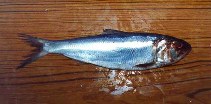
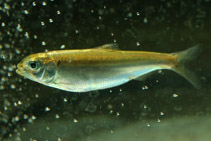
背棘 (總數) : 0; 背的軟條 (總數) : 18 - 21; 臀棘: 0; 臀鰭軟條: 20 - 27; 脊椎骨: 57 - 58. Diagnosis: Body somewhat compressed, fairly deep with depth at pectoral fin more than head length, scutes apparent along belly (Ref. 188, 51442). Upper jaw with a distinct median notch, lower jaw fitting into it; no teeth on palatine and vomer; gillrakers long, thin and numerous, a total of 85 to 155 on first arch, longer than gill filaments (Ref. 188, 6683, 59043). A dark spot posterior to gill opening, but sometimes absent, sometimes followed by several small blotches (Ref. 188, 59043). Alosa alosa resembles Alosa fallax, which has fewer and shorter gillrakers and 7 or 8 black spots along flank (Ref. 188).
Body shape (shape guide): fusiform / normal; Cross section: compressed.
身體略微扁長形的, 相當深的在胸鰭超過頭長隨著深度.(參考文獻 188, 參考文獻 51442) 上頜凹槽, 下頜嵌入它。 (參考文獻 188) 鰓耙長的﹐細的與很多的, 總計 85 到 130, 長度超過鰓絲.(參考文獻 188) 大又細的鱗片.(參考文獻 51442) 出現腹部的鱗甲。 (參考文獻 51442) 一個深色斑點在鰓裂後面 (有時不存在; 偶然地 1 或 2 更多的斑點).(參考文獻 188)
Body shape (shape guide): fusiform / normal; Cross section: compressed.
身體略微扁長形的, 相當深的在胸鰭超過頭長隨著深度.(參考文獻 188, 參考文獻 51442) 上頜凹槽, 下頜嵌入它。 (參考文獻 188) 鰓耙長的﹐細的與很多的, 總計 85 到 130, 長度超過鰓絲.(參考文獻 188) 大又細的鱗片.(參考文獻 51442) 出現腹部的鱗甲。 (參考文獻 51442) 一個深色斑點在鰓裂後面 (有時不存在; 偶然地 1 或 2 更多的斑點).(參考文獻 188)
Amphihaline species, schooling and strongly migratory, penetrating far up rivers but not into small tributaries (Refs. 188, 59043). Adults are usually found in open waters along the coast (Ref. 51442). In freshwater, they inhabit major rivers but may also enter tributaries, if water temperature is equal to or is warmer than the main river (Ref. 188, 10536). Known lake populations from Morocco and Portugal need access to rivers to spawn (Refs. 10536, 89647, 89648). Larvae and small juveniles inhabit deep slow-flowing areas of rivers (Ref. 89649), some swimming upstream in late summer and autumn (Ref. 10536). Juveniles (up to 1+ years) are usually found near estuaries or river mouths (Refs. 10536, 59043), possibly making vertical diurnal movements synchronized with the tides; they remain in estuaries for over one year (Ref. 89630). Adults primarily feed on a wide range of planktonic crustaceans; larger individuals feed on small schooling fishes (Ref. 188, 51442, 59043). Juveniles in freshwater prey on insect larvae. Females in European rivers commonly reach 70 cm total length (Ref. 10536). Females grow faster and are always larger than males of the same age (Ref. 10536). Less common than Alosa fallax but both have suffered from pollution and weirs or other obstructions (Ref. 188). It has been suggested that members of the genus Alosa are hearing specialists with the American shad (Alosa sapidissima) having been found to detect and respond to sounds up to at least 180 kHz (Ref. 89631). This may aid in predator avoidance (e.g. cetaceans) (Ref. 89632). Hybridization with the twaite shad (Alosa fallax) has been reported from the Rhine (Ref. 89633) as well as from rivers in France and Algeria (Ref. 10536). Shad hybrids may reproduce (Ref. 27567). Marketed fresh and frozen; eaten sautéed, broiled, fried and baked (Ref. 9988).
Amphihaline 種, 在海洋中度過它大部分的生活期.(參考文獻 51442) 群游性而強烈的迴游性種, 穿透在河川最上游, 但是不進入小的支流之內.(參考文獻 188) 五月時進入河中產卵, 通常在晚上與水流是迅急的地方.(參考文獻 188) 迴游成魚不進食。 (參考文獻 30578) 成魚在產卵此時稚魚之後返回大海移動秋天時向下至海洋.(參考文獻 188) 吃寬範圍的浮游性甲殼動物; 較大的成魚吃小的群游性魚。 (參考文獻 188, 參考文獻 51442) 比 Alosa fallax不普遍但是兩者已經蒙受污染與魚樑或其他的障礙.(參考文獻 188) 在市場上銷售生鮮和冷凍; 吃煎炒, 火烤了, 油炸了而且燒烤了.(參考文獻 9988)
Amphihaline 種, 在海洋中度過它大部分的生活期.(參考文獻 51442) 群游性而強烈的迴游性種, 穿透在河川最上游, 但是不進入小的支流之內.(參考文獻 188) 五月時進入河中產卵, 通常在晚上與水流是迅急的地方.(參考文獻 188) 迴游成魚不進食。 (參考文獻 30578) 成魚在產卵此時稚魚之後返回大海移動秋天時向下至海洋.(參考文獻 188) 吃寬範圍的浮游性甲殼動物; 較大的成魚吃小的群游性魚。 (參考文獻 188, 參考文獻 51442) 比 Alosa fallax不普遍但是兩者已經蒙受污染與魚樑或其他的障礙.(參考文獻 188) 在市場上銷售生鮮和冷凍; 吃煎炒, 火烤了, 油炸了而且燒烤了.(參考文獻 9988)
生命週期和交配行為 成熟度 | 繁殖 | 產卵場 | 卵 | 孕卵數 | 仔魚
Adults in the sea begin to move towards the coast in February and congregate near or in estuaries (Ref. 10536). They ascend rivers in April and May when water temperature is 9-12 °C, peaking at 13-16 °C. Adults may migrate up to 700 km from the sea into major rivers and occasionally into the largest tributaries of these rivers to spawn (Ref. 10536). Males migrate upriver at 3-9 years; females first reproduce 1-3 years later than males. Gametogenesis occurs during spawning migration.
Males arrive first in the upper reaches and occupy appropriate spawning sites, with females arriving 1-2 weeks later (Ref. 10536). Spawning sites are usually shallow areas (<1.5 m depth) of rivers near a confluence with strong currents and clean gravel bottoms (Refs. 188, 10536, 59043). Spawning occurs at night (over several nights), in large and very noisy schools that form near the surface.when water temperature reaches at least 15 °C and is believed to be optimal between 22-24 °C. (Ref. 88171). Coupling happens side by side, thrashing caudal fins on water surface and swimming in circles while expulsing eggs and sperms in the surrounding water. Eggs are fertilized in mid-water and then sink to the gravel bottom. Eggs hatch after 4-8 days (22-24 °C) (Ref. 89630). After spawning, adults return to the sea but many die before reaching it (Ref. 188, 51442, 59043). Only 5-6 % of the adults spawn more than once in their lifetime (Ref. 89655). After 3-4 months juveniles (8-12 cm length) move towards the sea until mature (Ref. 10536). Individual fish apparently return to their natal spawning site (Ref. 59043). Also Refs. 5744, 5745.
東大西洋: 從卑爾根 (挪威) 沿著對在非洲中的茅利塔尼亞北部的歐洲的海岸。 (參考文獻 188, 參考文獻 51442) 也在地中海的西部中.(參考文獻 188) 記錄來自了波羅的海西部海洋向上到加里寧格勒州.(參考文獻 12801,26334) 伯恩公約的附錄 3(受保育的動物群).
主要參考資料
上傳您的推薦信 | 參考文獻 | 合作者 | 合作者
Whitehead, P.J.P., 1985. FAO Species Catalogue. Vol. 7. Clupeoid fishes of the world (suborder Clupeoidei). An annotated and illustrated catalogue of the herrings, sardines, pilchards, sprats, shads, anchovies and wolf-herrings. FAO Fish. Synop. 125(7/1):1-303. Rome: FAO. (Ref. 188)
CITES
Not Evaluated
對人類具威脅
無害處的
人類使用
漁業: 低經濟; 游釣魚種: 是的
FAO - 漁業: 著陸; Publication: search | FishSource | 周邊海洋
更多資訊
工具
特別的報告
下載 XML
網路資源
AFORO (otoliths) | Aquatic Commons | BHL | Cloffa | Websites from users | 檢查 FishWatcher | CISTI | Catalog of Fishes: 屬, 種 | DiscoverLife | ECOTOX | FAO - 漁業: 著陸; Publication: search | Faunafri | Fishipedia | Fishtrace | GloBI | Google Books | Google Scholar | Google | IGFA World Record | 國家資料庫 | OneZoom | Open Tree of Life | Otolith Atlas of Taiwan Fishes | PubMed | Reef Life Survey | Socotra Atlas | TreeBase | 樹狀分類階層 | Wikipedia: 去, 搜尋 | World Records Freshwater Fishing | 動物學的記錄
基於模型的估計
首選溫度 (參考文獻 123201): 7 - 15.6, mean 10.1 °C (based on 480 cells).
系統發育多樣性指數 (參考文獻 82804): PD50 = 0.5000 [Uniqueness, from 0.5 = low to 2.0 = high].
Bayesian length-weight: a=0.00631 (0.00516 - 0.00771), b=3.09 (3.05 - 3.13), in cm total length, based on LWR estimates for this species (Ref. 93245).
營養階層 (參考文獻 69278): 3.0 ±0.2 se; based on diet studies.
回復力 (參考文獻 120179): 中等的, 族群倍增時間最少 1.4 - 4.4年 (K=0.19-0.29; tm=3.5; tmax=10).
營養素 (Ref. 124155): Calcium = 11.2 [4.4, 59.5] mg/100g; Iron = 0.629 [0.269, 1.334] mg/100g; Protein = 19.1 [16.5, 21.8] %; Omega3 = 1.27 [0.69, 2.44] g/100g; Selenium = 15.2 [7.4, 29.9] μg/100g; VitaminA = 15.2 [3.5, 65.1] μg/100g; Zinc = 0.323 [0.203, 0.541] mg/100g (wet weight); based on nutrient studies.