Environment: milieu / climate zone / пределы глубины / distribution range
экология
; пресноводный; солоноватоводный демерсальный; pH range: 6.5 - 7.5; dH range: ? - 15; мигрирует в реке (Ref. 51243). Tropical; 22°C - 28°C (Ref. 1672); 38°N - 1°N
Asia: Pakistan to Viet Nam and Indonesia.
Size / Вес / Возраст
половая зрелость: Lm ? range ? - ? cm
Max length : 90.0 cm TL самец/пол неопределен; (Ref. 37770); наибольший вес (опубликованные данные): 500.00 g (Ref. 9671)
Краткое описание
определительные ключи | морфология | морфометрия
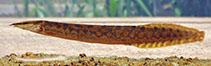
колючие лучи спинного плавника (общее число) : 33 - 40; членистые (мягкие) лучи спинного плавника (общее число) : 67 - 82; членистые (мягкие) лучи анального плавника: 67 - 83; позвонки: 87 - 98. Body dull brown with 1-3 darker, longitudinal zigzag lines, more or less connected to form a reticulated pattern, more or less distinct and restricted to the dorsal two thirds of the body (Ref. 27732).
Body shape (shape guide): eel-like.
Adults live in highland streams to lowland wetlands (Ref. 57235). Usually found in streams and rivers with sand, pebble, or boulder substrate. They seldom leave the bottom except when disturbed. Also occur in still waters, both in coastal marshes and dry zone tanks. Sometimes stays partially buried in fine substrate. Enter flooded forest (Ref. 9497). Reported to occur in areas with rocky bottoms in the Mekong mainstream during the dry season, but enter canals, lakes and other floodplain areas during the flood season (Ref. 37770). Forages at night on benthic insect larvae, worms and some submerged plant material (Ref. 12693). Common during the summer months. Marketed fresh and frequently seen in the aquarium trade (Ref. 12693). Economic important species, both food and aquarium trades (Ref. 57235).
Life cycle and mating behavior
половая зрелость | размножение | нерест | икра | Fecundity | личинки
Pethiyagoda, R., 1991. Freshwater fishes of Sri Lanka. The Wildlife Heritage Trust of Sri Lanka, Colombo. 362 p. (Ref. 6028)
Статус Красного Списка МСОП (Ref. 130435: Version 2025-1)
Угроза для людей
Harmless
Использование человеком
рыболовство: коммерческий; аквариум: коммерческий
дополнительная информация
инструменты
Специальные отчеты
Скачать в формате XML
ресурсы в Интернет
Estimates based on models
Phylogenetic diversity index (ссылка
82804): PD
50 = 0.5000 [Uniqueness, from 0.5 = low to 2.0 = high].
Bayesian length-weight: a=0.00372 (0.00274 - 0.00504), b=2.90 (2.81 - 2.99), in cm total length, based on LWR estimates for this species (Ref.
93245).
Trophic level (ссылка
69278): 2.8 ±0.27 se; based on food items.
устойчивость к внешним воздействиям (ссылка
120179): средний (среднего размера), минимальное время удвоения популяции 1.4-4.4 года (Preliminary K or Fecundity.).
Fishing Vulnerability (Ref.
59153): High vulnerability (56 of 100).
🛈
Nutrients (Ref.
124155): Calcium = 261 [124, 515] mg/100g; Iron = 1.88 [0.89, 3.98] mg/100g; Protein = 17.4 [15.6, 19.2] %; Omega3 = 0.126 [0.064, 0.232] g/100g; Selenium = 22.6 [8.4, 64.1] μg/100g; VitaminA = 14.9 [5.4, 38.0] μg/100g; Zinc = 1.19 [0.67, 2.32] mg/100g (wet weight); based on
nutrient studies.