>
Galaxiiformes (Southern smelts) >
Galaxiidae (Galaxiids) > Aplochitoninae
Etymology: Aplochiton: Greek, aploe, -es = simplicity + Greek, chiton = tunic, long dress (Ref. 45335).
More on author: Jenyns.
Issue
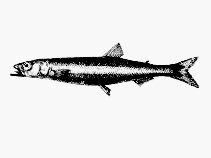
Earlier work included Aplochiton in the family Aplochitonidae. Aplochiton taeniatus is a specialized piscivore with a very large mouth and greatly enlarged teeth (McDowall and Nakaya 1988). Aplochiton marinus is considered a synonym of A. taeniatus. See McDowall (1971a) for a detailed description.
Environment: milieu / climate zone / distribuzione batimetrica / distribution range
Ecologia
; acqua dolce; salmastro benthopelagico. Temperate; 39°S - 56°S
South America: On both sides of the Andes, in Chile from Lake Villarrica south and in Argentina from Lake Lacar south; into Tierra del Fuego at the southern tip of South America.
Size / Peso / Age
Maturità: Lm ? range ? - ? cm
Max length : 33.4 cm SL maschio/sesso non determinato; (Ref. 35399)
Short description
Chiavi di identificazione | Morfologia | Morfometria
Spine dorsali (totale) : 0; Raggi dorsali molli (totale) : 12; Spine anali: 2; Raggi anali molli: 13.
Body shape (shape guide): elongated.
Found mostly in lakes, but recent collections from sites close to the sea suggest amphidromy.
Life cycle and mating behavior
Maturità | Riproduzione | Deposizione | Uova | Fecundity | Larve
McDowall, R.M. and K. Nakaya, 1987. Identity of the galaxoid fishes of the genus Aplochiton Jenyns from southern Chile. Jap. J. Ichthyol. 34(3):377-383. (Ref. 9005)
IUCN Red List Status (Ref. 130435: Version 2025-1)
Threat to humans
Harmless
Human uses
Pesca: di nessun interesse
Strumenti
Special reports
Download XML
Fonti Internet
Estimates based on models
Phylogenetic diversity index (Fonte Biblio.
82804): PD
50 = 0.6250 [Uniqueness, from 0.5 = low to 2.0 = high].
Bayesian length-weight: a=0.00417 (0.00163 - 0.01066), b=3.16 (2.93 - 3.39), in cm total length, based on LWR estimates for this (Sub)family-body shape (Ref.
93245).
Trophic level (Fonte Biblio.
69278): 3.3 ±0.4 se; based on size and trophs of closest relatives
Resilienza (Fonte Biblio.
120179): Medio, tempo minimo di raddoppiamento della popolazione 1.4 - 4.4 anni (Preliminary K or Fecundity.).
Fishing Vulnerability (Ref.
59153): Low to moderate vulnerability (31 of 100).
🛈