



अपना अपलोड करें तस्वीरें और वीडियो
तस्वीरे | Google image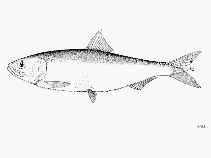 Alosa maeotica
चित्र स्रोत: AP FAO
तस्वीरे | Google image
चित्र स्रोत: AP FAO
वर्गीकरण / नाम आम नाम | उपशब्द | Catalog of Fishes(वर्ग, प्रजाति) | ITIS | CoL | WoRMS | Cloffa
> Clupeiformes (Herrings) > Alosidae (Shads and Sardines)
Etymology: Alosa: Latin, alausa = a fish cited by Ausonius and Latin, halec = pickle, dealing with the Greek word hals = salt; it is also the old Saxon name for shad = "alli" ; 1591 (Ref. 45335).
Eponymy: This is a toponym referring to Maeotis, the ancient name for the Sea of Azov, where these species occur. (Ref. 128868), visit book page.
Etymology: Alosa: Latin, alausa = a fish cited by Ausonius and Latin, halec = pickle, dealing with the Greek word hals = salt; it is also the old Saxon name for shad = "alli" ; 1591 (Ref. 45335).
Eponymy: This is a toponym referring to Maeotis, the ancient name for the Sea of Azov, where these species occur. (Ref. 128868), visit book page.
पर्यावरण: पर्यावरण / जलवायु क्षेत्र / गहराई सीमा / वितरण सीमा पारिस्थितिकी
समुद्री; स्वच्छ जल, अलवण जल; खारा pelagic-neritic. Temperate; 48°N - 40°N, 27°E - 43°E (Ref. 188)
वितरण प्रदेशों | ऐफ ऐ ओ क्षेत्र | पारिस्थितिकी प्रणालियों | संयोग | बिन्दु नक्शा | भूमिका | Faunafri
Eurasia: Black Sea and Sea of Azov.
प्रथम परिपक्वता पर लंबाई / आकार / वज़न / आयु
परिपक्व अवधि: Lm 14.0, range 13 - 15 cm
Max length : 33.2 cm TL पुल्लिंग / अलिंग; (Ref. 96734); 33.8 cm TL (female); common length : 18.0 cm SL पुल्लिंग / अलिंग; (Ref. 188); अधिकतम प्रकाशित वज़न: 331.70 g (Ref. 96734); अधिकतम प्रकाशित वज़न: 331.70 g; अधिकतम सूचित उम्र: 6 वर्षो (Ref. 10547)
Max length : 33.2 cm TL पुल्लिंग / अलिंग; (Ref. 96734); 33.8 cm TL (female); common length : 18.0 cm SL पुल्लिंग / अलिंग; (Ref. 188); अधिकतम प्रकाशित वज़न: 331.70 g (Ref. 96734); अधिकतम प्रकाशित वज़न: 331.70 g; अधिकतम सूचित उम्र: 6 वर्षो (Ref. 10547)
संक्षिप्त वर्णन पहचान कुंजी | आकृति विज्ञान | मौरफोमैटरिक्स
पृष्ठीय रीढ़ (सम्पूर्ण) : 0; गुदा कांटा: 0. Body fairly elongate, more `herring-like' than `shad-like'. Gill rakers thin and straight, often closely packed and pointed, usually shorter than gill filaments. Teeth well developed in both jaws. Other Black Sea Alosa have more gill rakers (A. caspia 50 to 80 and A. pontica 47 to 66). Sardinella aurita is more slender, has many more gill rakers and i 8 pelvic fin rays.
Body shape (shape guide): fusiform / normal; Cross section: compressed.
Body shape (shape guide): fusiform / normal; Cross section: compressed.
Non-anadromous, entering limans and lower parts of river deltas, but only occasionally in freshwater. They are more or less abundant in lower reaches of rivers and coastal lagoons. A cold-loving species, tolerating 3 or 4°C.(Ref. 188). At sea, pelagic in deep water and enters brackish lagoons to spawn. Mature adults spawn first at 2 years and many individuals spawn for 2-4 seasons. Eggs sink to bottom. Spent individuals return to the sea to feed. In autumn, they migrate to southern Black Sea to overwinter. Juveniles migrate to the sea or estuaries during the first summer (Ref. 59043). Adults feed mainly on small fishes (mainly sprats and anchovies) also on shrimps, gammarids and other large crustaceans (Ref. 188). In northern Black Sea, the decline in habitat quality in suitable estuarine ecosystems is expected to have an impact in the immediate future (Ref. 59043).
जीवन चक्र और संभोग व्यवहार परिपक्व अवधि | पुनरुत्पत्ति | मछलीऔ का अंडे देना | अंडे | उपजाऊपन | लार्वा
Juveniles migrate to sea or remain in estuaries during their first summer (Ref. 59043). In autumn, they migrate to southern Black Sea to overwinter. As spring approaches, they start to move into brackish lagoons to spawn until early summer. After spawning, spent fish return to sea to feed. Many individuals spawn for 2-4 seasons (Ref. 59043).
मुख्य संदर्भ
अपने संदर्भ अपलोड करें | संदर्भ | संयोजक | सहयोगीयो
Whitehead, P.J.P., 1985. FAO Species Catalogue. Vol. 7. Clupeoid fishes of the world (suborder Clupeoidei). An annotated and illustrated catalogue of the herrings, sardines, pilchards, sprats, shads, anchovies and wolf-herrings. FAO Fish. Synop. 125(7/1):1-303. Rome: FAO. (Ref. 188)
आईयूसीएन रेड लिस्ट स्थिति (Ref. 130435: Version 2025-2 (Global))
Least Concern (LC) ; Date assessed: 26 June 2022
CITES
Not Evaluated
मनुष्यों के लिए ख़तरा
Harmless
मानव उपयोग
मात्स्यिकी: लघु वाणिज्य
FAO - Publication: search | FishSource |
अधिक जानकारी
जनसंख्या गतिशीलता
विकास मापदंड
अधिकतम आयु/आकार
लंबाई-वजन संबंध
लंबाई-लंबाई संबंध
लंबाई-आवृत्तियाँ
सामूहिक रूपांतरण
भर्ती
बहुतायत
विकास मापदंड
अधिकतम आयु/आकार
लंबाई-वजन संबंध
लंबाई-लंबाई संबंध
लंबाई-आवृत्तियाँ
सामूहिक रूपांतरण
भर्ती
बहुतायत
जीवन चक्र
पुनरुत्पत्ति
परिपक्व अवधि
परिपक्वता/गिल्स संबंध
उपजाऊपन
मछलीऔ का अंडे देना
स्पॉनिंग एकत्रीकरण
अंडे
अंडे का विकास
लार्वा
लारवल गतिकी
पुनरुत्पत्ति
परिपक्व अवधि
परिपक्वता/गिल्स संबंध
उपजाऊपन
मछलीऔ का अंडे देना
स्पॉनिंग एकत्रीकरण
अंडे
अंडे का विकास
लार्वा
लारवल गतिकी
शरीर रचना
गिल क्षेत्र
दिमाग
ओटोलिथ
गिल क्षेत्र
दिमाग
ओटोलिथ
फिजियोलॉजी
शारीरिक संरचना
पोषक तत्व
प्राणवायु की खपत
तैराकी का प्रकार
तैराकी की गति
दृश्य वर्णक
मछली की आवाज
रोग एवं परजीवी
विषाक्तता (LC50s)
शारीरिक संरचना
पोषक तत्व
प्राणवायु की खपत
तैराकी का प्रकार
तैराकी की गति
दृश्य वर्णक
मछली की आवाज
रोग एवं परजीवी
विषाक्तता (LC50s)
आनुवंशिकी
जीनोम
आनुवंशिकी
विषमयुग्मजी
हैरेटिबिलटी
आनुवंशिक विविधता
जीनोम
आनुवंशिकी
विषमयुग्मजी
हैरेटिबिलटी
आनुवंशिक विविधता
मानव संबंधी
जलकृषि प्रणालियाँ
जलीयकृषि रूपरेखाऐ
खींच
सिगुएटेरा के मामले
टिकट, सिक्के, विविध.
जलकृषि प्रणालियाँ
जलीयकृषि रूपरेखाऐ
खींच
सिगुएटेरा के मामले
टिकट, सिक्के, विविध.
साधन
ई-पुस्तक | कार्यक्षेत्र पथप्रदर्शक | लंबाई आवृति इंद्रजालिक | जीवन-इतिहास उपकरण | बिन्दु नक्शा |
कैच-एमएसवाई |
विशेष रिपोर्ट
एक्वेरियम के रखरखाव की जांच करें | प्रजातियों के तथ्य पत्रक की जाँच करें | जलीय कृषि तथ्य पत्रक की जाँच करें
XML डाउनलोड करें
सारांश पृष्ठ | बिंदु डेटा | आम नाम | तस्वीरें
इंटरनेट स्रोत
AFORO (otoliths) | Aquatic Commons | BHL | Cloffa | Websites from users | Check FishWatcher | CISTI | Catalog of Fishes: वर्ग, प्रजाति | DiscoverLife | ECOTOX | FAO - Publication: search | Faunafri | Fishipedia | Fishtrace | GloBI | Google Books | Google Scholar | Google | IGFA World Record | राष्ट्रीय आंकड़ासंचय | OneZoom | Open Tree of Life | Otolith Atlas of Taiwan Fishes | PubMed | Reef Life Survey | Socotra Atlas | TreeBase | Tree of Life | Wikipedia: Go, खोज | World Records Freshwater Fishing | प्राणीशास्त्रीय अभिलेख
मॉडल पर आधारित अनुमान
जातिवृति विविधता सूचकांक (संदर्भ 82804): PD50 = 0.5000 [Uniqueness, from 0.5 = low to 2.0 = high].
Bayesian length-weight: a=0.00631 (0.00425 - 0.00937), b=3.09 (2.97 - 3.21), in cm total length, based on LWR estimates for this species & Genus-body shape (Ref. 93245).
ट्रॉफिक स्तर (संदर्भ 69278): 4.4 ±0.8 se; based on diet studies.
लौटाव (संदर्भ 120179): माध्यम, न्यूनतम जनसंख्या दुगनी होने का समय 1.4 - 4.4 वर्ष। (tmax=6).