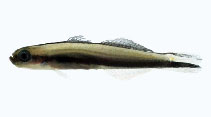
Parioglossus formosus, Beautiful hover goby

You can sponsor this page

Parioglossus formosus (Smith, 1931)

Beautiful hover goby
مشاهدات خود را اضافه کنيد در Fish Watcher
Native range | All suitable habitat | Point map | Year 2050
This map was computer-generated and has not yet been reviewed.
Parioglossus formosus   AquaMaps   Data sources: GBIF OBIS
را بارگذاری کني تصاوير و فيلم ها
عکس ها | تصوير گوگل
Image of Parioglossus formosus (Beautiful hover goby)
Parioglossus formosus
عکس از Winterbottom, R.

رده بندی / Names اسامي عام | مترادف | Catalog of Fishes(جنس, گونه ها) | ITIS | CoL | WoRMS | Cloffa

> Gobiiformes (Gobies) > Microdesmidae (Wormfishes) > Ptereleotrinae
Etymology: Parioglossus: Greek, pareia = jaw + Greek, glossa = tongue (Ref. 45335).
More on author: Smith.

Environment: milieu / climate zone / تغييرات عمق / distribution range بوم شناسي

دريايي; لب شور وابسته به آب سنگ; تغييرات عمق 0 - 15 m (Ref. 48444). Tropical; 25°N - 24°S

پراكنش كشورها | مناطق سازمان خوار و بار جهاني (FAO) | Ecosystems | ظهور | نقشه نقطه ای | معرفي | Faunafri

Western Pacific: Gulf of Thailand to Fiji, north to Yayaema Islands, south to northwestern Australia and the southern Great Barrier Reef.

Size / Weight / سن

بلوغ: Lm ?  range ? - ? cm
Max length : 4.5 cm SL جنس نر / بدون خواص جنسي; (Ref. 48637)

توصيف مختصر كليدهاي شناسايي | ريخت شناسي | ريخت ستجي بوسيله انداره گيري

خارهاي باله پشتي (کل) : 6 - 7; شعاع نرم باله پشتي (کل) : 13 - 15; خارهاي باله مخرجي: 1; شعاع نرم باله مخرجي: 13 - 15.
Body shape (shape guide): elongated.

زيست شناسي     واژه نامه (بعنوان مثال epibenthic)

Occurs in shallow coastal reefs and mangrove-lined inlets. Hovers in schools among branching corals or mangroves to a depth of about 4 meters.

Life cycle and mating behavior بلوغ | تولید مثل | تخم ریزی | تخم ها | Fecundity | توزاد ( لارو)

مآخذ اصلی Upload your references | مراجع | هماهنگ كننده : Randall, John E. | همكاران

Myers, R.F., 1991. Micronesian reef fishes. Second Ed. Coral Graphics, Barrigada, Guam. 298 p. (Ref. 1602)

وضعيت در فهرست قرمز IUCN (Ref. 130435: Version 2025-1)

  حداقل نگرانی (LC) ; Date assessed: 18 August 2023

CITES

Not Evaluated

CMS (Ref. 116361)

Not Evaluated

خطر برای انسان ها

  Harmless


استفاده انسانی

FAO - Publication: search | FishSource |

اطلاعات بيشتر

Trophic ecology
Food items (preys)
تركيب غذايي
مصرف غذايي
Food rations
شکارچیان
بوم شناسي
بوم شناسي
Home ranges
Population dynamics
Growth parameters
Max. ages / sizes
Length-weight rel.
Length-length rel.
نوسانات طولی
Mass conversion
بازسازی
فراواني
Life cycle
تولید مثل
بلوغ
Maturity/Gills rel.
Fecundity
تخم ریزی
Spawning aggregations
تخم ها
نمو تخم
توزاد ( لارو)
پويايي لاروي
Anatomy
منطقه آبششي
Brain
Otolith
Physiology
Body composition
Nutrients
Oxygen consumption
Swimming type
Swimming speed
Visual pigments
Fish sound
Diseases & Parasites
Toxicity (LC50s)
ژنتيك
ژنوم
ژنتيك
Heterozygosity
وارث
Human related
Aquaculture systems
نمايه هاي آبزي پروري
نژادها
Ciguatera cases
Stamps, coins, misc.
Outreach
همكاران
Taxonomy
اسامي عام
مترادف
ريخت شناسي
ريخت ستجي بوسيله انداره گيري
عکس ها
مراجع
مراجع

ابزارها

گزارش های ويژه

بارگيری XML

منابع اينترنتي

Estimates based on models

Preferred temperature (مرجع 123201): 26.1 - 29.3, mean 28.7 °C (based on 1701 cells).
Phylogenetic diversity index (مرجع 82804):  PD50 = 0.5000   [Uniqueness, from 0.5 = low to 2.0 = high].
Bayesian length-weight: a=0.00389 (0.00180 - 0.00842), b=3.12 (2.94 - 3.30), in cm total length, based on all LWR estimates for this body shape (Ref. 93245).
Trophic level (مرجع 69278):  3.2   ±0.4 se; based on size and trophs of closest relatives
Fishing Vulnerability (Ref. 59153):  Low vulnerability (10 of 100). 🛈