



เพิ่มการสังเกตของคุณใน Fish Watcher
| Native range | All suitable habitat | Point map | Year 2050 |

|
| This map was computer-generated and has not yet been reviewed. |
| Rhincodon typus AquaMaps Data sources: GBIF OBIS |
อัพโหลดของคุณ ภาพถ่าย และ วิดีโอ
รูปภาพหลายรูป | วิดีโอ | แสตมป์ เหรียญ อื่นๆ | Google image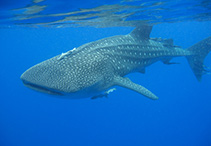 Rhincodon typus
ภาพโดย Wirtz, P.
รูปภาพหลายรูป | วิดีโอ | แสตมป์ เหรียญ อื่นๆ | Google image
ภาพโดย Wirtz, P.
การจำแนกประเภท / ชื่อ ชื่อสามัญ | ชื่อพ้อง | Catalog of Fishes(สกุล, ชนิด) | ITIS | CoL | WoRMS | Cloffa
sub class Elasmobranchii (ฉลามและกระเบน) (sharks and rays) > Orectolobiformes (Carpet sharks) > Rhincodontidae (Whale shark)
Etymology: Rhincodon: rhinc, presumably a typographical error for rhine (Gr.), rasp, but often mistranslated as rhynchos (Gr.), snout; odon, tooth, referring to small, slightly curved teeth, “placed in longitudinal rows, and altogether so disposed towards the anterior edges of jaws as to exhibit the resemblance of a rasp or file lying across each” (See ETYFish); typus: Serving as type species of the genus (See ETYFish).
Eponymy: Camrin D Braun is an American ichthyologist. [...] (Ref. 128868), visit book page.
Etymology: Rhincodon: rhinc, presumably a typographical error for rhine (Gr.), rasp, but often mistranslated as rhynchos (Gr.), snout; odon, tooth, referring to small, slightly curved teeth, “placed in longitudinal rows, and altogether so disposed towards the anterior edges of jaws as to exhibit the resemblance of a rasp or file lying across each” (See ETYFish); typus: Serving as type species of the genus (See ETYFish).
Eponymy: Camrin D Braun is an American ichthyologist. [...] (Ref. 128868), visit book page.
สิ่งแวดล้อม : สิ่งแวดล้อม / เขตภูมิอากาศ / ระดับความลึก / ระยะการกระจายสินค้า นิเวศวิทยา
เกี่ยวกับทะเล,น้ำเค็ม pelagic-oceanic; สัตว์น้ำที่อาศัยและอพยพภายในทะเลเท่านั้น (Ref. 87829); ระดับความลึก 0 - 1928 m (Ref. 106604), usually 0 - 100 m (Ref. 89972). Subtropical; 18°C - 30°C (Ref. 35465); 45°N - 48°S, 180°W - 180°E
การแพร่กระจาย อาณาเขต | พื้นที่จำแนกตาม FAO | ระบบนิเวศหลายระบบ | การปรากฏขึ้น,การเกิดขึ้น,พบ | ตำแหน่งบนแผนที่ | การแนะนำ | Faunafri
Circumglobal, all tropical and warm temperate seas except the Mediterranean.
ความยาวเมื่อครบกำหนดครั้งแรก / ขนาด / น้ำหนัก / อายุ
วัยเจริญพันธุ์: Lm 500.0, range 440 - 560 cm
Max length : 1,700 cm TL เพศผู้/กระเทย; (Ref. 48722); 2,000.0 cm TL (female); common length : 1,000 cm TL เพศผู้/กระเทย; (Ref. 12757); น้ำหนักสูงสุดที่มีการรายงาน: 34.0 t (Ref. 48722); อายุสูงสุดที่ได้รายงาน: 80 ปี (Ref. 116781)
Max length : 1,700 cm TL เพศผู้/กระเทย; (Ref. 48722); 2,000.0 cm TL (female); common length : 1,000 cm TL เพศผู้/กระเทย; (Ref. 12757); น้ำหนักสูงสุดที่มีการรายงาน: 34.0 t (Ref. 48722); อายุสูงสุดที่ได้รายงาน: 80 ปี (Ref. 116781)
คำอธิบายสั้นๆ เครื่องมือที่ใช้ในการแยกชนิดสัตว์,สิ่งมีชีวิตออกจากกัน | สัณฐานวิทยา | ความยาวต่างๆ
เงี่ยงครีบหลัง (รวม) : 0; เงี่ยงครีบก้น: 0. A huge, filter-feeding, blunt-headed shark with a distinct checkerboard pattern of yellow or white spots, on grey, bluish or blue-grey to green-brown back, white or yellowish underside, with horizontal and vertical stripes on back and sides of body; head broad and flat; snout short; mouth almost terminal, huge and transverse in front of eyes; prominent ridges on body, lowest terminating in a keel on caudal peduncle (Ref. 58085, 114967); nostrils with rudimentary barbels; long nasoral grooves; spiracles close to and larger than eyes; 5 exceptionally large gill openings, the fifth behind pectoral fin (Ref. 110893, 114967); numerous small, scale-like teeth and feeds by filtering plankton with special sieve-like modifications of the gill bars (Ref. 26938).
Body shape (shape guide): elongated; Cross section: other (see remarks).
Body shape (shape guide): elongated; Cross section: other (see remarks).
World's largest fish, but is harmless to humans (Ref. 6871). Grows up to 20m (Ref. 48722). Often seen offshore but coming close inshore, sometimes entering lagoons or coral atolls (Ref. 247). Sometimes seen cruising near outer wall (Ref. 26938). Reported to frequent shallow water areas near estuaries and river mouths, sometimes during seasonal shrimp blooms (Ref. 48696). Found singly, or in aggregations of over 100 individuals (Ref. 5578). Often associated with groups of pelagic fishes, especially scombrids (Ref. 247). Highly migratory between ocean basins and national jurisdictions, but returns to the same sites annually (Refs. 48672, 131113). Feed on planktonic and nektonic prey, such as small fishes (sardines, anchovies, mackerel, juvenile tunas and albacore), small crustaceans and squids (Ref. 247). Often seen in a vertical position with the head at or near the surface when feeding (Ref. 13571). When actively feeding on zooplankton the sharks turn their heads from side to side, with part of the head lifted out of the water, and the mouth opened and closed 7-28 times per minute; these suction gulps were synchronized with the opening and closing of the gill slits (Ref. 35680). Ovoviviparous, with litter size of over 300 pups (Ref. 37816, 43278). Females of 438 to 562 cm are immature (FIGIS 09/2003). Utilized fresh, frozen, dried and salted for human consumption, liver processed for oil, fins used for shark-fin soup, offal probably for fishmeal (Ref. 13571), cartilage for health supplements and skin for leather products (Ref. 48723). Used in Chinese medicine (Ref. 12166). Highly valued commodity in ecotourism operations. Populations have been depleted in several countries by harpoon fisheries (Ref. 48696). Estimated longevity of 80.4 yrs is much larger than reported maximum age 38 yrs based on vertebral bands for a female of 11.9 m TL. Maximum length of up to 21 m and weight of up to 42 tons have been reported (Ref. 116781), but probably the most reliably measured size so far is 12 m TL (Ref. 26319).
วงจรชีวิตและพฤติกรรมการผสมพันธุ์ วัยเจริญพันธุ์ | การสืบพันธุ์ | การวางไข่ | เซลสืบพันธ์ของเพศเมีย(ไข่) | ความดกของไข่ | ตัวอ่อน
Distinct pairing with embrace (Ref. 205). Ovoviviparous (Ref. 35465). Embryos feed solely on yolk (Ref. 50449). Late term embryos shed their egg case within the uterus at a size of 58 to 64 cm TL (ovovivipary). The smallest free-living species are from 55-56 cm long, the smallest of which had an umbilical scar. A pregnant female has recently been found with 300 embryos, the largest of which were 58-64 cm (Refs. 26346, 35678).
อ้างอิงหลัก
อัพโหลดข้อมูลอ้างอิงของคุณ | อ้างอิง | ผู้ประสานงาน : Compagno, Leonard J.V. | ผู้ร่วมมือ
Colman, J.G., 1997. A review of the biology and ecology of the whale shark. J. Fish Biol. 51(6):1219-1234. (Ref. 26319)
สถานะบัญชีแดงของ IUCN (Ref. 130435: Version 2025-2 (Global))
Endangered (EN) (A2bd); Date assessed: 31 March 2025
ภัยคุกคามต่อมนุษย์
Harmless (Ref. 6871)
การใช้ของมนุษย์
การประมง: การค้า
FAO - การประมง: โปรไฟล์สายพันธุ์; Publication: search | FishSource | ทะเลรอบๆเรา
ข้อมูลเพิ่มเติม
พลวัตของประชากร
พารามิเตอร์การเจริญเติบโต
อายุสูงสุด / ขนาด
ความยาว-น้ำหนักสัมพันธ์
ความยาว-ความยาวสัมพันธ์
ความยาว-ความถี่
การแปลงมวล
การทดแทนที่
อุดมสมบรูณ์
พารามิเตอร์การเจริญเติบโต
อายุสูงสุด / ขนาด
ความยาว-น้ำหนักสัมพันธ์
ความยาว-ความยาวสัมพันธ์
ความยาว-ความถี่
การแปลงมวล
การทดแทนที่
อุดมสมบรูณ์
วงจรชีวิต
การสืบพันธุ์
วัยเจริญพันธุ์
ความสมบูรณ์พันธุ์/เหงือกที่เกี่ยวข้อง
ความดกของไข่
การวางไข่
การรวมตัวของสปอน
เซลสืบพันธ์ของเพศเมีย(ไข่)
การพัฒนาไข่
ตัวอ่อน
พลวัตของสัตว์น้ำวัยอ่อน
การสืบพันธุ์
วัยเจริญพันธุ์
ความสมบูรณ์พันธุ์/เหงือกที่เกี่ยวข้อง
ความดกของไข่
การวางไข่
การรวมตัวของสปอน
เซลสืบพันธ์ของเพศเมีย(ไข่)
การพัฒนาไข่
ตัวอ่อน
พลวัตของสัตว์น้ำวัยอ่อน
การแพร่กระจาย
อาณาเขต
พื้นที่จำแนกตาม FAO
ระบบนิเวศหลายระบบ
การปรากฏขึ้น,การเกิดขึ้น,พบ
การแนะนำ
BRUVS - วิดีโอ
อาณาเขต
พื้นที่จำแนกตาม FAO
ระบบนิเวศหลายระบบ
การปรากฏขึ้น,การเกิดขึ้น,พบ
การแนะนำ
BRUVS - วิดีโอ
สรีรวิทยา
องค์ประกอบของร่างกาย
สารอาหาร
การใช้ออกซิเจน
ประเภทการว่ายน้ำ
ระดับความเร็วในการว่ายน้ำ
เม็ดสีที่มองเห็นได้
เสียงปลา
โรคและปรสิต
ความเป็นพิษ (LC50s)
องค์ประกอบของร่างกาย
สารอาหาร
การใช้ออกซิเจน
ประเภทการว่ายน้ำ
ระดับความเร็วในการว่ายน้ำ
เม็ดสีที่มองเห็นได้
เสียงปลา
โรคและปรสิต
ความเป็นพิษ (LC50s)
เกี่ยวข้องกับมนุษย์
ระบบการเพาะเลี้ยงสัตว์น้ำ
ประวัติการเพาะเลี้ยงสัตว์น้ำ
สายพันธุ์
กรณีซิเกวเทอรา
แสตมป์ เหรียญ อื่นๆ
ระบบการเพาะเลี้ยงสัตว์น้ำ
ประวัติการเพาะเลี้ยงสัตว์น้ำ
สายพันธุ์
กรณีซิเกวเทอรา
แสตมป์ เหรียญ อื่นๆ
เครื่องมือ
แบบทดสอบชีววิทยา | หนังสืออิเล็กทรอนิกส์ | คู่มือภาคสนาม | เครื่องมือที่ใช้ในการแยกชนิดสัตว์,สิ่งมีชีวิตออกจากกัน | ผู้มีความชำนาญในเรื่องความถี่ของความยาว | เครื่องมือในการศึกษาชีวประวัติ | ตำแหน่งบนแผนที่ |
จับ-MSY |
รายงานพิเศษ
ตรวจสอบการบำรุงรักษาตู้ปลา | ตรวจสอบเอกสารข้อเท็จจริงเกี่ยวกับสายพันธุ์ | ตรวจสอบเอกสารข้อเท็จจริงเกี่ยวกับการเพาะเลี้ยงสัตว์น้ำ
ดาวน์โหลด XML
หน้าสรุป | ข้อมูลสำคัญ | ชื่อสามัญ | ภาพถ่าย
แหล่งที่มาจากอินเตอร์เน็ต
AFORO (otoliths) | Aquatic Commons | BHL | Cloffa | Websites from users | Check FishWatcher | CISTI | Catalog of Fishes: สกุล, ชนิด | DiscoverLife | DORIS | ECOTOX | FAO - การประมง: โปรไฟล์สายพันธุ์; Publication: search | Faunafri | Fishipedia | Fishtrace | GloBI | Google Books | Google Scholar | Google | IGFA World Record | ฐานข้อมูลแห่งชาติ | OneZoom | Open Tree of Life | Otolith Atlas of Taiwan Fishes | PubMed | Reef Life Survey | Socotra Atlas | TreeBase | แผนภูมิชีวิตแบบต้นไม้ | Wikipedia: Go, ค้นหา | World Records Freshwater Fishing | Zoobank | บันทึกทางด้านสัตววิทยา
การประมาณค่าตามแบบจำลอง
อุณหภูมิที่ต้องการ (อ้างอิง 123201): 19.6 - 29, mean 27.3 °C (based on 5510 cells).
ดัชนีความหลากหลายทางวิวัฒนาการ (อ้างอิง 82804): PD50 = 1.5000 [Uniqueness, from 0.5 = low to 2.0 = high].
Bayesian length-weight: a=0.00389 (0.00180 - 0.00842), b=3.12 (2.94 - 3.30), in cm total length, based on all LWR estimates for this body shape (Ref. 93245).
ระดับชั้นอาหาร (อ้างอิง 69278): 3.6 ±0.5 se; based on diet studies.
ความสามารถในการกลับคืนสู่ปกติ (อ้างอิง 120179): ต่ำมาก, เวลาต่ำสุดที่จะทำให้ประชากรเพิ่มขึ้นเป็น 2 เท่าใช้เวลามากกว่า 14 ปี (K=0.02; Fec=16-300).