



Uploaden van uw Foto's en video's
Afbeeldingen | Google afbeelding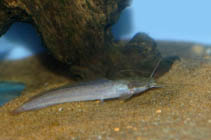 Clarias camerunensis
Afbeelding van JJPhoto
Afbeeldingen | Google afbeelding
Afbeelding van JJPhoto
Classificatie / Namen Lokale namen | Synoniemen | Catalog of Fishes(Genus, Soort(en)) | ITIS | CoL | WoRMS | Cloffa
> Siluriformes (Catfishes) > Clariidae (Airbreathing catfishes)
Etymology: Clarias: Greek, chlaros = lively, in reference to the ability of the fish to live for a long time out of water.
More on author: Lönnberg.
Etymology: Clarias: Greek, chlaros = lively, in reference to the ability of the fish to live for a long time out of water.
More on author: Lönnberg.
Milieu: milieu / Klimaatzone / Diepte / verspreidingsgebied Ecologie
; zoet water demersaal. Tropical; 23°C - 28°C (Ref. 12468); 9°N - 11°S
Verspreiding Gebieden | FAO regio's | Ecosystemen | Voorkomen | Verspreidingskaart | Introducties | Faunafri
Africa: from Volta basin in Ghana (Ref. 57129) and coastal rivers in Togo to the lower and middle Congo River basin (Ref. 248); also reported from the upper Congo (Ref. 106245). Widespread in Lower Guinea, from the Cross in Nigeria and Cameroon to the Loémé in Republic of Congo (Ref. 81644).
Grootte / Gewicht / Leeftijd
Korte beschrijving Determinatiesleutels | Morfologie | Morfometrie
Dorsale stekels (totaal) : 0; Dorsale zachte stralen (totaal) : 69 - 94; Anale zachte stralen: 52 - 70; Wervels: 56 - 61. Diagnosis: body less elongate, its maximum depth 11.9-16.4% SL (m=14.1); head length 21.0-26.0% SL (m=24.1) (Ref. 57129, 81644). Head rectangular dorsally; snout extremely broadly rounded; eyes more laterally placed (Ref. 248). Interorbital distance 45.4-54.3% HL (m=48.8) (Ref. 57129, 81644). Tooth plates extremely broad (Ref. 248), width of premaxillary tooth plate 30.4-38.9% HL (m=34.9), and of vomerine tooth plate 26.1-33.9% HL (m=29.7)(Ref. 57129, 81644). Frontal fontanel long and narrow; occipital fontanelle long and oval-shaped (Ref. 248). Supraorbital and "dermosphenotic" bones separated in specimens up to 200 mm SL, in larger specimens they usually become joined (Ref. 248, 101841)). 7-13 (Ref. 57129, 81644) or 7-14 (Ref. 101841) gill rakers on first gill arch. Suprabranchial organ well developed (Ref. 248, 101841). Pectoral spine slender, its outer side showing strong downward serrations (Ref. 248, 81644). Dorsal fin length 59.5-67.9% SL; distance from dorsal to caudal fin 1.2-4.3% SL (Ref. 57129, 101841). Flank neuromasts arranged in a regular pattern (Ref. 81644).
Colouration: no information on colour in life (Ref. 57129, 101841). Preserved specimens: dark brown on back and sides and pale brown to beige/whitish on belly; pectoral and pelvic fins sometimes with a pale distal band; caudal fin sometimes with alternating light and dark vertical bars (Ref. 57129, 81644). Never an irregular pattern of small white spots on body (Ref. 101841).
Body shape (shape guide): elongated.
Body shape (shape guide): elongated.
Facultative air-breathing (Ref. 126274); Data on the diet of C. walkeri (=C. camerunensis) showed larvae of mayflies, chironomids, and caddis insects to be the main food of small and middle-sized specimens (Ref. 248). Stomach content analysis showed presence of practically everything edible from plant remains, insects and their larvae to fish remains (Ref. 78218).
Levenscyclus en paargedrag Maturiteit | Voortplanting | Paaien | Eieren | Fecunditeit | Larven
Hoofdreferentie
Upload uw referenties | Referenties | Coördinator | Medewerkers
Teugels, G.G., 1986. A systematic revision of the African species of the genus Clarias (Pisces; Clariidae). Ann. Mus. R. Afr. Centr., Sci. Zool., 247:199 p. (Ref. 248)
Status op de Rode Lijst van het IUCN (Ref. 130435: Version 2025-2 (Global))
Niet bedreigd (LC) ; Date assessed: 29 April 2019
CITES
Not Evaluated
Gevaar voor de mens
Harmless
Gebruik door de mens
FAO - Publication: search | FishSource |
Meer informatie
Trofische ecologie
Voedsel (prooien)
Dieetsamenstelling
Voedselconsumptie
Voedselrantsoenen
Predatoren
Voedsel (prooien)
Dieetsamenstelling
Voedselconsumptie
Voedselrantsoenen
Predatoren
Populatiedynamica
Groeiparameters
Max. leeftijden / maten
Lengte-gewicht rel.
Lengte-lengte rel.
Lengtefrequenties
Massaconversie
Rekrutering
Abundantie
Groeiparameters
Max. leeftijden / maten
Lengte-gewicht rel.
Lengte-lengte rel.
Lengtefrequenties
Massaconversie
Rekrutering
Abundantie
Levenscyclus
Voortplanting
Maturiteit
Rijpheid/kieuwen rel.
Fecunditeit
Paaien
Paaibestanden
Eieren
Ontwikkeling van de eieren
Larven
Larvale populatiedynamiek
Voortplanting
Maturiteit
Rijpheid/kieuwen rel.
Fecunditeit
Paaien
Paaibestanden
Eieren
Ontwikkeling van de eieren
Larven
Larvale populatiedynamiek
Anatomie
Kieuwoppervlak
Hersenen
Otoliet
Kieuwoppervlak
Hersenen
Otoliet
Fysiologie
Lichaamssamenstelling
Voedingsstoffen
Zuurstofverbruik
Type zwemmen
Zwemsnelheid
Visuele pigmenten
Vis geluid
Ziekten en parasieten
Toxiciteit (LC50)
Lichaamssamenstelling
Voedingsstoffen
Zuurstofverbruik
Type zwemmen
Zwemsnelheid
Visuele pigmenten
Vis geluid
Ziekten en parasieten
Toxiciteit (LC50)
Menselijk gerelateerd
Aquacultuursystemen
Aquacultuurprofielen
Kweeklijnen
Ciguatera gevallen
Postzegels, munten, diversen.
Aquacultuursystemen
Aquacultuurprofielen
Kweeklijnen
Ciguatera gevallen
Postzegels, munten, diversen.
Tools
Biologische quiz | E-boek | Veldgids | Determinatiesleutels | Lengtefrequentie Tool | Levenscyclus tool | Verspreidingskaart |
Vangst-MSY |
Speciale rapporten
Bekijk gegevens voor het houden in een aquarium | Bekijk Fact Sheets voor de soort | Bekijk Aquacultuur Fact Sheets
Download XML
Internetbronnen
AFORO (otoliths) | Aquatic Commons | BHL | Cloffa | Websites from users | Bekijk FishWatcher | CISTI | Catalog of Fishes: Genus, Soort(en) | DiscoverLife | ECOTOX | FAO - Publication: search | Faunafri | Fishipedia | Fishtrace | GloBI | Google Books | Google Scholar | Google | IGFA World Record | OneZoom | Open Tree of Life | Otolith Atlas of Taiwan Fishes | PubMed | Reef Life Survey | Socotra Atlas | TreeBase | Tree of Life | Wikipedia: ga naar, zoek | World Records Freshwater Fishing | Zoobank | Zoological Record
Schattingen op basis van modellen
Fylogenetische diversiteitsindex (Ref. 82804): PD50 = 0.5000 [Uniqueness, from 0.5 = low to 2.0 = high].
Bayesian length-weight: a=0.00776 (0.00372 - 0.01620), b=2.96 (2.79 - 3.13), in cm total length, based on LWR estimates for this Genus-body shape (Ref. 93245).
Trofisch niveau (Ref. 69278): 3.5 ±0.51 se; based on food items.
Weerstandsvermogen (Ref. 120179): Gemiddeld, minimale populatieverdubbelingstijd 1,4-4,4 jaar (Preliminary K or Fecundity.).