>
Syngnathiformes (Pipefishes and seahorses) >
Syngnathidae (Pipefishes and seahorses) > Syngnathinae
Etymology: Urocampus: Greek, oura = tail + greek, kampe = curved (Ref. 45335).
More on author: Castelnau.
Environment: milieu / climate zone / εύρος βάθους / distribution range
Οικολογία
Θαλασσινό(ά); Υφάλμυρο βενθικό(ς); εύρος βάθους 0 - 5 m (Ref. 5316). Tropical; 8°S - 45°S
Western Pacific: Australia and Papua New Guinea.
Μέγεθος / Βάρος / Age
Γεννητική Ωρίμανση: Lm ? range ? - ? cm
Max length : 10.0 cm SL αρσενικό/απροσδιόριστο; (Ref. 31838)
Short description
Κλείδες προσδιορισμού | Μορφολογία | Μορφομετρία
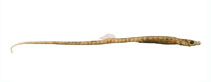
Ραχιαίες άκανθες (συνολικά) : 0; Μαλακές ραχιαίες ακτίνες (συνολικά) : 13 - 15; Εδρικές άκανθες: 0; Μαλακές εδρικές ακτίνες: 2. Small and slender, and have a short, thick snout, continuous superior trunk and tail ridges, small pectoral fins, and a dorsal fin that originates on tail rings 5-9. Body usually has numerous hair-like appendages which provide camouflage.
Body shape (shape guide): eel-like.
Inhabit lower reaches of rivers, estuaries or other protected inshore habitats (Ref. 5316). Found mostly in algal or Zostera beds (Ref. 5316), rarely at depths of more than a few meters (Ref. 31838). Ovoviviparous (Ref. 205). The male carries the eggs in a brood pouch which is found under the tail (Ref. 205).
Male carries the eggs in a brood pouch (Ref. 205). Up to 20 eggs are incubated by the male in a brood pouch formed from laterally expanded flaps of skin on the underside of the tail. Newly emerged larvae may remain in the pouch (Ref. 31838).
Paxton, J.R., D.F. Hoese, G.R. Allen and J.E. Hanley, 1989. Pisces. Petromyzontidae to Carangidae. Zoological Catalogue of Australia, Vol. 7. Australian Government Publishing Service, Canberra, 665 p. (Ref. 7300)
IUCN Red List Status (Ref. 130435: Version 2025-1)
Threat to humans
Harmless
Human uses
Εργαλεία
Special reports
Download XML
Διαδικτυακές πηγές
Estimates based on models
Preferred temperature (Αναφ.
123201): 14.6 - 25.5, mean 18.3 °C (based on 410 cells).
Phylogenetic diversity index (Αναφ.
82804): PD
50 = 0.7500 [Uniqueness, from 0.5 = low to 2.0 = high].
Bayesian length-weight: a=0.00037 (0.00016 - 0.00085), b=3.18 (2.99 - 3.37), in cm total length, based on LWR estimates for this (Sub)family-body shape (Ref.
93245).
Τροφικό Επίπεδο (Αναφ.
69278): 3.0 ±0.1 se; based on diet studies.
Ελαστικότητα (Αναφ.
120179): Χαμηλό, ελάχιστος χρόνος για διπλασιασμό πληθυσμού 4,5 - 14 έτη (Fec=20).
Fishing Vulnerability (Ref.
59153): Low vulnerability (10 of 100).
🛈