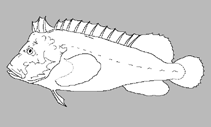
Cocotropus masudai

You can sponsor this page

Cocotropus masudai Matsubara, 1943

Upload your photos and videos
Google image
Image of Cocotropus masudai
No image available for this species;
drawing shows typical species in Aploactinidae.

Classification / Names প্রচলিত নাম সমূহ | প্রতিনাম সমূহ | Catalog of Fishes(গণ , প্রজাতি ) | ITIS | CoL | WoRMS | Cloffa

> Perciformes/Scorpaenoidei (Scorpionfishes) > Aploactinidae (Velvetfishes)
Etymology: Cocotropus: Greek, kokkos = berry, seed + Greek, tropsis, tropo = turning (Ref. 45335).
Eponymy: Hajime Masuda (1921–2005) was a Japanese ichthyologist. [...] (Ref. 128868), visit book page.

Environment: milieu / climate zone / গভীরতার পরিসীমা / distribution range বাস্তুসংস্থান

সামুদ্রিক তলদেশ বিহারী. Temperate

বিতরণ দেশ সমূহ | এফ এ ও এলাকাসমূহ | বাস্তুতন্ত্র | দৃষ্টিগোচর | মানচিত্র নির্দেশ করুন | প্রচলন | Faunafri

Northwest Pacific: known only from Hachijojima, Japan.

আকৃতি / ওজন / Age

পরিপক্কতা : Lm ?  range ? - ? cm
Max length : 5.0 cm TL পুরুষ/ লিঙ্গ অনিধর্ারিত ; (Ref. 559)

Short description সনাক্তকারী নির্দেশক | বহিঃ অঙ্গ সংস্থান | মরফোমেট্রিক্স

পৃষ্ঠীয় কাঁটা (মোট ) : 12; পৃষ্ঠীয় নরম পাখনা দন্ড (মোট ) : 9; পায়ূ কাঁটা : 2; পায়ূর নরম পাখনা্তুন্ড: 7; কশেরুকা : 26. Body compressed and somewhat sparsely covered with rather soft prickles. Preoperculum with 5 spines; uppermost longest with a cutting end; lowest rudimentary and embedded (Ref. 559). Snout in lateral profile concave. Streaks on body few, if any (Ref. 39602).
Body shape (shape guide): elongated; Cross section: compressed.

জীববিজ্ঞান     শব্দকোষ (উদাহরণ স্বরূপ epibenthic)

Life cycle and mating behavior পরিপক্কতা | প্রজনন | ডিম ছাড়া | ডিমসমূহ | ডিম্বধারন ক্ষমতা | শুককীট

Main reference Upload your references | সূত্র সংখ্যা | সমম্বয়কারী | সহযোগী

Masuda, H., K. Amaoka, C. Araga, T. Uyeno and T. Yoshino, 1984. The fishes of the Japanese Archipelago. Vol. 1. Tokai University Press, Tokyo, Japan. 437 p. (text). (Ref. 559)

IUCN Red List Status (Ref. 130435: Version 2025-1)


CITES

Not Evaluated

CMS (Ref. 116361)

Not Evaluated

Threat to humans

  Harmless


Human uses

FAO - Publication: search | FishSource |

আরো তথ্য

ট্রফিক বাস্তুতন্ত্র
Food items (preys)
পথ্য উপাদান
খাদ্য গ্রহণ
Food rations
শিকারী প্রাণী সমূহ
বাস্তুসংস্থান
বাস্তুসংস্থান
Home ranges
Population dynamics
Growth parameters
Max. ages / sizes
Length-weight rel.
Length-length rel.
Length-frequencies
Mass conversion
নির্বাচন
প্রাচুর্য
Life cycle
প্রজনন
পরিপক্কতা
Maturity/Gills rel.
ডিম্বধারন ক্ষমতা
ডিম ছাড়া
Spawning aggregations
ডিমসমূহ
Egg development
শুককীট
শুককীটের সত্রিুয়তা
বিতরণ
দেশ সমূহ
এফ এ ও এলাকাসমূহ
বাস্তুতন্ত্র
দৃষ্টিগোচর
প্রচলন
BRUVS - Videos
Anatomy
ফুলকা এলাকা
Brain
Otolith
Physiology
Body composition
Nutrients
অম্লজান ব্যবহার
-এর সাতাঁরের ধরণ
সাতাঁরের গতি
Visual pigments
Fish sound
Diseases & Parasites
Toxicity (LC50s)
বংশানুগতিবিদ্যা
Genome
বংশানুগতিবিদ্যা
Heterozygosity
উতরাধিকার সুত্রে পাওয়া যোগ্যতা
Human related
Aquaculture systems
একুয়াকালচার নকশাসমূহ
বংশ
Ciguatera cases
Stamps, coins, misc.
সূত্র সংখ্যা
সূত্র সংখ্যা

হাতিয়ার

Special reports

Download XML

ইন্টারনেট সুত্র

Estimates based on models

Phylogenetic diversity index (সূত্র 82804):  PD50 = 0.5000   [Uniqueness, from 0.5 = low to 2.0 = high].
Bayesian length-weight: a=0.00537 (0.00215 - 0.01342), b=3.14 (2.92 - 3.36), in cm total length, based on LWR estimates for this (Sub)family-body shape (Ref. 93245).
ট্রফিক পর্যায়ে (সূত্র 69278):  3.2   ±0.3 se; based on size and trophs of closest relatives
Fishing Vulnerability (Ref. 59153):  Low vulnerability (10 of 100). 🛈