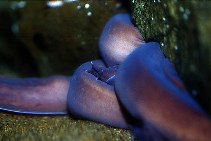
ກຸ່ມປາທະເລຊະນິດໜຶ່ງທີ່ມີລຳຕົວຍາວຄືອ່ຽນ ແລະບໍ່ມີກະດູກຄາງກະໄຕປາກແຕ່ຈະມີກຸ່ມແຂ້ວເປັນແຜ່ນອ້ອມຮອບປາກ (ຕົວຢ່າງປາ ແຮກຟິດ) (hagfishes) >
Myxiniformes (Hagfishes) >
Myxinidae (Hagfishes) > Eptatretinae
Etymology: Eptatretus: hepta (Gr.), seven; tretos (Gr.), perforated (i.e., with holes), referring to seven gill apertures on what would later be described as Homea banksii (=E. cirrhatus) [range within genus is 6-14 pairs of gill apertures] (See ETYFish); stoutii: In honor of Arthur B. Stout (1814-1898), surgeon and corresponding secretary of the California Academy of Sciences [see box, below] (See ETYFish).
Eponymy: Dr Arthur Breese Stout (1814–1898) was a prominent surgeon in San Francisco. [...] (Ref. 128868), visit book page.
Environment: milieu / climate zone / ລະດັບຄວາມເລິກ / distribution range
ນິເວດວິທະຍາ
ສັດທະເລ ອາໄສຢູ່ໃກ້ໜ້າດິນໃຕ້ພື້ນທ້ອງນ້ຳ; ບໍ່ມີການເຄື່ອນຍ້າຍ; ລະດັບຄວາມເລິກ 16 - 966 m (Ref. 96339). Temperate; 58°N - 20°N, 137°W - 105°W
Eastern Pacific: southeastern Alaska to Bahia San Pablo, central Baja California, Mexico.
Length at first maturity / ຂະໜາດ / ນ້ຳໜັກ / Age
ການຈະເລີນເຕັມໄວ: Lm 42.0 range ? - ? cm
Max length : 63.5 cm TL ຕົວຜູ້/ບໍ່ມີເພດ; (Ref. 96339)
ຄີ (ໜາມ)ແຂງຢູ່ຫຼັງປາ (ທັງໝົດ) : 0; ຄີຫຼັງຂອງປາ (ຄີອ່ອນ) (ທັງໝົດ) : 0; ຄີ(ໜາມ) ແຂງຢູ່ຄີກົ້ນປາ
ກຸ່ມປາກະດູກແຂງ
ຄວາມຖີ່ຂອງກຸ່ມຖ່າຍທອດພັນ
ປາທີ່ມີການເຄື່ອນຍ້າຍຈາກທະເລໄປຫານ້ຳຈືດ ແລະນ້ຳຈືດຫາທະເລ
ປາທີ່ມີການເຄື່ອນຍ້າຍຈາກທະເລແລະໄປໄຂ່ຢູ່ນ້ຳຈືດ
ຄີກົ້ນຂອງປາ
ສັດທີ່ມີກະດູກສັນຫັຼງ
ການຖ່າຍທອດທາງກຳມະພັນຈາກພໍ່ແມ່ຫາລູກ: 0; ຄີກົ້ນຂອງປາ: 0. No true fins - one dorsal finfold, far back, median, very low, continuous with caudal; caudal broad, rounded; ventral finfold very low, origin somewhat posterior to last gill pore, extending to anus (Ref. 6885). Dark brown, tan, gray, or brownish red, often tinted with blue or purple, never black, lighter ventrally, rarely with large patches of white; preserved specimens light brown (Ref. 6885).
Body shape (shape guide): eel-like.
Inhabits fine silt and clay bottoms (Ref. 6885). Enters large fishes by way of the mouth and anus and feed on its viscera and muscles (Ref. 6885). May greatly diminish catches taken with fixed gears (Ref. 6885). Produces mucilaginous slime when harassed (Ref. 6885). Probably exhibits hermaphroditism (Ref. 56947). Due to its primitive metabolism it is collected for research purposes (Ref. 6885). TBK: demerspelag.
Copulatory organ absent (Ref. 51361). Presence of bisexual juvenile gonad, requires further investigation regarding hermaphroditism (Ref. 56947). In one study (Ref. 40710), hermaphroditism is exhibited by only 0.2% of the individuals studied.
Fernholm, B., 1998. Hagfish systematics. p. 33-44. In J.M. Jørgensen, J.P. Lomholt, R.E. Weber and H. Malte (eds.) The biology of hagfishes. Chapman & Hall, London. 578 p. (Ref. 31276)
IUCN Red List Status (Ref. 130435: Version 2025-1)
Threat to humans
Harmless
Human uses
ການປະມົງ: ທີ່ບໍ່ມີຄວາມສົນໃຈ; ຕູ້ປາ: ບ່ອນວາງສະແດງສັນນ້ຳຂອງລັດ
ເຄື່ອງມື
Special reports
Download XML
ແຫຼ່ງອີນເຕີເນັດ
Estimates based on models
Preferred temperature (ເອກະສານອ້າງອີງ
123201): 5.8 - 9.4, mean 7.1 °C (based on 54 cells).
Phylogenetic diversity index (ເອກະສານອ້າງອີງ
82804): PD
50 = 0.5000 [Uniqueness, from 0.5 = low to 2.0 = high].
Bayesian length-weight: a=0.00288 (0.00169 - 0.00493), b=2.88 (2.73 - 3.03), in cm total length, based on LWR estimates for this species & (Sub)family-body (Ref.
93245).
ຊັ້ນເຂດຮ້ອນ (ເອກະສານອ້າງອີງ
69278): 4.2 ±0.70 se; based on food items.
ຄວາມຢືດຢຸ່ນ (ເອກະສານອ້າງອີງ
120179): ຕຳ່, ປະຊາກອນຕຳ່ສຸດທີ່ໃຊ້ເວລາສອງເທົ່າ 4.5 - 14 ປີ (Fec = 28).
Fishing Vulnerability (Ref.
59153): Moderate to high vulnerability (45 of 100).
🛈