



Ichthyomyzon fossor Reighard & Cummins, 1916
Northern brook lamprey
Carica il tuo foto e Video
Immagini | Google image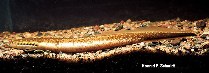 Ichthyomyzon fossor
Immagine di The Native Fish Conservancy
Immagini | Google image
Immagine di The Native Fish Conservancy
Classificazione / Nomi Nomi Comuni | Sinonimi | Catalog of Fishes(Genere, Specie) | ITIS | CoL | WoRMS | Cloffa
> Petromyzontiformes (Lampreys) > Petromyzontidae (Northern lampreys) > Petromyzontinae
Etymology: Ichthyomyzon: ichthys, fish; myzon (Gr.), to suck (borrowed from Petromyzon), i.e., a sucking fish, referring to their suctorial behavior (See ETYFish); fossor: Latin for digger, referring to how ammocoetes burrow into silt and sand (See ETYFish).
Etymology: Ichthyomyzon: ichthys, fish; myzon (Gr.), to suck (borrowed from Petromyzon), i.e., a sucking fish, referring to their suctorial behavior (See ETYFish); fossor: Latin for digger, referring to how ammocoetes burrow into silt and sand (See ETYFish).
Ambiente: milieu / zona climatica / distribuzione batimetrica / gamma di distribuzione Ecologia
; acqua dolce demersale; potamodromo (Ref. 126106). Temperate; 14°C - 26°C (Ref. 89241); 50°N - 37°N
Distribuzione Territories | Aree FAO | Ecosistemi | Presenze | Mappa dei ritrovamenti | Introduzioni | Faunafri
North America: St. Lawrence River, Quebec, west through Great Lakes and northern Mississippi River basin to Red River (Hudson Bay basin), south Manitoba; localized in Ohio River basin of northwest Pennsylvania, west Virginia, east Kentucky, north and south central Ohio and north Indiana; Missouri River basin.
Lunghezza alla prima maturità / Dimensione / Peso / Età
Maturità: Lm 13.5 range ? - ? cm
Max length : 17.0 cm TL maschio/sesso non determinato; (Ref. 5723); common length : 13.4 cm TL maschio/sesso non determinato; (Ref. 12193); Età massima riportata: 6 anni (Ref. 72462)
Max length : 17.0 cm TL maschio/sesso non determinato; (Ref. 5723); common length : 13.4 cm TL maschio/sesso non determinato; (Ref. 12193); Età massima riportata: 6 anni (Ref. 72462)
Breve descrizione Chiavi di identificazione | Morfologia | Morfometria
Adults: 8.6-16.6 cm TL. Body proportions, as percentage of TL (based on 59 specimens measuring 9.8-15.8 cm TL): prebranchial length, 7.4-9.9; branchial length, 8.7-11.9; trunk length, 46.7-54.6; tail length, 27.7-33.7; eye length, 1.0-2.0; disc length, 3.6-6.4. The urogenital papilla length, as a percentage of branchial length, in 25 spawning males measuring 9.9-14.95 cm TL, 6.7-21.7. Trunk myomeres, 47-58. Dentition: supraoral lamina, 1-4 unicuspid teeth, usually 2; infraoral lamina, 6-11 teeth, usually unicuspid but one may be bicuspid; 4 endolateral teeth on each side; 0-1, strong mode of 0, bicuspid endolaterals in total, the other endolaterals unicuspid; 1-3 rows of anterials; first row of anterials, 3 unicuspid teeth; 1-5 rows of exolaterals on each side, usually 3-4; 2-3 rows of posterials; first row of posterials, 10-11 unicuspid teeth; crest of transverse lingual lamina strongly w-shaped and with either indistinct or about 20 small cusps, the median one not enlarged; longitudinal lingual laminae with 17 cusps each. Marginal membrane vestigial. A small gular pouch is present in both males and females. Velar tentacles, 1-2, smooth. Body coloration (preserved) in adults darker (grayish brown) on the dorsal and upper lateral aspects and lighter (pale gray or silvery white) on the lower lateral and ventral aspects, giving a distinctly bicolored appearance. Lateral line neuromasts unpigmented. Extent of caudal fin pigmentation, 25% to more than 75%. Caudal fin shape, rounded.
Body shape (shape guide): eel-like.
Body shape (shape guide): eel-like.
Freshwater. Generally associated with warmwater habitats and tolerant of variation in terms of discharge, water temperature, and substrate. Mainly inhabits warmwater, isolated segments of moderate-sized to large streams with summer flows 0.03-31 m3/s, summer water temperatures 14-25.6 ˚C (Ref.89241). Adults inhabit clean, clear gravel riffles and runs of small rivers. Ammocoetes occur in quiet water over sand, silt and debris (Ref.1998). Metamorphosis occurs in late August to September, in Michigan and extends to early October in Québec (Ref. 89241). Non-parasitic, the adults and possibly the larger ammocoetes in the resting stage do not feed (Ref. 1998). Adults live less than 6 months. In Michigan, the spawning period is from 13 May to 6 July, at water temperatures between 12.8-23.3 ˚C, with peak spawning activity in late May to mid-June. In Québec, spawning occurs in May, at water temperatures between 12.8-17.2 °C, peaking at temperatures between 13.3-15.6 °C. Nests are usually in the open and are poorly defined, but have also been found downstream of large stones 18-36 cm in diameter, or on a patch of gravel downstream of a submerged log. The nests are found in streams having 3.5-8 m width, 10-61 cm depth, and 0.1-0.6 m3/s flow. Up to 13 spawning lampreys have been found in a nest. There are reported occurrences in Michigan of communal spawning of Northern Brook Lamprey with Silver Lamprey (Pine River), and of Northern Brook Lamprey with Sea Lamprey (Devils River). Fecundity, 1,200 eggs/female. During spawning, adults preyed upon by Ambloplites rupestris. In the Laurentian Great Lakes Basin, it has been negatively affected by control measures directed towards Petromyzon marinus, except for the chemosterilization of males, which affects only the latter species. Vladykov (1949) reported that in the province of Québec, Canada, fishermen use ammocoetes as bait for sportfishes (Ref. 89241).
Ciclo vitale e comportamento di accoppiamento Maturità | Riproduzione | Deposizione | Uova | Fecondità | Larve
Riferimento principale
Caricare le referenze | Bibliografia | Coordinatore | Collaboratori
Robins, C.R., R.M. Bailey, C.E. Bond, J.R. Brooker, E.A. Lachner, R.N. Lea and W.B. Scott, 1991. Common and scientific names of fishes from the United States and Canada. Am. Fish. Soc. Spec. Publ. (20):183 p. (Ref. 3814)
Stato della Lista Rossa IUCN (Ref. 130435: Version 2025-2 (Global))
Least Concern (LC) ; Date assessed: 17 February 2012
CITES
Not Evaluated
Minaccia per l'uomo
Harmless
Usi umani
Esca: occasionally
FAO - Publication: search | FishSource |
Informazioni ulteriori
Ecologia trofica
Articoli alimentari (prede)
Alimentazione
Consumo di cibo
Razioni alimentari
Predatori
Articoli alimentari (prede)
Alimentazione
Consumo di cibo
Razioni alimentari
Predatori
Dinamica della popolazione
Parametri di crescita
Età massima / dimensioni massime
Rapporto lunghezza-peso.
Lunghezza-lunghezza rel.
Lunghezza-frequenze
Conversione di massa
Reclutamento
Abbondanza
Parametri di crescita
Età massima / dimensioni massime
Rapporto lunghezza-peso.
Lunghezza-lunghezza rel.
Lunghezza-frequenze
Conversione di massa
Reclutamento
Abbondanza
Ciclo di vita
Riproduzione
Maturità
Maturità/Gli occhielli sono relativi.
Fecondità
Deposizione
Aggregazioni riproduttive
Uova
Sviluppo delle uova
Larve
Dinamica popolazioni larvali
Riproduzione
Maturità
Maturità/Gli occhielli sono relativi.
Fecondità
Deposizione
Aggregazioni riproduttive
Uova
Sviluppo delle uova
Larve
Dinamica popolazioni larvali
Anatomia
Area branchiale
Cervello
Otolite
Area branchiale
Cervello
Otolite
Fisiologia
Composizione corporea
Nutrienti
Consumo di ossigeno
Tipo di nuoto
Velocità di nuoto
Pigmenti visivi
Suono del pesce
Malattie e parassiti
Tossicità (LC50)
Composizione corporea
Nutrienti
Consumo di ossigeno
Tipo di nuoto
Velocità di nuoto
Pigmenti visivi
Suono del pesce
Malattie e parassiti
Tossicità (LC50)
Legato all'uomo
Sistemi di acquacoltura
Profili di acquacoltura
Varietà
Casi di Ciguatera
Francobolli, monete, materiale vario.
Sistemi di acquacoltura
Profili di acquacoltura
Varietà
Casi di Ciguatera
Francobolli, monete, materiale vario.
Strumenti
Quiz organico | Libro elettronico | Giuda pratica | Chiavi di identificazione | Generatore frequenze di lunghezza | Strumento Parametri Biologici | Mappa dei ritrovamenti |
Cattura-MSY |
Rapporti speciali
Controllo della manutenzione dell'acquario | Verificare la presenza di schede informative sulle specie | Verifica delle schede informative sull'acquacoltura
Scarica XML
Fonti Internet
AFORO (otoliths) | Aquatic Commons | BHL | Cloffa | Websites from users | Check FishWatcher | CISTI | Catalog of Fishes: Genere, Specie | DiscoverLife | ECOTOX | FAO - Publication: search | Faunafri | Fishipedia | Fishtrace | GloBI | Google Books | Google Scholar | Google | IGFA World Record | OneZoom | Open Tree of Life | Otolith Atlas of Taiwan Fishes | PubMed | Reef Life Survey | Socotra Atlas | TreeBase | Tree of Life | Wikipedia: Go, ricerca | World Records Freshwater Fishing | Zoobank | Record zoologico
Stime basate su modelli
Indice di diversità filogenetica (Fonte Biblio. 82804): PD50 = 0.5156 [Uniqueness, from 0.5 = low to 2.0 = high].
Bayesian length-weight: a=0.00105 (0.00040 - 0.00275), b=3.03 (2.80 - 3.26), in cm total length, based on LWR estimates for this (Sub)family-body shape (Ref. 93245).
Livello trofico (Fonte Biblio. 69278): 4.1 ±0.7 se; based on size and trophs of closest relatives
Resilienza (Fonte Biblio. 120179): Basso, tempo minimo di raddoppiamento della popolazione 4.5 - 14 anni (tm=tmax=6; Fec=1,200).