



Προσθέστε την παρατήρησή σας στο Fish Watcher
| Native range | All suitable habitat | Point map | Year 2050 |

|
| This map was computer-generated and has not yet been reviewed. |
| Bathyraja aleutica AquaMaps Data sources: GBIF OBIS |
Ανεβάστε το φωτογραφίες και Βίντεο
Φωτογραφίες | Google image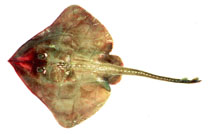 Bathyraja aleutica
Εικόνα από Orlov, A.
Φωτογραφίες | Google image
Εικόνα από Orlov, A.
Ταξινόμηση / Ονόματα Κοινά ονόματα | Συνώνυμα | Catalog of Fishes(Γένος, Είδη) | ITIS | CoL | WoRMS | Cloffa
Ελασμοβράγχιοι (καρχαρίες και σαλάχια) (sharks and rays) > Rajiformes (Skates and rays) > Arhynchobatidae (Softnose skates)
Etymology: Bathyraja: Greek, bathys = deep + Latin, raja, -ae = a ray (Raja sp) (Ref. 45335); aleutica: Named for its type locality, Aleutian Islands.
More on author: Gilbert.
Etymology: Bathyraja: Greek, bathys = deep + Latin, raja, -ae = a ray (Raja sp) (Ref. 45335); aleutica: Named for its type locality, Aleutian Islands.
More on author: Gilbert.
Περιβάλλον: περιβάλλον / κλιματική ζώνη / εύρος βάθους / εύρος διανομής Οικολογία
Θαλασσινό(ά) βαθύβιο(ς); εύρος βάθους 15 - 1602 m (Ref. 50550). Deep-water
Κατανομή Εδάφη | Περιοχές FAO | Οικοσυστήματα | Παρουσίες | Σημειακός χάρτης | Εισαγωγές | Faunafri
North Pacific: from the Bering Sea, south to Cape Mendocino, northern California, and far west to northern Japan.
Μήκος κατά την πρώτη ωρίμανση / Μέγεθος / Βάρος / Ηλικία
Γεννητική Ωρίμανση: Lm 122.0, range 112 - 132 cm
Max length : 161 cm TL αρσενικό/απροσδιόριστο; (Ref. 56527); 154.0 cm TL (female); μεγ. δημοσιευμένο βάρος: 23.1 kg (Ref. 56527)
Max length : 161 cm TL αρσενικό/απροσδιόριστο; (Ref. 56527); 154.0 cm TL (female); μεγ. δημοσιευμένο βάρος: 23.1 kg (Ref. 56527)
Σύντομη περιγραφή Κλείδες προσδιορισμού | Μορφολογία | Μορφομετρία
This large, rhomboidal skates (1,540 mm TL) have long head length 16.7-24.3% TL) and rounded pectoral apices; interdorsal space is large (1.3-3.1% TL); claspers short and stubby, with tip rounded and not bulbous, with weakly defined pseudosiphon, the dorsal lobe has a short pseudorhipidion, U-shaped cleft, while ventral lobe with a rounded projection; teeth in 34-42 rows on upper jaw, and 32-38 rows on lower jaw; pectoral radials 90; pelvic fins 22; total vertebrae 152; dorsal surface of body with fine prickles, becoming larger on the tail, also with thorns, with males having alar thorns, no malar thorns, middorsal thorns developed and high in number (4-11), nuchal thorns strong (3-5), scapular and tail thorns present, interdorsal thorns weak (1-2). Colouration: dorsal dark brown to grey, dark spots on pectorals, often with ocellus on either pectoral fin, while ventral white, with darker coloration on the snout, gills, disc margins, pelvics, and underside of the tail (Ref. 126515).
Cross section: flattened.
Cross section: flattened.
Found in deep waters, on outer continental shelf and upper slope, often over muddy sediments. Reported to feed mainly on benthic crustaceans, including shrimps and crabs, and secondarily on bony fishes (Ref. 126515). Oviparous. Distinct pairing with embrace. Young may tend to follow large objects, such as their mother (Ref. 205). Size at maturity for males 113 cm TL and 125 cm TL for females with males growing to at least 150 cm TL and females grow to about 154 cm TL; reported size at birth is 12-15 cm TL (Ref. 126515). Eggs are deposited in sandy or muddy flats (Ref. 205). Egg capsule measures 120-136 mm long and 73-90 mm wide (Ref. 41249, 41253); golden brown in color, and covered with coarse, striated, and anteriorly-directed prickles, giving it a velvety texture; the cases are with long, curved horns at each corner, with the anterior horns being short and these horns taper and become thin and filamentous at their ends (Ref. 126515).
Κύκλος ζωής και συμπεριφορά ζευγαρώματος Γεννητική Ωρίμανση | Αναπαραγωγή | Γεννοβολία | Αβγά | Γονιμότητα | Προνύμφες
Oviparous, paired eggs are laid. Embryos feed solely on yolk (Ref. 50449). Distinct pairing with embrace. Young may tend to follow large objects, such as their mother (Ref. 205).
Κύρια αναφορά
Ανεβάστε τις αναφορές σας | Αναφορές | Συντονιστής : McEachran, John | Συνεργάτες
Knuckey, J.D.S. and D.A. Ebert, 2022. A taxonomic revision of Northeast Pacific softnose skates (Rajiformes: Arhynchobatidae: Bathyraja Ishiyama). Zootaxa 5142(1):1-89. (Ref. 126515)
Κατάσταση Κόκκινου Καταλόγου IUCN (Ref. 130435: Version 2025-2 (Global))
Least Concern (LC) ; Date assessed: 19 September 2023
CITES
Not Evaluated
Απειλή για τον άνθρωπο
Harmless
Ανθρώπινες χρήσεις
αλιεία: bycatch
FAO - Publication: search | FishSource |
Περισσότερες πληροφορίες
Πληθυσμιακή δυναμική
Παράμετροι Αύξησης
Μέγιστες ηλικίες / μεγέθη
Μήκος-βάρος σχετ.
Μήκος-μήκος rel.
Μήκος-συχνότητες
Μετατροπή μάζας
Στρατολόγηση
Αφθονία
Παράμετροι Αύξησης
Μέγιστες ηλικίες / μεγέθη
Μήκος-βάρος σχετ.
Μήκος-μήκος rel.
Μήκος-συχνότητες
Μετατροπή μάζας
Στρατολόγηση
Αφθονία
Κύκλος ζωής
Αναπαραγωγή
Γεννητική Ωρίμανση
Ωριμότητα / Gills rel.
Γονιμότητα
Γεννοβολία
Συγκεντρώσεις αναπαραγωγής
Αβγά
Ανάπτυξη αυγών
Προνύμφες
Δυναμική προνυμφών
Αναπαραγωγή
Γεννητική Ωρίμανση
Ωριμότητα / Gills rel.
Γονιμότητα
Γεννοβολία
Συγκεντρώσεις αναπαραγωγής
Αβγά
Ανάπτυξη αυγών
Προνύμφες
Δυναμική προνυμφών
Ανατομία
Επιφάνεια βραγχίων
Εγκέφαλος
Ωτόλιθος
Επιφάνεια βραγχίων
Εγκέφαλος
Ωτόλιθος
Φυσιολογία
Σύνθεση σώματος
Θρεπτικά συστατικά
Κατανάλωση οξυγόνου
Τύπος κολύμβησης
Ταχύτητα κολύμβησης
Οπτικές χρωστικές ουσίες
Ήχος ψαριών
Ασθένειες & παράσιτα
Τοξικότητα (LC50)
Σύνθεση σώματος
Θρεπτικά συστατικά
Κατανάλωση οξυγόνου
Τύπος κολύμβησης
Ταχύτητα κολύμβησης
Οπτικές χρωστικές ουσίες
Ήχος ψαριών
Ασθένειες & παράσιτα
Τοξικότητα (LC50)
Γενετική
Γονιδίωμα
Γενετική
Ετεροζυγωτία
Κληρονομικότητα
Γενετική ποικιλομορφία
Γονιδίωμα
Γενετική
Ετεροζυγωτία
Κληρονομικότητα
Γενετική ποικιλομορφία
Ανθρώπινη σχέση
Συστήματα υδατοκαλλιέργειας
Προφίλ υδατοκαλλιεργειών
Στελέχοι
Περιπτώσεις Ciguatera
Γραμματόσημα, νομίσματα, διάφορα.
Συστήματα υδατοκαλλιέργειας
Προφίλ υδατοκαλλιεργειών
Στελέχοι
Περιπτώσεις Ciguatera
Γραμματόσημα, νομίσματα, διάφορα.
Εργαλεία
Ηλεκτρονικό βιβλίο | Οδηγός πεδίου | Ανάλυση κατά μήκος συνθέσεων | Εργαλείο ιστορίας ζωής | Σημειακός χάρτης |
Catch-MSY |
Ειδικές εκθέσεις
Έλεγχος για συντήρηση ενυδρείου | Ελέγξτε για ενημερωτικά δελτία ειδών | Ελέγξτε για ενημερωτικά δελτία υδατοκαλλιέργειας
Λήψη XML
Διαδικτυακές πηγές
AFORO (otoliths) | Aquatic Commons | BHL | Cloffa | Websites from users | Check FishWatcher | CISTI | Catalog of Fishes: Γένος, Είδη | DiscoverLife | ECOTOX | FAO - Publication: search | Faunafri | Fishipedia | Fishtrace | GloBI | Google Books | Google Scholar | Google | IGFA World Record | OceanAdapt | OneZoom | Open Tree of Life | Otolith Atlas of Taiwan Fishes | PubMed | Reef Life Survey | Socotra Atlas | TreeBase | Δέντρο Ζωής | Wikipedia: Go, αναζήτηση | World Records Freshwater Fishing | Zoological Record
Εκτιμήσεις βάσει μοντέλων
Προτιμώμενη θερμοκρασία (Αναφ. 123201): 1.3 - 5.1, mean 2.3 °C (based on 239 cells).
Δείκτης φυλογενετικής ποικιλότητας (Αναφ. 82804): PD50 = 0.5000 [Uniqueness, from 0.5 = low to 2.0 = high].
Bayesian length-weight: a=0.00309 (0.00211 - 0.00452), b=3.11 (3.00 - 3.22), in cm total length, based on LWR estimates for this species & Genus-body shape (Ref. 93245).
Τροφικό Επίπεδο (Αναφ. 69278): 4.1 ±0.76 se; based on food items.
Ελαστικότητα (Αναφ. 120179): Χαμηλό, ελάχιστος χρόνος για διπλασιασμό πληθυσμού 4,5 - 14 έτη (Fec assumed to be <100).