



Pteroplatytrygon violacea (Bonaparte, 1832)
Pelagic stingray
Προσθέστε την παρατήρησή σας στο Fish Watcher
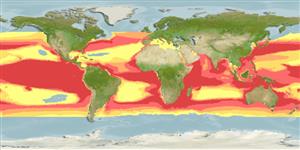
| Native range | All suitable habitat | Point map | Year 2050 |
|
| This map was computer-generated and has not yet been reviewed. |
| Pteroplatytrygon violacea AquaMaps Data sources: GBIF OBIS |
Ανεβάστε το φωτογραφίες και Βίντεο
Φωτογραφίες | Google image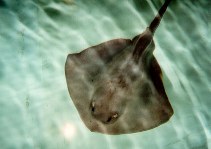 Pteroplatytrygon violacea
Male Εικόνα από Mollet, H.F.
Φωτογραφίες | Google image
Male Εικόνα από Mollet, H.F.
Ταξινόμηση / Ονόματα Κοινά ονόματα | Συνώνυμα | Catalog of Fishes(Γένος, Είδη) | ITIS | CoL | WoRMS | Cloffa
Ελασμοβράγχιοι (καρχαρίες και σαλάχια) (sharks and rays) > Myliobatiformes (Stingrays) > Dasyatidae (Stingrays) > Dasyatinae
Etymology: Pteroplatytrygon: Greek, pteron = wing, fin + Greek,platys = flat + Greek, trygon = a sting ray (Ref. 45335); violacea: From the Latin 'viola' meaning violet.
More on author: Bonaparte.
Etymology: Pteroplatytrygon: Greek, pteron = wing, fin + Greek,platys = flat + Greek, trygon = a sting ray (Ref. 45335); violacea: From the Latin 'viola' meaning violet.
More on author: Bonaparte.
Περιβάλλον: περιβάλλον / κλιματική ζώνη / εύρος βάθους / εύρος διανομής Οικολογία
Θαλασσινό(ά) pelagic-oceanic; εύρος βάθους 1 - 381 m (Ref. 58302), usually 1 - 100 m (Ref. 55209). Subtropical; 52°N - 50°S, 180°W - 180°E (Ref. 55209)
Κατανομή Εδάφη | Περιοχές FAO | Οικοσυστήματα | Παρουσίες | Σημειακός χάρτης | Εισαγωγές | Faunafri
Probably cosmopolitan in tropical and subtropical seas. Eastern Pacific: Reported from Vancouver (Ref. 11980), from California (USA), Baja California (Mexico) to Chile, and the Galapagos Is. (Ref. 9068). Western Atlantic (Ref. 7251). Eastern Atlantic: Southeastern coasts of the Mediterranean and off Sicily; Reported from Cape Verde (Ref. 34514). Indian Ocean.
Μήκος κατά την πρώτη ωρίμανση / Μέγεθος / Βάρος / Ηλικία
Γεννητική Ωρίμανση: Lm 45.0, range 40 - 50 cm
Max length : 96.0 cm WD αρσενικό/απροσδιόριστο; (Ref. 48844); common length : 80.0 cm WD αρσενικό/απροσδιόριστο; (Ref. 9254)
Max length : 96.0 cm WD αρσενικό/απροσδιόριστο; (Ref. 48844); common length : 80.0 cm WD αρσενικό/απροσδιόριστο; (Ref. 9254)
Σύντομη περιγραφή Κλείδες προσδιορισμού | Μορφολογία | Μορφομετρία
A thick, dark stingray with a broadly rounded snout and an angular pectoral disc; tail less than twice body length with a long lower caudal finfold ending far in front of tail tip, but with no upper finfold; disc without thorns; usually 1 extremely long sting on tail; eyes do not protrude (Ref. 5578). Uniformly violet, purple, or dark blue-green dorsally and ventrally (Ref. 3263). No prominent markings (Ref. 3263).
Body shape (shape guide): other.
Body shape (shape guide): other.
Found in open, tropical and warm temperate waters usually in the first 100 m. Possibly the only totally pelagic member of the family (Ref. 6871). Feeds on coelenterates (including medusae), squid, decapod crustaceans, and fish. Ovoviviparous (Ref. 50449). Venomous spine on tail. Common catch of the pelagic tuna (and shark) longline and gillnet fisheries (drift, Ref. 75025) operating throughout the region (Ref. 58048); also by purse-seine and bottom trawls (Ref. 75025). Utilized for its meat and sometimes cartilage (Ref.58048). Total length 110 TL (80 cm WD) (Ref. 9254).
Κύκλος ζωής και συμπεριφορά ζευγαρώματος Γεννητική Ωρίμανση | Αναπαραγωγή | Γεννοβολία | Αβγά | Γονιμότητα | Προνύμφες
Exhibit ovoviparity (aplacental viviparity), with embryos feeding initially on yolk, then receiving additional nourishment from the mother by indirect absorption of uterine fluid enriched with mucus, fat or protein through specialised structures (Ref. 50449). Distinct pairing with embrace (Ref. 205). With 2 (Ref.58048) to 9 young born at 15-25 cm WD (Ref. 26346); after a gestation period of 4 months (Ref.58048).
Κύρια αναφορά
Ανεβάστε τις αναφορές σας | Αναφορές | Συντονιστής : McEachran, John | Συνεργάτες
Compagno, L.J.V., 1999. Checklist of living elasmobranchs. p. 471-498. In W.C. Hamlett (ed.) Sharks, skates, and rays: the biology of elasmobranch fishes. Johns Hopkins University Press, Maryland. (Ref. 35766)
Κατάσταση Κόκκινου Καταλόγου IUCN (Ref. 130435: Version 2025-2 (Global))
Least Concern (LC) ; Date assessed: 09 November 2018
CITES
Not Evaluated
Απειλή για τον άνθρωπο
Venomous (Ref. 9254)
Ανθρώπινες χρήσεις
αλιεία: Εμπορικό(ά); αλιεία αναψυχής: ναί
FAO - Publication: search | FishSource |
Περισσότερες πληροφορίες
Πληθυσμιακή δυναμική
Παράμετροι Αύξησης
Μέγιστες ηλικίες / μεγέθη
Μήκος-βάρος σχετ.
Μήκος-μήκος rel.
Μήκος-συχνότητες
Μετατροπή μάζας
Στρατολόγηση
Αφθονία
Παράμετροι Αύξησης
Μέγιστες ηλικίες / μεγέθη
Μήκος-βάρος σχετ.
Μήκος-μήκος rel.
Μήκος-συχνότητες
Μετατροπή μάζας
Στρατολόγηση
Αφθονία
Κύκλος ζωής
Αναπαραγωγή
Γεννητική Ωρίμανση
Ωριμότητα / Gills rel.
Γονιμότητα
Γεννοβολία
Συγκεντρώσεις αναπαραγωγής
Αβγά
Ανάπτυξη αυγών
Προνύμφες
Δυναμική προνυμφών
Αναπαραγωγή
Γεννητική Ωρίμανση
Ωριμότητα / Gills rel.
Γονιμότητα
Γεννοβολία
Συγκεντρώσεις αναπαραγωγής
Αβγά
Ανάπτυξη αυγών
Προνύμφες
Δυναμική προνυμφών
Ανατομία
Επιφάνεια βραγχίων
Εγκέφαλος
Ωτόλιθος
Επιφάνεια βραγχίων
Εγκέφαλος
Ωτόλιθος
Φυσιολογία
Σύνθεση σώματος
Θρεπτικά συστατικά
Κατανάλωση οξυγόνου
Τύπος κολύμβησης
Ταχύτητα κολύμβησης
Οπτικές χρωστικές ουσίες
Ήχος ψαριών
Ασθένειες & παράσιτα
Τοξικότητα (LC50)
Σύνθεση σώματος
Θρεπτικά συστατικά
Κατανάλωση οξυγόνου
Τύπος κολύμβησης
Ταχύτητα κολύμβησης
Οπτικές χρωστικές ουσίες
Ήχος ψαριών
Ασθένειες & παράσιτα
Τοξικότητα (LC50)
Ανθρώπινη σχέση
Συστήματα υδατοκαλλιέργειας
Προφίλ υδατοκαλλιεργειών
Στελέχοι
Περιπτώσεις Ciguatera
Γραμματόσημα, νομίσματα, διάφορα.
Συστήματα υδατοκαλλιέργειας
Προφίλ υδατοκαλλιεργειών
Στελέχοι
Περιπτώσεις Ciguatera
Γραμματόσημα, νομίσματα, διάφορα.
Εργαλεία
Βιολογικό κουίζ | Ηλεκτρονικό βιβλίο | Οδηγός πεδίου | Κλείδες προσδιορισμού | Ανάλυση κατά μήκος συνθέσεων | Εργαλείο ιστορίας ζωής | Σημειακός χάρτης |
Catch-MSY |
Ειδικές εκθέσεις
Έλεγχος για συντήρηση ενυδρείου | Ελέγξτε για ενημερωτικά δελτία ειδών | Ελέγξτε για ενημερωτικά δελτία υδατοκαλλιέργειας
Λήψη XML
Διαδικτυακές πηγές
AFORO (otoliths) | Aquatic Commons | BHL | Cloffa | Websites from users | Check FishWatcher | CISTI | Catalog of Fishes: Γένος, Είδη | DiscoverLife | ECOTOX | FAO - Publication: search | Faunafri | Fishipedia | Fishtrace | GloBI | Google Books | Google Scholar | Google | IGFA World Record | Εθνικές βάσεις δεδομένων | OneZoom | Open Tree of Life | Otolith Atlas of Taiwan Fishes | Δημόσια ενυδρεία | PubMed | Reef Life Survey | Socotra Atlas | TreeBase | Δέντρο Ζωής | Wikipedia: Go, αναζήτηση | World Records Freshwater Fishing | Zoological Record
Εκτιμήσεις βάσει μοντέλων
Προτιμώμενη θερμοκρασία (Αναφ. 123201): 12 - 28.6, mean 24.8 °C (based on 5148 cells).
Δείκτης φυλογενετικής ποικιλότητας (Αναφ. 82804): PD50 = 1.0000 [Uniqueness, from 0.5 = low to 2.0 = high].
Bayesian length-weight: a=0.00447 (0.00189 - 0.01058), b=3.12 (2.92 - 3.32), in cm total length, based on LWR estimates for this (Sub)family-body shape (Ref. 93245).
Τροφικό Επίπεδο (Αναφ. 69278): 4.4 ±0.54 se; based on food items.
Ελαστικότητα (Αναφ. 120179): Πολύ χαμηλό, ελάχιστος χρόνος για διπλασιασμό πληθυσμού > 14 έτη (K=0.18 (captivity); Fec=1-9 (could probably have 2 litters per year)).
Θρεπτικά συστατικά (Ref. 124155): Calcium = 19.5 [4.9, 91.5] mg/100g; Iron = 0.96 [0.25, 2.71] mg/100g; Protein = 22.8 [19.9, 25.8] %; Omega3 = 0.354 [0.107, 1.041] g/100g; Selenium = 20.5 [5.9, 52.0] μg/100g; VitaminA = 15.6 [5.9, 43.5] μg/100g; Zinc = 0.475 [0.235, 0.879] mg/100g (wet weight);