This website uses cookies to enhance your browsing experience and ensure the functionality of our site. For more detailed information about the types of cookies we use and how we protect your privacy, please visit our Privacy Information page.
×
Cookie Settings
This website uses different types of cookies to enhance your experience. Please select your preferences below:
Central America: Pacific slope, in tributaries of Fonseca Gulf in Honduras and Nicaragua; Atlantic slope in Río Chirripó (Río Matina) of Costa Rica to the Río San Juan and associated drainages of Nicaragua, including the Great Lakes.
Tamanho / Peso / Idade
Maturidade: Lm? range ? - ? cm Max length : 12.1 cm SL macho/indeterminado; (Ref. 137577)
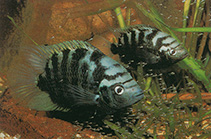
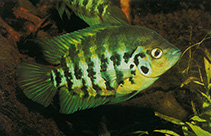
Espinhos dorsais (total) : 15 - 17; Raios dorsais moles (total) : 7 - 9; Espinhos anais: 9 - 11; Raios anais moles: 7 - 9. This species is distinguished by the following characters: 16- 19 total gill rakers on first arch, with rakers elongate and slender; 2 spots on opercle, vertically aligned; posterior end of maxilla not concave; circumpeduncular scales modally 18 or fewer; rows of secondary pored scales present on caudal fin; bars on side of body extending partially onto dorsal and anal fins, no medial intensification in bars on side of body, ocellus present on dorsal fin of mature females; in life abdomen predominantly yellow-green; caudal blotch ocellated (Ref. 74403).
Inhabits mainly shallow waters or swampy areas of lakes and rivers. Often found in many eutrophic oxbow lakes, ponds, roadside ditches and remnant pools of floodplains with thick vegetation. Prefers warm temperature and thrives in stagnant waters. An open water substrate spawner which lays eggs in extreme shallows. Fry feed on parents' dermal mucus for first few days (Ref. 7335). Feeds on detritus and insects (Ref. 36880).
Ciclo de vida e comportamento de acasalamento Maturidade | Reprodução | Desova | Ovos | Fecundidade | Larvas
Dinâmica das populações Parâmetros de crescimento Idades / tamanhos máximos Comprimento-peso rel. Comprimento-comprimento rel. Frequência de comprimento Conversão de massa Recrutamento Abundância
Ciclo de vida Reprodução Maturidade Maturidade/Rel. das guelras Fecundidade Desova Agregações de desova Ovos Desenvolvimento dos ovos Larvas Dinâmica larvar
Fisiologia Composição corporal Nutrientes Consumo de oxigénio Tipo de natação Velocidade de natação Pigmentos visuais Som de peixe Doenças e Parasitas Toxicidade (LC50s)
Índice de diversidade filogenética (Ref. 82804): PD50 = 1.0000 [Uniqueness, from 0.5 = low to 2.0 = high].
Bayesian length-weight: a=0.02188 (0.01025 - 0.04670), b=3.05 (2.87 - 3.23), in cm total length, based on LWR estimates for this (Sub)family-body shape (Ref. 93245).
Nível Trófico (Ref. 69278): 2.6 ±0.28 se; based on food items.
Resiliência (Ref. 120179): Médio, tempo mínimo de duplicação da população 1,4 - 4,4 anos (Assuming Fec<1000).
Vulnerabilidade da pesca (Ref. 59153): Low vulnerability (10 of 100). 🛈