



Hemibagrus wyckioides (Fang & Chaux, 1949)
Sube tu fotos y Vídeos
Imágenes | Google image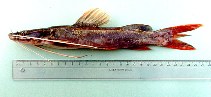 Hemibagrus wyckioides
Foto de Warren, T.
Imágenes | Google image
Foto de Warren, T.
Clasificación / Nombres Nombres comunes | Sinónimos | Catalog of Fishes(Género, Especie) | ITIS | CoL | WoRMS | Cloffa
> Siluriformes (Catfishes) > Bagridae (Bagrid catfishes)
Etymology: Hemibagrus: Greek, hemi = the half + Mozarabic, bagre, Greek, pagros = a fish, Dentex sp. (Ref. 45335).
Etymology: Hemibagrus: Greek, hemi = the half + Mozarabic, bagre, Greek, pagros = a fish, Dentex sp. (Ref. 45335).
Entorno: milieu / zona climática / rango de profundidad / gama de distribución Ecología
; agua dulce demersal; potamodromo (Ref. 51243). Subtropical
Distribución Territorios | Áreas FAO | Ecosistemas | Ocurrencias, apariciones | Mapa de puntos | Introducciones | Faunafri
Asia: Mekong basin (Ref. 27732). Reported from Chao Phraya, Maeklong and Peninsular Thailand river systems (Ref. 26336).
Tamaño / Peso / Edad
Madurez: Lm ? range ? - ? cm
Max length : 130 cm TL macho / no sexado; (Ref. 30857); common length : 50.0 cm SL macho / no sexado; (Ref. 12693); peso máximo publicado: 86.0 kg (Ref. )
Max length : 130 cm TL macho / no sexado; (Ref. 30857); common length : 50.0 cm SL macho / no sexado; (Ref. 12693); peso máximo publicado: 86.0 kg (Ref. )
Descripción breve Claves de identificación | Morfología | Morfometría
Espinas dorsales (total) : 1; Radios blandos dorsales (total) : 7 - 8; Radios blandos anales: 12 - 14; Vértebra: 52 - 53. Bright red caudal fin in specimens bigger than about 15 cm SL; whitish in smaller ones (Ref. 27732). Adipose fin long (length of adipose-fin base 18.7-25.7% SL), with a gently-sloping anterior margin; dorsal spine poorly ossified and short (7.5-11.4% SL) without serrations on posterior edge; length of dorsal-fin base 16.3-18.3% SL; maxillary barbels reaching to at least middle of adipose fin base (230.1-297.0% HL) (Ref. 38441). Head flat rather than conical; a short occipital process not close to basal bone of dorsal fin; no stripes on body (Ref. 12693).
Body shape (shape guide): elongated.
Body shape (shape guide): elongated.
Occurs in large upland rivers. Common in areas with rocky bottoms and irregular depths (Ref. 12693). Apparently does not migrate but reproduces locally and enters the flooded forest during high water in July-October (Ref. 38441). Feeds on insects, prawns, fish (Ref. 33813) and crabs (Ref. 38441). Marketed fresh (Ref. 12693). Maximum weight reported for an individual caught in Mae Klong River, Thailand, reached 86 kg (J-F. Helias, pers.comm., 07/2002; see photo Hewyc_u0.jpg).
Ciclo vital y comportamiento de apareamiento Madurez | Reproducción | Puesta | Huevos | Fecundidad | Larva
Referencia principal
Suba sus referencias | Referencias | Coordinador | Colaboradores
Ng, H.H. and W.J. Rainboth, 1999. The bagrid catfish genus Hemibagrus (Teleostei: Siluriformes) in central Indochina with a new species from the Mekong River. Raffles Bull. Zool. 47(2):555-576. (Ref. 38441)
Situación en la Lista Roja de la UICN (Ref. 130435: Version 2025-2 (Global))
Least Concern (LC) ; Date assessed: 19 January 2011
CITES
Not Evaluated
Amenaza para el ser humano
Harmless
Usos humanos
FAO - Publication: search | FishSource |
Más información
Ecología Trófica
Alimentos (presas)
Composición de la dieta
consumo de alimento
Raciones de comida
Despredadores
Alimentos (presas)
Composición de la dieta
consumo de alimento
Raciones de comida
Despredadores
Dinámica de la población
Coeficiente del crecimiento para
Edades / tallas máximas
Longitud-peso rel.
Longitud-longitud rel.
Longitud-frecuencias
Conversión de masas
Reclutamiento
Abundancia
Coeficiente del crecimiento para
Edades / tallas máximas
Longitud-peso rel.
Longitud-longitud rel.
Longitud-frecuencias
Conversión de masas
Reclutamiento
Abundancia
Ciclo de vida
Reproducción
Madurez
Madurez/Gills rel.
Fecundidad
Puesta
Agregaciones de desove
Huevos
Desarrollo de los huevos
Larva
Dinámica larvaria
Reproducción
Madurez
Madurez/Gills rel.
Fecundidad
Puesta
Agregaciones de desove
Huevos
Desarrollo de los huevos
Larva
Dinámica larvaria
Distribución
Territorios
Áreas FAO
Ecosistemas
Ocurrencias, apariciones
Introducciones
BRUVS - Vídeos
Territorios
Áreas FAO
Ecosistemas
Ocurrencias, apariciones
Introducciones
BRUVS - Vídeos
Anatomía
Superficie branquial
Cerebro
Otolito
Superficie branquial
Cerebro
Otolito
Fisiología
Composición corporal
Nutrientes
Consumo del oxígeno
Tipo de natación
Velocidad de natación
Pigmentos visuales
Sonido de peces
Enfermedades y parásitos
Toxicidad (CL50)
Composición corporal
Nutrientes
Consumo del oxígeno
Tipo de natación
Velocidad de natación
Pigmentos visuales
Sonido de peces
Enfermedades y parásitos
Toxicidad (CL50)
Genética
Genoma
Genética
Heterocigosidad
heritabilidad
Diversidad genética
Genoma
Genética
Heterocigosidad
heritabilidad
Diversidad genética
Relacionados con el ser humano
Sistemas de acuicultura
Perfiles de acuicultura
Razas
Ciguatera cases
Sellos, monedas, varios
Sistemas de acuicultura
Perfiles de acuicultura
Razas
Ciguatera cases
Sellos, monedas, varios
Herramientas
Libro electrónico | Guía de campo | Claves de identificación | Asistente para frecuencias de tallas | Herramienta de ciclo de vida | Mapa de puntos |
Catch-MSY |
Informes especiales
Comprobar el mantenimiento del acuario | Buscar fichas sobre especies | Consulte las hojas informativas sobre acuicultura
Descargar XML
Fuentes de Internet
AFORO (otoliths) | Aquatic Commons | BHL | Cloffa | Websites from users | Check FishWatcher | CISTI | Catalog of Fishes: Género, Especie | DiscoverLife | ECOTOX | FAO - Publication: search | Faunafri | Fishipedia | Fishtrace | GloBI | Google Books | Google Scholar | Google | IGFA World Record | OneZoom | Open Tree of Life | Otolith Atlas of Taiwan Fishes | PubMed | Reef Life Survey | Socotra Atlas | TreeBase | Árbol de la vida | Wikipedia: Go, búsqueda | World Records Freshwater Fishing | Expediente Zoológico
Estimaciones basadas en modelos
Índice de diversidad filogenética (Referencia 82804): PD50 = 0.5000 [Uniqueness, from 0.5 = low to 2.0 = high].
Bayesian length-weight: a=0.01148 (0.00653 - 0.02018), b=2.99 (2.84 - 3.14), in cm total length, based on LWR estimates for this species & (Sub)family-body (Ref. 93245).
Nivel trófico (Referencia 69278): 3.7 ±0.60 se; based on food items.
Resiliencia (Referencia 120179): Muy bajo, población duplicada en un tiempo mínimo superior a 14 años (Preliminary K or Fecundity.).
Nutrientes (Ref. 124155): Calcium = 16.8 [3.2, 67.2] mg/100g; Iron = 0.731 [0.261, 2.245] mg/100g; Protein = 17.7 [15.6, 19.7] %; Omega3 = 0.35 [0.13, 0.89] g/100g; Selenium = 52.7 [20.1, 125.3] μg/100g; VitaminA = 26.9 [4.8, 146.3] μg/100g; Zinc = 0.82 [0.55, 1.24] mg/100g (wet weight);