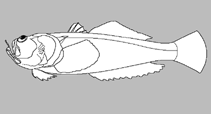
رده بندی / Names
اسامي عام | مترادف | Catalog of Fishes(جنس, گونه ها) | ITIS | CoL | WoRMS | Cloffa
Environment: milieu / climate zone / تغييرات عمق / distribution range
بوم شناسي
دريايي موجوداتی که در اعماق زیر 200 متر زندگی و تغذیه می کنند; تغييرات عمق 100 - 510 m (Ref. 13479). Deep-water
Western Pacific: Japan, Kyushu-Palau Ridge, and Norfolk Ridge (northern Tasman Sea).
Size / Weight / سن
بلوغ: Lm ? range ? - ? cm
Max length : 29.1 cm SL جنس نر / بدون خواص جنسي; (Ref. 13479)
توصيف مختصر
كليدهاي شناسايي | ريخت شناسي | ريخت ستجي بوسيله انداره گيري
خارهاي باله پشتي (کل) : 4 - 5; شعاع نرم باله پشتي (کل) : 13 - 14; خارهاي باله مخرجي: 0; شعاع نرم باله مخرجي: 13 - 14. Fresh specimens with brownish body, paler below. Upper half of body with many yellowish-white blotches, irregular and blurred in shape. Spinous dorsal fin uniformly jet-black except for the brownish first spine. Pectoral, second dorsal and anal fins reddish-brown. Caudal fin and posterior basal part of anal fin dark olive. Pelvic fin pale pink.
Life cycle and mating behavior
بلوغ | تولید مثل | تخم ریزی | تخم ها | Fecundity | توزاد ( لارو)
Okamura, O. and H. Kishimoto, 1993. Selenoscopus turbisquamatus, a new genus and species of urnoscopid fish from Japan and the Norfolk Ridge. Jap. J. Ichthyol. 39(4):311-317. (Ref. 13479)
وضعيت در فهرست قرمز IUCN (Ref. 130435: Version 2025-1)
خطر برای انسان ها
Harmless
استفاده انسانی
ابزارها
گزارش های ويژه
بارگيری XML
منابع اينترنتي
Estimates based on models
Preferred temperature (مرجع
123201): 1.8 - 20.2, mean 14.2 °C (based on 40 cells).
Phylogenetic diversity index (مرجع
82804): PD
50 = 0.5000 [Uniqueness, from 0.5 = low to 2.0 = high].
Bayesian length-weight: a=0.01000 (0.00244 - 0.04107), b=3.04 (2.81 - 3.27), in cm total length, based on all LWR estimates for this body shape (Ref.
93245).
Trophic level (مرجع
69278): 4.2 ±0.7 se; based on size and trophs of closest relatives
جهندگی (مرجع
120179): متوسط, كمينه زمان لازم براي دو برابر شدن جمعيت 4/1 – 4/4 سال (Preliminary K or Fecundity.).
Fishing Vulnerability (Ref.
59153): Low to moderate vulnerability (26 of 100).
🛈