



Labidesthes sicculus (Cope, 1865)
Brook silverside
Uploaden van uw Foto's en video's
Afbeeldingen | Google afbeelding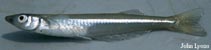 Labidesthes sicculus
Afbeelding van Lyons, J.
Afbeeldingen | Google afbeelding
Afbeelding van Lyons, J.
Classificatie / Namen Lokale namen | Synoniemen | Catalog of Fishes(Genus, Soort(en)) | ITIS | CoL | WoRMS | Cloffa
> Atheriniformes (Silversides) > Atherinopsidae (Neotropical silversides) > Menidiinae
Etymology: Labidesthes: Greek, labidos = pair of forceps + Greek esthio = to eat; in reference to the shape of the mouth (Ref. 45335); sicculus: Name most likely from Latin 'sicula' meaning small dagger (see Ref. 104856). Others consider the origin of the name from the Latin 'siccus' meaning dried, referring to being found in dried pools (Ref. 10294, 79012).
More on author: Cope.
Etymology: Labidesthes: Greek, labidos = pair of forceps + Greek esthio = to eat; in reference to the shape of the mouth (Ref. 45335); sicculus: Name most likely from Latin 'sicula' meaning small dagger (see Ref. 104856). Others consider the origin of the name from the Latin 'siccus' meaning dried, referring to being found in dried pools (Ref. 10294, 79012).
More on author: Cope.
Milieu: milieu / Klimaatzone / Diepte / verspreidingsgebied Ecologie
; zoet water pelagisch; standvastig (Ref. 126106). Subtropical; 5°C - 20°C (Ref. 13614); 46°N - 25°N
Verspreiding Gebieden | FAO regio's | Ecosystemen | Voorkomen | Verspreidingskaart | Introducties | Faunafri
North America: Gulf of Mexico drainages from the Pearl River west to Brazos River including sthe Mississippi River drainage, and the Great Lakes (but not Lake Superior) - St. Lawrence River drainages.
Lengte bij maturiteit / Grootte / Gewicht / Leeftijd
Maturiteit: Lm 7.0 range ? - ? cm
Max length : 13.0 cm TL mannelijk / geslacht onbekend; (Ref. 5723); common length : 8.4 cm TL mannelijk / geslacht onbekend; (Ref. 12193); max. gerapporteerde leeftijd: 2.00 Jaren (Ref. 12193)
Max length : 13.0 cm TL mannelijk / geslacht onbekend; (Ref. 5723); common length : 8.4 cm TL mannelijk / geslacht onbekend; (Ref. 12193); max. gerapporteerde leeftijd: 2.00 Jaren (Ref. 12193)
Korte beschrijving Determinatiesleutels | Morfologie | Morfometrie
Dorsale stekels (totaal) : 4 - 7; Dorsale zachte stralen (totaal) : 8 - 12; Anale stekels: 1; Anale zachte stralen: 19 - 27. This species is distinguished and differs from Labidesthes vanhyningi by the following characters: Labidesthes sicculus have the anterolateral processes of the posttemporals longer than width of the base (vs. L. vanhyningi having the processes shorter than width of base); with a midlateral stripe tapering to insertion of pectoral fin in advance of first dorsal fin (vs. maintaining width or usually expanding, to insertion of pectoral fin in advance of the first dorsal-fin); a ratio of thoracic length to abdominal length greater than 2 (vs. less than 2) (Ref. 104856).
Body shape (shape guide): elongated; Cross section: compressed.
Body shape (shape guide): elongated; Cross section: compressed.
Adults occur near surface of lakes, ponds, and quiet pools of creeks and small to large rivers. Usually found in open water (Ref 5723, 10294). They feed on zooplankton, including copepods, cladocerans, and midge larvae (Ref. 10294).
Levenscyclus en paargedrag Maturiteit | Voortplanting | Paaien | Eieren | Fecunditeit | Larven
Hoofdreferentie
Upload uw referenties | Referenties | Coördinator | Medewerkers
Werneke, D.C. and J.W. Armbruster, 2015. Silversides of the genus Labidesthes (Atheriniformes: Atherinopsidae). Zootaxa 4032(5):535-550. (Ref. 104856)
Status op de Rode Lijst van het IUCN (Ref. 130435: Version 2025-2 (Global))
Niet bedreigd (LC) ; Date assessed: 21 February 2012
CITES
Not Evaluated
Gevaar voor de mens
Harmless
Gebruik door de mens
Aas: usually
FAO - Publication: search | FishSource |
Meer informatie
Trofische ecologie
Voedsel (prooien)
Dieetsamenstelling
Voedselconsumptie
Voedselrantsoenen
Predatoren
Voedsel (prooien)
Dieetsamenstelling
Voedselconsumptie
Voedselrantsoenen
Predatoren
Populatiedynamica
Groeiparameters
Max. leeftijden / maten
Lengte-gewicht rel.
Lengte-lengte rel.
Lengtefrequenties
Massaconversie
Rekrutering
Abundantie
Groeiparameters
Max. leeftijden / maten
Lengte-gewicht rel.
Lengte-lengte rel.
Lengtefrequenties
Massaconversie
Rekrutering
Abundantie
Levenscyclus
Voortplanting
Maturiteit
Rijpheid/kieuwen rel.
Fecunditeit
Paaien
Paaibestanden
Eieren
Ontwikkeling van de eieren
Larven
Larvale populatiedynamiek
Voortplanting
Maturiteit
Rijpheid/kieuwen rel.
Fecunditeit
Paaien
Paaibestanden
Eieren
Ontwikkeling van de eieren
Larven
Larvale populatiedynamiek
Anatomie
Kieuwoppervlak
Hersenen
Otoliet
Kieuwoppervlak
Hersenen
Otoliet
Fysiologie
Lichaamssamenstelling
Voedingsstoffen
Zuurstofverbruik
Type zwemmen
Zwemsnelheid
Visuele pigmenten
Vis geluid
Ziekten en parasieten
Toxiciteit (LC50)
Lichaamssamenstelling
Voedingsstoffen
Zuurstofverbruik
Type zwemmen
Zwemsnelheid
Visuele pigmenten
Vis geluid
Ziekten en parasieten
Toxiciteit (LC50)
Menselijk gerelateerd
Aquacultuursystemen
Aquacultuurprofielen
Kweeklijnen
Ciguatera gevallen
Postzegels, munten, diversen.
Aquacultuursystemen
Aquacultuurprofielen
Kweeklijnen
Ciguatera gevallen
Postzegels, munten, diversen.
Tools
Speciale rapporten
Bekijk gegevens voor het houden in een aquarium | Bekijk Fact Sheets voor de soort | Bekijk Aquacultuur Fact Sheets
Download XML
Internetbronnen
AFORO (otoliths) | Exoten/Invasieve soorten database | Aquatic Commons | BHL | Cloffa | Websites from users | Bekijk FishWatcher | CISTI | Catalog of Fishes: Genus, Soort(en) | DiscoverLife | ECOTOX | FAO - Publication: search | Faunafri | Fishipedia | Fishtrace | GloBI | Google Books | Google Scholar | Google | IGFA World Record | OneZoom | Open Tree of Life | Otolith Atlas of Taiwan Fishes | PubMed | Reef Life Survey | Socotra Atlas | TreeBase | Tree of Life | Wikipedia: ga naar, zoek | World Records Freshwater Fishing | Zoological Record
Schattingen op basis van modellen
Fylogenetische diversiteitsindex (Ref. 82804): PD50 = 0.7500 [Uniqueness, from 0.5 = low to 2.0 = high].
Bayesian length-weight: a=0.00447 (0.00241 - 0.00829), b=3.03 (2.86 - 3.20), in cm total length, based on LWR estimates for this species & (Sub)family-body (Ref. 93245).
Trofisch niveau (Ref. 69278): 3.4 ±0.45 se; based on food items.
Weerstandsvermogen (Ref. 120179): Hoog, minimale populatieverdubbelingstijd minder dan 15 maanden (K=3.70; tmax=2).