>
Perciformes/Cottoidei (Sculpins) >
Cottidae (Sculpins)
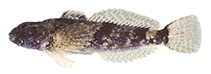
Etymology: Cottus: Greek, kottos = a fish (Ref. 45335); bairdii: Named after Spencer Fullerton Baird, first U.S. Fish Commissioner.
Eponymy: Spencer Fullerton Baird (1823–1887) was an American zoologist and giant of American ornithology. [...] (Ref. 128868), visit book page.
More on author: Girard.
Environment: milieu / climate zone / distribuzione batimetrica / distribution range
Ecologia
; acqua dolce demersale; distribuzione batimetrica ? - 16 m (Ref. 1998). Temperate; 59°N - 34°N
North America: widespread with highly disjunct distribution in Canada and USA. The former Blue Ridge race of the Atlantic slope of the Appalachian Mountains is now recognized as a distinct species Cottus caeruleomentum.
Size / Peso / Age
Maturità: Lm ? range ? - ? cm
Max length : 15.0 cm TL maschio/sesso non determinato; (Ref. 5723); common length : 8.4 cm TL maschio/sesso non determinato; (Ref. 12193); Età massima riportata: 2.00 anni (Ref. 12193)
Adults occur in rubble and gravel riffles, less often in sand-gravel runs of headwaters, creeks and small rivers. Also found in springs and their effluents and rocky shores of lakes (Ref. 1998, 10294). Feed mainly on aquatic insect larvae, but also on crustaceans, annelids, fishes, fish eggs, and plant material (Ref. 1998, 10294). Spawn in the spring (Ref. 1998). A male guards the cluster of eggs laid by different females (Ref. 1998). Neither anterolateral glandular groove nor venom gland is present (Ref. 57406).
Life cycle and mating behavior
Maturità | Riproduzione | Deposizione | Uova | Fecundity | Larve
Male selects a nesting site under a rock of ledge. Male entices a female to enter the nest. Female deposits eggs on the upper surface of the rock and leaves or is driven out of the nest. Eggs are deposited by different females. The male guards the eggs from predators and maintains a natural current flow (Ref. 1998). Also Ref. 53335.
Page, L.M. and B.M. Burr, 1991. A field guide to freshwater fishes of North America north of Mexico. Houghton Mifflin Company, Boston. 432 p. (Ref. 5723)
IUCN Red List Status (Ref. 130435: Version 2025-1)
Threat to humans
Harmless
Human uses
Pesca: di nessun interesse
Strumenti
Special reports
Download XML
Fonti Internet
Estimates based on models
Phylogenetic diversity index (Fonte Biblio.
82804): PD
50 = 0.5000 [Uniqueness, from 0.5 = low to 2.0 = high].
Bayesian length-weight: a=0.00708 (0.00414 - 0.01211), b=3.15 (3.00 - 3.30), in cm total length, based on LWR estimates for this species & (Sub)family-body (Ref.
93245).
Trophic level (Fonte Biblio.
69278): 3.3 ±0.46 se; based on food items.
Resilienza (Fonte Biblio.
120179): Alto, tempo minimo di raddoppiamento della popolazione meno di 15 mesi (tmax=2).
Fishing Vulnerability (Ref.
59153): Low vulnerability (10 of 100).
🛈