>
Eupercaria/misc (Various families in series Eupercaria) >
Sciaenidae (Drums or croakers)
Etymology: Plagioscion: Greek, plagios = oblique + Greek, skiaina, skion = barbel, red mullet (Ref. 45335).
More on author: Heckel.
Environment: milieu / climate zone / profondeur / distribution range
Écologie
; eau douce benthopélagique; potamodrome (Ref. 51243). Tropical; 22°C - 27°C (Ref. 12468)
South America: Amazon, Orinoco, Paraná, Paraguay, and São Francisco River basins and rivers fo Guianas.
Length at first maturity / Taille / Poids / Âge
Maturité: Lm 20.7 range ? - ? cm
Max length : 80.0 cm TL mâle / non sexé; (Ref. 36888); poids max. publié: 4.5 kg (Ref. 40637)
Description synthétique
Clés d'identification | Morphologie | Morphométrie
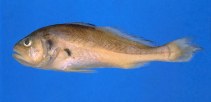
Épines dorsales (Total) : 11; Rayons mous dorsaux (Total) : 30 - 34; Épines anales: 2; Rayons mous anaux: 5 - 6. Vertebral column extends into caudal fin. Black spot near the base of the pectorals. Dorsal posterior margin of operculum slightly toothed.
Body shape (shape guide): fusiform / normal; Cross section: oval.
Occupies very diverse biotopes and carries out its biological cycle in freshwater as well as in brackish water (Ref. 27188). Juveniles feed on larvae of crustaceans (especially Macrobrachium), aquatic insects and copepods. Adults prey on fish. Captured during the rainy season (Ref. 35237).
Casatti, L., 2003. Sciaenidae (Drums or croakers). p. 599-602. In R.E. Reis, S.O. Kullander and C.J. Ferraris, Jr. (eds.) Checklist of the Freshwater Fishes of South and Central America. Porto Alegre: EDIPUCRS, Brasil. (Ref. 36888)
Statut dans la liste rouge de l'IUCN (Ref. 130435: Version 2025-1)
Menace pour l'homme
Harmless
Utilisations par l'homme
Pêcheries: commercial; Aquaculture: commercial; pêche sportive: oui; Aquarium: Commercial
Outils
Articles particuliers
Télécharger en XML
Sources Internet
Estimates based on models
Phylogenetic diversity index (Réf.
82804): PD
50 = 0.5078 [Uniqueness, from 0.5 = low to 2.0 = high].
Bayesian length-weight: a=0.00871 (0.00796 - 0.00953), b=3.08 (3.06 - 3.10), in cm total length, based on LWR estimates for this species (Ref.
93245).
Niveau trophique (Réf.
69278): 4.4 ±0.5 se; based on diet studies.
Résilience (Réf.
120179): Milieu, temps minimum de doublement de population : 1,4 à 4,4 années (K=0.11-0.22; tm=1-1.5).
Fishing Vulnerability (Ref.
59153): High vulnerability (62 of 100).
🛈
Nutrients (Ref.
124155): Calcium = 47.4 [22.8, 100.6] mg/100g; Iron = 0.868 [0.407, 1.560] mg/100g; Protein = 18.9 [17.6, 20.2] %; Omega3 = 0.344 [0.122, 0.954] g/100g; Selenium = 73.9 [29.6, 172.3] μg/100g; VitaminA = 85.8 [22.4, 311.3] μg/100g; Zinc = 1.18 [0.79, 1.79] mg/100g (wet weight);