



Pleuragramma antarcticum Boulenger, 1902
Antarctic silverfish
Carregue seu(sua) Fotos e vídeos
Fotos | Imagem do Google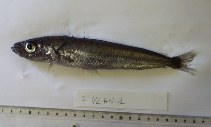 Pleuragramma antarcticum
Foto de Sala, A.
Fotos | Imagem do Google
Foto de Sala, A.
Classificação / Nomes Nomes comuns | Sinônimos | Catalog of Fishes(Gênero, Espécies) | ITIS | CoL | WoRMS | Cloffa
> Perciformes/Notothenioidei (Icefishes) > Nototheniidae (Cod icefishes) > Pleuragrammatinae
Etymology: Pleuragramma: Greek, pleura = side, ribe + Greek, gramma = letter, signal (Ref. 45335); antarcticum: Named after the region in which this is common (Ref. 11892).
More on author: Boulenger.
Etymology: Pleuragramma: Greek, pleura = side, ribe + Greek, gramma = letter, signal (Ref. 45335); antarcticum: Named after the region in which this is common (Ref. 11892).
More on author: Boulenger.
Meio ambiente: milieu / Zona climática / intervalo de profundidade / faixa de distribuição Ecologia
marinhas pelagic-oceanic; intervalo de profundidade 0 - 1000 m (Ref. 127764). Polar; ? - 2°C (Ref. 6390); 60°S - 78°S, 180°W - 180°E
Distribuição Territórios | Áreas da FAO | Ecossistemas | Ocorrências | Mapa de pontos | Introduções | Faunafri
Southern Ocean: Antarctic Peninsula, South Shetland, Elephant, South Orkney islands, Weddell, Bellingshausen, Ross and Davis seas, Oates, Adélie, Wilhelm and other coasts of East Antarctica to Prydz Bay.
Comprimento de primeira maturação / Tamanho / Peso / Idade
Maturidade: Lm ?, range 13 - ? cm
Max length : 26.6 cm TL macho/indeterminado; (Ref. 124149); common length : 15.0 cm TL macho/indeterminado; (Ref. 2121); peso máx. publicado: 200.00 g (Ref. 6390); idade máx. registrada: 20 anos (Ref. 5216)
Max length : 26.6 cm TL macho/indeterminado; (Ref. 124149); common length : 15.0 cm TL macho/indeterminado; (Ref. 2121); peso máx. publicado: 200.00 g (Ref. 6390); idade máx. registrada: 20 anos (Ref. 5216)
Descrição suscinta Chaves de identificação | Morfologia | Morfometria
Espinhos dorsais (total) : 6 - 8; Raios dorsais (total) : 35 - 38; Espinhos anais: 0; Raios anais : 36 - 39; Vértebras: 52 - 56. Pre-opercular-mandibular canal pores 9 (rarely 10), with 3 (rarely 4) on the mandible. Infraorbital canal with 4+2 pores; lateral line organs (neuromasts) present exposed region between the canal segments, the normal number probably being 4 (rarely 5), but some or all are often missing. Supraorbital canal with 3+1 pores (a second, more posterior pore rarely present in postero-dorsal section); between these 2 supraorbital canal segments is a trough divided by 3 low transverse ridges into 4 shallow depressions; on each ridge is a neuromasts organ. Temporal canal with 1+4 pores; between the 2 segment lies a single exposed neuromast. Supratemporal canal with 1+1 pores; no traces of neuromasts were found in the intervening regions.
Color: In life, pink with a silvery hue, the dorsal surface slightly darker. All fins pale, with clear hyaline membranes. The body becomes silvery with a darker dorsum only after death (Ref. 28937).
Body shape (shape guide): fusiform / normal; Cross section: oval.
Body shape (shape guide): fusiform / normal; Cross section: oval.
Regarded as the only truly pelagic fish in Antarctic waters (Ref. 6390). Larvae and postlarvae occur between 0 to 135 m; juveniles 50 to 400 and adults below 400 m (Ref. 5179). Postlarvae feed mainly on eggs and larvae of copepods; juveniles mainly on copepods, but take also eggs and larvae of euphausiids, polychaetes and chaetognaths (Ref. 5179). Larger items are ingested with increase in size (Ref. 5179). Larval pelagic phase is long (Ref. 28916).
Ciclo de vida ou comportamento de acasalamento Maturidade | Reprodução | Desova | Ovos | Fecundidade | Larvas
Mature females may spawn for the first time from around 7-9 years of age (Ref. 71843).
Referência principal
Carregar suas referências | Referências | Coordenador | Colaboradores
Dewitt, H.H., P.C. Heemstra and O. Gon, 1990. Nototheniidae. p. 279-331. In O. Gon and P.C. Heemstra (eds.) Fishes of the Southern Ocean. J.L.B. Smith Institute of Ichthyology, Grahamstown, South Africa. (Ref. 5179)
Status na Lista Vermelha da UICN (Ref. 130435: Version 2025-2 (Global))
Segura ou pouco preocupante (LC) ; Date assessed: 04 February 2009
CITES
Not Evaluated
Ameaça para os humanos
Harmless
Uso pelos humanos
Pescarias: pouco comercial
FAO - pescarias: desembarques; Publication: search | FishSource | Sea Around Us
Mais informação
Ecologia Trófica
Itens alimentares (presas)
Composição da dieta
Consumo alimentar
Rações alimentares
Predadores
Itens alimentares (presas)
Composição da dieta
Consumo alimentar
Rações alimentares
Predadores
Dinâmica populacional
Parâmetros de crescimento
Idade máxima / tamanhos
Relação comprimento-peso.
Relação comprimento-comprimento.
Frequências de comprimento
Conversão de massa
Recrutamento
Abundância
Parâmetros de crescimento
Idade máxima / tamanhos
Relação comprimento-peso.
Relação comprimento-comprimento.
Frequências de comprimento
Conversão de massa
Recrutamento
Abundância
Ciclo de vida
Reprodução
Maturidade
Maturidade/Rel. das guelras
Fecundidade
Desova
Agregações de desova
Ovos
Desenvolvimento dos ovos
Larvas
Dinâmica larval
Reprodução
Maturidade
Maturidade/Rel. das guelras
Fecundidade
Desova
Agregações de desova
Ovos
Desenvolvimento dos ovos
Larvas
Dinâmica larval
Anatomia
Área branquial
Cérebro
Otólito
Área branquial
Cérebro
Otólito
Fisiologia
Composição corporal
Nutrientes
Consumo de oxigênio
Tipo de natação
Velocidade de natação
Pigmentos visuais
Som de peixe
Doenças e Parasitas
Toxicidade (LC50s)
Composição corporal
Nutrientes
Consumo de oxigênio
Tipo de natação
Velocidade de natação
Pigmentos visuais
Som de peixe
Doenças e Parasitas
Toxicidade (LC50s)
Relacionado a humanos
Sistemas de aquicultura
Perfis para aquacultura
Estirpes
Casos de Ciguatera
Selos, moedas, diversos.
Sistemas de aquicultura
Perfis para aquacultura
Estirpes
Casos de Ciguatera
Selos, moedas, diversos.
Ferramentas
Livro eletrônico | Guia de campo | Chaves de identificação | Ferramenta auxiliar de frequências de comprimento | Ferramenta sobre a história de vida | Mapa de pontos |
Catch-MSY |
Relatórios especiais
Checar Manutenção em Aquário | Checar Planilhas de Fatos sobre as Espécies | Checar Planilhas de Fatos sobre Aquicultura
Baixar XML
Fontes da internet
AFORO (otoliths) | Aquatic Commons | BHL | Cloffa | Websites from users | Checar Observador de Peixes (FishWatcher) | CISTI | Catalog of Fishes: Gênero, Espécies | DiscoverLife | ECOTOX | FAO - pescarias: desembarques; Publication: search | Faunafri | Fishipedia | Fishtrace | GloBI | Google Books | Google Scholar | Google | IGFA World Record | OneZoom | Open Tree of Life | Otolith Atlas of Taiwan Fishes | PubMed | Reef Life Survey | Socotra Atlas | TreeBase | Árvore da vida | Wikipedia: Ir para, procura | World Records Freshwater Fishing | Zoobank | Registro zoológico
Estimativas baseadas em modelos
Temperatura preferida (Ref. 123201): -1.8 - 0.9, mean -1 °C (based on 540 cells).
Índice de diversidade filogenética (Ref. 82804): PD50 = 1.0000 [Uniqueness, from 0.5 = low to 2.0 = high].
Bayesian length-weight: a=0.00355 (0.00225 - 0.00560), b=3.22 (3.09 - 3.35), in cm total length, based on LWR estimates for this species & (Sub)family-body (Ref. 93245).
Nível Trófico (Ref. 69278): 3.2 ±0.3 se; based on diet studies.
Resiliência (Ref. 120179): Baixo, tempo mínimo de duplicação da população 4,5 - 14 anos (K=0.14; tm=3-4; tmax=20; Fec=4,000).
Nutrientes (Ref. 124155): Calcium = 31.8 [16.5, 72.3] mg/100g; Iron = 0.582 [0.268, 1.204] mg/100g; Protein = 16.1 [12.9, 19.0] %; Omega3 = 0.425 [0.227, 0.796] g/100g; Selenium = 11.9 [4.3, 26.7] μg/100g; VitaminA = 30.7 [6.6, 152.8] μg/100g; Zinc = 0.593 [0.386, 0.926] mg/100g (wet weight); based on nutrient studies.