



Hippoglossus stenolepis Schmidt, 1904
Pacific halibut
個人による観察記録の追加 Fish Watcher
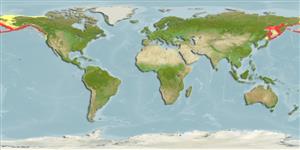
| Native range | All suitable habitat | Point map | Year 2050 |
|
| This map was computer-generated and has not yet been reviewed. |
| Hippoglossus stenolepis AquaMaps Data sources: GBIF OBIS |
アップロード 写真 そして ビデオ
画像 | ビデオ | 切手、コイン、その他 | グーグルの画像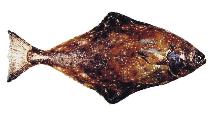 Hippoglossus stenolepis
画像によって Archipelago Marine Research Ltd.
画像 | ビデオ | 切手、コイン、その他 | グーグルの画像
画像によって Archipelago Marine Research Ltd.
分類 / 名前 共通名の | 類義語 | Catalog of Fishes(部類, 種) | ITIS | CoL | WoRMS | Cloffa
> Pleuronectiformes (Flatfishes) > Pleuronectidae (Righteye flounders) > Hippoglossinae
Etymology: Hippoglossus: Greek, ippos = horse + Greek, glossa = tongue (Ref. 45335); stenolepis: From the Greek hippos (horse), glossa (tounge), steno (narrow), lepis, (scale). In 1904, a Russian scientist by the name of P.J. Schmidt first proposed the scientific name based on anatomical differences such as scale shape, pectoral fin length, and body shape which he thought distinguished it from the Atlantic halibut (Hippoglossus hippoglossus). (Ref. 94075).
Etymology: Hippoglossus: Greek, ippos = horse + Greek, glossa = tongue (Ref. 45335); stenolepis: From the Greek hippos (horse), glossa (tounge), steno (narrow), lepis, (scale). In 1904, a Russian scientist by the name of P.J. Schmidt first proposed the scientific name based on anatomical differences such as scale shape, pectoral fin length, and body shape which he thought distinguished it from the Atlantic halibut (Hippoglossus hippoglossus). (Ref. 94075).
環境:環境 / 気候帯 / 深さの範囲 / 分布範囲 生態学
海 底生の; 海洋回遊性 (Ref. 138310); 深さの範囲 0 - 1200 m (Ref. 50550). Temperate; 73°N - 42°N, 138°E - 123°W (Ref. 54557)
分布 領土 | 国連食糧農業機関の区域 | エコシステム | 事件 | 目的のマップ | 導入 | Faunafri
North Pacific: Hokkaido, Japan and the Sea of Okhotsk to the southern Chukchi Sea and Point Camalu, Baja California, Mexico.
初回成熟時の長さ / サイズ / 重さ / 年齢
成熟: Lm ? range ? - ? cm
Max length : 258 cm TL オス/雌雄の選別がない; (Ref. 40637); 267.0 cm TL (female); 最大公表体重: 363.0 kg (Ref. ); 最大記録サイズ: 55 年 (Ref. 55701)
Max length : 258 cm TL オス/雌雄の選別がない; (Ref. 40637); 267.0 cm TL (female); 最大公表体重: 363.0 kg (Ref. ); 最大記録サイズ: 55 年 (Ref. 55701)
簡単な記述 検索表 | 形態学 | 形態計測学
背面の脊椎 (合計) : 0; 背鰭 (合計) : 90 - 106; 肛門の骨: 0; 臀鰭: 69 - 80; 脊つい: 49 - 51. Dorsal origin above anterior part of pupil in upper eye, generally low, higher in middle. Caudal spread and slightly lunate. Pectorals small.
Body shape (shape guide): fusiform / normal.
Body shape (shape guide): fusiform / normal.
Found on various types of bottoms (Ref. 2850). Young are found near shore, moving out to deeper waters as they grow older (Ref. 6885). Older individuals typically move from deeper water along the edge of the continental shelf where they spend the winter, to shallow coastal water (27-274 m) for the summer (Ref. 28499). Feed on fishes, crabs, clams, squids, and other invertebrates (Ref. 6885). Utilized fresh, dried or salted, smoked and frozen; eaten steamed, fried, broiled, boiled, microwaved and baked (Ref. 9988).
ライフサイクルと交尾行動 成熟 | 繁殖 | 放精 | 卵 | 生産力 | 幼生
主な参考文献
参考文献のアップロード | 参考文献 | コーディネーター : Amaoka, Kunio | 協力者
Vinnikov, K.A., R.C. Thomson and T.A. Munroe, 2018. Revised classification of the righteye flounders (Teleostei: Pleuronectidae) based on multilocus phylogeny with complete taxon sampling. Molecular phylogenetics and evolution, 125:147-162. (Ref. 122998)
CITES
Not Evaluated
人間に対する脅威
Harmless
人間の用途
水産業: 高い商業の; ゲームフィッシュ: はい; 水族館・水槽: 公共の水族館
FAO - 水産業: 着陸, 種の外形; Publication: search | FishSource | 私達の周りの海
より多くの情報
解剖学
カマ
脳
オトリス
カマ
脳
オトリス
遺伝子の
ゲノム
遺伝子の
ヘテロ接合性
遺伝
遺伝的多様性
ゲノム
遺伝子の
ヘテロ接合性
遺伝
遺伝的多様性
用具
オーガニック・クイズ | 電子書籍 | 野外観察図鑑 | 長さ-周波数ウィザード | 生活史の基盤ツール | 目的のマップ |
キャッチ-MSY |
特記事項
XMLをダウンロードして下さい
インターネットの情報源
AFORO (otoliths) | Aquatic Commons | BHL | Cloffa | Websites from users | Check FishWatcher | CISTI | Catalog of Fishes: 部類, 種 | DiscoverLife | ECOTOX | FAO - 水産業: 着陸, 種の外形; Publication: search | Faunafri | Fishipedia | Fishtrace | GloBI | Google Books | Google Scholar | Google | IGFA World Record | OceanAdapt | OneZoom | Open Tree of Life | Otolith Atlas of Taiwan Fishes | 公共の水族館 | PubMed | Reef Life Survey | Socotra Atlas | TreeBase | 生命の木 | Wikipedia: 行く, 検索する | World Records Freshwater Fishing | Zoobank | 動物に関する記録
モデルに基づく推定値
好ましい温度 (参照 123201): 0.3 - 5.7, mean 1.6 °C (based on 454 cells).
系統多様性指数 (参照 82804): PD50 = 0.7500 [Uniqueness, from 0.5 = low to 2.0 = high].
Bayesian length-weight: a=0.00631 (0.00396 - 0.01004), b=3.14 (3.00 - 3.28), in cm total length, based on LWR estimates for this species & (Sub)family-body (Ref. 93245).
栄養段階 (参照 69278): 4.1 ±0.2 se; based on diet studies.
回復力 (参照 120179): 非常に低い, 14年以上の倍増期間の最小個体群 (rm=0.2; K=0.05; tm=5-20; tmax=55).
Prior r = 0.11, 95% CL = 0.07 - 0.17, Based on 3 full stock assessments.
栄養素 (Ref. 124155): Calcium = 8.89 [2.92, 21.69] mg/100g; Iron = 0.202 [0.078, 0.561] mg/100g; Protein = 18 [16, 20] %; Omega3 = 0.391 [0.169, 0.895] g/100g; Selenium = 42.3 [14.7, 110.0] μg/100g; VitaminA = 10.8 [2.5, 41.8] μg/100g; Zinc = 0.412 [0.179, 0.699] mg/100g (wet weight);