



Thêm quan sát của bạn vào Fish Watcher
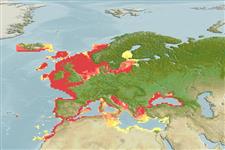
| Native range | All suitable habitat | Point map | Year 2050 |
|
| This map was computer-generated and has not yet been reviewed. |
| Alosa fallax AquaMaps Data sources: GBIF OBIS |
Tải lên của bạn hình ảnh Và Video
Các tranh (Ảnh) | Google image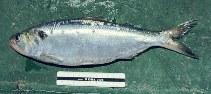 Alosa fallax
Hình ảnh của Stergiou, K.I.
Các tranh (Ảnh) | Google image
Hình ảnh của Stergiou, K.I.
Phân loại / Tên Tên thường gặp | Các synonym ( Các tên trùng) | Catalog of Fishes(Giống, Các loài) | ITIS | CoL | WoRMS | Cloffa
> Clupeiformes (Herrings) > Alosidae (Shads and Sardines)
Etymology: Alosa: Latin, alausa = a fish cited by Ausonius and Latin, halec = pickle, dealing with the Greek word hals = salt; it is also the old Saxon name for shad = "alli" ; 1591 (Ref. 45335).
More on author: Lacepède.
Etymology: Alosa: Latin, alausa = a fish cited by Ausonius and Latin, halec = pickle, dealing with the Greek word hals = salt; it is also the old Saxon name for shad = "alli" ; 1591 (Ref. 45335).
More on author: Lacepède.
Taxonomic Remarks
5 subspecies known.
Môi trường: môi trường / vùng khí hậu / Mức độ sâu / phạm vi phân phối Sinh thái học
biển; nước ngọt; thuộc về nước lợ pelagic-neritic; di cư biển sông (để đẻ trứng) (Ref. 138126); mức độ sâu 10 - 400 m (Ref. 2945). Temperate; 66°N - 27°N, 25°W - 42°E
Sự phân bố Lãnh thổ | Các khu vực của FAO | Các hệ sinh thái | Những lần xuất hiện | Bản đồ điểm | Những chỉ dẫn | Faunafri
Northeast Atlantic: Atlantic coasts from southern and western Iceland to northern Morocco (Ref. 188, 6683), including North Sea (Ref. 6683), Baltic Sea (Ref. 188, 6683); also Mediterranean Sea (Ref. 188, 3397, 6683) and Black Sea (Ref. 188, 3397, 26334). Several subspecies have been recognized based on the number of gill rakers and geographical location (Ref. 10541); some have since been given species-status (Ref. 59043).
Chiều dài lúc trưởng thành đầu tiên / Bộ gần gũi / Khối lượng (Trọng lượng) / Tuổi
Chín muồi sinh dục: Lm 32.5 range ? - ? cm
Max length : 60.0 cm SL con đực/không giới tính; (Ref. 35388); common length : 40.0 cm SL con đực/không giới tính; (Ref. 2945); Khối lượng cực đại được công bố: 1.5 kg (Ref. 188); Tuổi cực đại được báo cáo: 25 các năm (Ref. 556)
Max length : 60.0 cm SL con đực/không giới tính; (Ref. 35388); common length : 40.0 cm SL con đực/không giới tính; (Ref. 2945); Khối lượng cực đại được công bố: 1.5 kg (Ref. 188); Tuổi cực đại được báo cáo: 25 các năm (Ref. 556)
Mô tả ngắn gọn Khóa để định loại | Hình thái học | Sinh trắc học
Các tia vây lưng cứng (tổng cộng) : 0; Các vây lưng mềm (tổng cộng) : 16 - 22; Tia cứng vây hậu môn: 0; Tia mềm vây hậu môn: 19 - 26; Động vật có xương sống: 49 - 59. Diagnosis: Body somewhat compressed, moderately deep with depth at pectoral fin less than head length, scutes apparent along belly (Ref. 188). Upper jaw notched, lower jaw fitting into it; no teeth on palatine and vomer; gillrakers fairly short and stout, total 30 to 80, shorter than gill filaments (Ref. 188, 59043). Usually a series of 4-8 black blotches behind gill opening, but sometimes a single blotch, the others faint or absent (Ref. 188, 40476, 59043). Alosa fallax resembles Alosa alosa, which has more and longer gillrakers and at most only 3 dark spots on flank (Ref. 188).
Body shape (shape guide): fusiform / normal; Cross section: compressed.
Body shape (shape guide): fusiform / normal; Cross section: compressed.
Amphihaline species (Ref. 51442), schooling and strongly migratory, but apparently not penetrating far up rivers (Ref. 188, 6683). Adults are usually found in open waters along the coast (Refs. 59043, 89486); juveniles are usually found along estuaries and near the shore (Ref. 59043), possibly making vertical diurnal movements synchronized with the tides; they remain in estuaries for over one year (Ref. 89630). Several landlocked (lake) non-migratory populations exist (Ref. 10541). Mostly anadromous, entering river mouths in March (Italy) or early June (northenr European rivers) to spawn in or above the tidal reaches; adults probably return to sea not long after spawning (Ref. 188, 6683). Eggs are demersal and widely scattered among sand or gravel on river bed (Ref. 118, 6683). Ichthyophagous, feeds on small fishes and crustaceans, the young taking the fry of herrings, sprats and gobies (Ref. 188, 51442). Females grow faster and are always larger than males of the same age (Ref. 10541). Very locally distributed due to pollution and impoundment of large rivers throughout Europe and most populations declined during the first decade of the 20th century, but seem to have stabilized at a low level since then (Ref. 59043). It has been suggested that members of the genus Alosa are hearing specialists with the American shad (Alosa sapidissima) having been found to detect and respond to sounds up to at least 180 kHz (Ref. 89631). This may aid in predator avoidance (e.g. cetaceans) (Ref. 89632). Hybridization between this species and the allis shad (Alosa alosa) has been reported from the Rhine (Ref. 89633) as well as rivers in France and Algeria (Ref. 10541). There is some evidence that indicates that shad hybrids may reproduce (Ref. 27567).
Vòng đời và hành vi giao phối Chín muồi sinh dục | Sự tái sinh sản | Đẻ trứng | Các trứng | Sự sinh sản | Ấu trùng
Adults in the sea begin to congregate near mouths of estuaries in April. Enter estuaries and ascend rivers in May and June when water temperature is between 10-14 °C (Refs. 188, 51442, 59043, 89636). Males begin such movements at 2-3 years, females at 3-4 years (Ref. 59043). Although movement upstream is usually limited to a few kilometres above the brackish zone (Refs. 59043, 89486), spawning has also been reported in non-tidal freshwater areas up to 400 km upstream (Ref. 89637). Gametogenesis occurs in the estuaries. Early arrivals in the rivers are mostly males, with the sex ratio becoming more equal with the later arrivals (Ref. 42360). Spawning movements occur with spring tides and peak when river discharge levels are high (Refs. 89636, 89638). However, when flows are too high, movements upstream become limited (Refs. 89636, 89639). Spawn when water temperature is anywhere between 12-22 °C (Ref. 10541). Move to riverine spawning grounds at night; spawn in large, very noisy schools near surface and leave these areas before daybreak (Ref. 10541).
Spawning sites consist of sand and gravel areas with flowing water (Ref. 10541). Spent adults return to the sea and may spawn for 3-4 seasons throughout their lifetime (Refs. 30578, 51442, 59043). Most individuals will have lost 22 % of their body weight after spawning (Ref. 89640). There is some evidence that most individuals return to their natal rivers to spawn (Refs. 10541, 59043). Eggs either drift with the current or sink to the bottom (Ref. 59043, 89641). Eggs hatch after 2-8 days, depending on water temperature (optimal 15-25 °C) (Refs. 35387, 41851). Larvae and juveniles move towards the estuaries and river mouths during their first summer and to the sea at the end of their second year (Ref. 59043). Males mature mainly between the ages of 2-5 years, females between 3-7 years (Ref. 188, 2163, 10541). Length at maturity is between 30-40 cm total length (Ref. 88187).
Tài liệu tham khảo chính
Tải lên tài liệu tham khảo của bạn | Các tài liệu tham khảo | Người điều phối | Người cộng tác
Whitehead, P.J.P., 1985. FAO Species Catalogue. Vol. 7. Clupeoid fishes of the world (suborder Clupeoidei). An annotated and illustrated catalogue of the herrings, sardines, pilchards, sprats, shads, anchovies and wolf-herrings. FAO Fish. Synop. 125(7/1):1-303. Rome: FAO. (Ref. 188)
Tình trạng Sách đỏ IUCN (Ref. 130435: Version 2025-2 (Global))
Least Concern (LC) ; Date assessed: 26 June 2022
CITES
Not Evaluated
Mối đe dọa đối với con người
Harmless
Sử dụng của con người
Các nghề cá: buôn bán nhỏ
FAO - Các nghề cá: hạ cánh; Publication: search | FishSource | Biển chung quanh ta
Thêm thông tin
Sinh thái dinh dưỡng
Thức ăn (con mồi)
Thành phần thức ăn
Thành phần thức ăn
Khẩu phần ăn
Các động vật ăn mồi
Thức ăn (con mồi)
Thành phần thức ăn
Thành phần thức ăn
Khẩu phần ăn
Các động vật ăn mồi
Biến động dân số
Các thông số tăng trưởng
Độ tuổi / kích thước tối đa
Chiều dài-trọng lượng tương đối
Chiều dài-chiều dài tương đối.
Chiều dài-tần số
Chuyển đổi khối lượng
Bổ xung
Sự phong phú
Các thông số tăng trưởng
Độ tuổi / kích thước tối đa
Chiều dài-trọng lượng tương đối
Chiều dài-chiều dài tương đối.
Chiều dài-tần số
Chuyển đổi khối lượng
Bổ xung
Sự phong phú
Vòng đời
Sự tái sinh sản
Chín muồi sinh dục
Độ trưởng thành/Mang liên quan
Sự sinh sản
Đẻ trứng
Tập hợp sinh sản
Các trứng
Sự phát triển của trứng
Ấu trùng
Sự biến động ấu trùng
Sự tái sinh sản
Chín muồi sinh dục
Độ trưởng thành/Mang liên quan
Sự sinh sản
Đẻ trứng
Tập hợp sinh sản
Các trứng
Sự phát triển của trứng
Ấu trùng
Sự biến động ấu trùng
Sự phân bố
Lãnh thổ
Các khu vực của FAO
Các hệ sinh thái
Những lần xuất hiện
Những chỉ dẫn
BRUVS - Video
Lãnh thổ
Các khu vực của FAO
Các hệ sinh thái
Những lần xuất hiện
Những chỉ dẫn
BRUVS - Video
Sinh lý học
Thành phần cơ thể
Chất dinh dưỡng
Thành phần ô-xy
Kiểu bơi
Tốc độ bơi
Sắc tố thị giác
Tiếng cá
Bệnh tật & Ký sinh trùng
Độc tính (LC50)
Thành phần cơ thể
Chất dinh dưỡng
Thành phần ô-xy
Kiểu bơi
Tốc độ bơi
Sắc tố thị giác
Tiếng cá
Bệnh tật & Ký sinh trùng
Độc tính (LC50)
Liên quan đến con người
Hệ thống nuôi trồng thủy sản
Các tổng quan nuôi trồng thủy sản
Các giống
Các trường hợp ngộ độc Ciguatera
Tem, tiền xu, v.v.
Hệ thống nuôi trồng thủy sản
Các tổng quan nuôi trồng thủy sản
Các giống
Các trường hợp ngộ độc Ciguatera
Tem, tiền xu, v.v.
Các công cụ
Sách điện tử | Hướng dẫn hiện trường | Khóa để định loại | Tần suất chiều dài Wizard | Công cụ của vòng đời | Bản đồ điểm |
Bắt-MSY |
Báo cáo đặc biệt
Kiểm tra bảo trì bể cá | Kiểm tra các tờ thông tin về loài | Kiểm tra các tờ thông tin về nuôi trồng thủy sản
Tải xuống XML
Các nguồn internet
AFORO (otoliths) | Aquatic Commons | BHL | Cloffa | Websites from users | Check FishWatcher | CISTI | Catalog of Fishes: Giống, Các loài | DiscoverLife | ECOTOX | FAO - Các nghề cá: hạ cánh; Publication: search | Faunafri | Fishipedia | Fishtrace | GloBI | Google Books | Google Scholar | Google | IGFA World Record | Các cơ sở dữ liệu quốc gia | OneZoom | Open Tree of Life | Otolith Atlas of Taiwan Fishes | Bể cá công cộng | PubMed | Reef Life Survey | Socotra Atlas | TreeBase | Cây Đời sống | Wikipedia: Go, tìm | World Records Freshwater Fishing | Tạp chí Zoological Record
Ước tính dựa trên mô hình
Nhiệt độ ưa thích (Tài liệu tham khảo 123201): 8.7 - 19.3, mean 10.8 °C (based on 522 cells).
Chỉ số đa dạng phát sinh loài (Tài liệu tham khảo 82804): PD50 = 0.5000 [Uniqueness, from 0.5 = low to 2.0 = high].
Bayesian length-weight: a=0.00550 (0.00463 - 0.00653), b=3.06 (3.02 - 3.10), in cm total length, based on LWR estimates for this species (Ref. 93245).
Mức dinh dưỡng (Tài liệu tham khảo 69278): 4.0 ±0.4 se; based on diet studies.
Generation time: 3.1 (2.2 - 4.8) years. Estimated as median ln(3)/K based on 14 growth studies.
Thích nghi nhanh (Tài liệu tham khảo 120179): Trung bình, thời gian nhân đôi của chủng quần tối thiểu là 1.4 - 4.4 năm (K=0.21-0.38; tm=2-7; tmax=25; Fec>10,000).
Chất dinh dưỡng (Ref. 124155): Calcium = 9.95 [4.94, 51.06] mg/100g; Iron = 0.495 [0.207, 1.198] mg/100g; Protein = 19.5 [17.1, 22.4] %; Omega3 = 1.53 [0.81, 2.92] g/100g; Selenium = 14.3 [7.1, 31.3] μg/100g; VitaminA = 14.2 [3.7, 52.6] μg/100g; Zinc = 0.288 [0.182, 0.505] mg/100g (wet weight); based on nutrient studies.