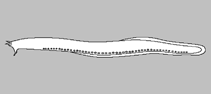
مارماهيان دهان گرد (hagfishes) >
Myxiniformes (Hagfishes) >
Myxinidae (Hagfishes) > Eptatretinae
Etymology: Eptatretus: hepta (Gr.), seven; tretos (Gr.), perforated (i.e., with holes), referring to seven gill apertures on what would later be described as Homea banksii (=E. cirrhatus) [range within genus is 6-14 pairs of gill apertures] (See ETYFish); wisneri: In honor of American ichthyologist Robert L. Wisner (1921-2005), Scripps Institution of Oceanography, for his contributions to hagfish biology (See ETYFish).
Eponymy: Robert ‘Bob’ Lester Wisner (1912–2005) was an American ichthyologist. [...] (Ref. 128868), visit book page.
Environment: milieu / climate zone / تغييرات عمق / distribution range
بوم شناسي
دريايي موجوداتی که در اعماق زیر 200 متر زندگی و تغذیه می کنند; غير مهاجر; تغييرات عمق 330 - 412 m (Ref. 51420). Deep-water
Northwest Pacific: southeast of Taiwan.
Size / Weight / سن
بلوغ: Lm ? range ? - ? cm
Max length : 33.5 cm TL جنس نر / بدون خواص جنسي; (Ref. 31276)
Brachial length 4.58% of total length; six pairs of gill pouches and gill apertures, gill apertures closely spaced in straight line; external opening of pharyngocutaneous duct (PCD) confluent with the most posterior left gill aperture (51 of 59 specimens examined), and much larger than other apertures; fused unicuspid teeth; eye spots present but not clear (Ref. 31545).
Body shape (shape guide): eel-like.
Life cycle and mating behavior
بلوغ | تولید مثل | تخم ریزی | تخم ها | Fecundity | توزاد ( لارو)
Copulatory organ absent. The gonads of hagfishes are situated in the peritoneal cavity. The ovary is found in the anterior portion of the gonad, and the testis is found in the posterior part. The animal becomes female if the cranial part of the gonad develops or male if the caudal part undergoes differentiation. If none develops, then the animal becomes sterile. If both anterior and posterior parts develop, then the animal becomes a functional hermaphrodite. However, hermaphroditism being characterised as functional needs to be validated by more reproduction studies (Ref. 51361 ).
Fernholm, B., 1998. Hagfish systematics. p. 33-44. In J.M. Jørgensen, J.P. Lomholt, R.E. Weber and H. Malte (eds.) The biology of hagfishes. Chapman & Hall, London. 578 p. (Ref. 31276)
وضعيت در فهرست قرمز IUCN (Ref. 130435: Version 2025-1)
خطر برای انسان ها
Harmless
استفاده انسانی
ماهي گيري – شيلات: از بی علاقه گی
ابزارها
گزارش های ويژه
بارگيری XML
منابع اينترنتي
Estimates based on models
Phylogenetic diversity index (مرجع
82804): PD
50 = 0.5000 [Uniqueness, from 0.5 = low to 2.0 = high].
Bayesian length-weight: a=0.00204 (0.00094 - 0.00444), b=2.93 (2.74 - 3.12), in cm total length, based on LWR estimates for this (Sub)family-body shape (Ref.
93245).
Trophic level (مرجع
69278): 4.0 ±0.7 se; based on size and trophs of closest relatives
جهندگی (مرجع
120179): پايين ، كم, كمينه زمان لازم براي دو برابر شدن جمعيت 5/4 – 14 سال (Fec assumed to be <100).
Fishing Vulnerability (Ref.
59153): Low vulnerability (24 of 100).
🛈