Environment: milieu / climate zone / ລະດັບຄວາມເລິກ / distribution range
ນິເວດວິທະຍາ
ສັດທະເລ; ນ້ຳກ່ອຍ ກ່ຽວກັນຫີນ; ບໍ່ມີການເຄື່ອນຍ້າຍ; ລະດັບຄວາມເລິກ 1 - 50 m (Ref. 90102). Tropical; 25°C - ?; 36°N - 36°S, 24°E - 77°W
Indo-West Pacific : Red Sea and East Africa (Ref. 4919) to north to southern Japan and the Hawaiian Islands, south to Lord Howe and Rapa islands. Eastern Pacific: Baja California and the Gulf of California to Panama (Ref. 9349, 11482).
ຂະໜາດ / ນ້ຳໜັກ / Age
ການຈະເລີນເຕັມໄວ: Lm ? range ? - ? cm
Max length : 50.0 cm TL ຕົວຜູ້/ບໍ່ມີເພດ; (Ref. 30874); ນ້ຳໜັກສູງສຸດທີ່ເຄຍຈັດພີມມາ: 2.0 kg (Ref. 40637)
ຄີ (ໜາມ)ແຂງຢູ່ຫຼັງປາ (ທັງໝົດ) : 0; ຄີຫຼັງຂອງປາ (ຄີອ່ອນ) (ທັງໝົດ) : 10 - 11; ຄີ(ໜາມ) ແຂງຢູ່ຄີກົ້ນປາ
ກຸ່ມປາກະດູກແຂງ
ຄວາມຖີ່ຂອງກຸ່ມຖ່າຍທອດພັນ
ປາທີ່ມີການເຄື່ອນຍ້າຍຈາກທະເລໄປຫານ້ຳຈືດ ແລະນ້ຳຈືດຫາທະເລ
ປາທີ່ມີການເຄື່ອນຍ້າຍຈາກທະເລແລະໄປໄຂ່ຢູ່ນ້ຳຈືດ
ຄີກົ້ນຂອງປາ
ສັດທີ່ມີກະດູກສັນຫັຼງ
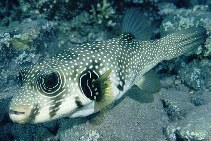
ການຖ່າຍທອດທາງກຳມະພັນຈາກພໍ່ແມ່ຫາລູກ: 0; ຄີກົ້ນຂອງປາ: 10 - 11. This species is characterized by the following: The body is generally greenish-brown in color, the back, sides and caudal fin profusely speckled with white spots, and the belly marked with white bars. A single bent lateral line. Body with small spines except around snout and caudal peduncle. Each nostril with two fleshy solid tentacles. Restricted gill opening.
Body shape (shape guide): short and / or deep; Cross section: circular.
Inhabit outer reef slopes to depths of at least 50 m, inner reef flats and lagoons. Juveniles common in weedy areas of estuaries (Ref. 4919). Also found in coastal bays and estuaries, usually near rocky reef or on sand-stretches between reefs with low algae-rubble reef to about 20 meters depth, or in shallow with sparse seagrass growth (Ref. 48637). Benthopelagic (Ref. 58302). Usually solitary and territorial on sandy to rubble areas. Feed on fleshy, calcareous, or coralline algae, detritus, mollusks, tunicates, sponges, corals, zoanthid anemones, crabs, tube worms and echinoderms (Ref. 1602).
Life cycle and mating behavior
ການຈະເລີນເຕັມໄວ | ການສືບພັນ | ການວາງໄຂ່ | ໄຂ່ | ຄວາມດົກຂອງໄຂ່ປາ | ຕົວອ່ອນ
Myers, R.F., 1991. Micronesian reef fishes. Second Ed. Coral Graphics, Barrigada, Guam. 298 p. (Ref. 1602)
IUCN Red List Status (Ref. 130435: Version 2025-1)
Threat to humans
Poisonous to eat (Ref. 4690)
Human uses
ການປະມົງ: ທີ່ເປັນການຄ້າໜ້ອຍ; ຊະນິດປາທີ່ຖືກນຳໃຊ້ເຂົ້າໃນການຫາເພື່ອເປັນເກມກິລາ: ແມ່ນ; ຕູ້ປາ: ເປັນສີນຄ້າ
ເຄື່ອງມື
Special reports
Download XML
ແຫຼ່ງອີນເຕີເນັດ
Estimates based on models
Preferred temperature (ເອກະສານອ້າງອີງ
123201): 23.7 - 29, mean 27.7 °C (based on 1504 cells).
Phylogenetic diversity index (ເອກະສານອ້າງອີງ
82804): PD
50 = 0.5000 [Uniqueness, from 0.5 = low to 2.0 = high].
Bayesian length-weight: a=0.03981 (0.02445 - 0.06482), b=2.82 (2.69 - 2.95), in cm total length, based on LWR estimates for this species & Genus-body shape (Ref.
93245).
ຊັ້ນເຂດຮ້ອນ (ເອກະສານອ້າງອີງ
69278): 3.2 ±0.0 se; based on diet studies.
ຄວາມຢືດຢຸ່ນ (ເອກະສານອ້າງອີງ
120179): ຂະໜາດກາງ, ປະຊາກອນຕຳ່ສຸດທີ່ໃຊ້ເວລາສອງເທົ່າ 1.4 - 4.4 ປີ (Preliminary K or Fecundity.).
Fishing Vulnerability (Ref.
59153): Moderate vulnerability (40 of 100).
🛈
Nutrients (Ref.
124155): Calcium = 33.9 [14.1, 86.4] mg/100g; Iron = 0.555 [0.297, 1.204] mg/100g; Protein = 18.6 [16.4, 20.7] %; Omega3 = 0.113 [0.059, 0.212] g/100g; Selenium = 37.1 [18.8, 80.3] μg/100g; VitaminA = 38.4 [10.4, 141.7] μg/100g; Zinc = 1.13 [0.76, 1.70] mg/100g (wet weight); based on
nutrient studies.