>
Ophidiiformes (Cusk eels) >
Bythitidae (Livebearing brotulas)
Etymology: Barathronus: Greek, barathron = abyss + ending -ites, that lives there; the Barathron was a deep pit in Athens where criminals were thrown; 1849 +Greek, onos = hake.
More on authors: Goode & Bean.
Environment: milieu / Klimaatzone / Diepte / distribution range
Ecologie
marien bathypelagisch; diepte 366 - 3270 m (Ref. 121928), usually 366 - 1640 m (Ref. 34024). Deep-water
Western Central Atlantic: Gulf of Mexico and the Caribbean Sea.
Grootte / Gewicht / Leeftijd
Maturiteit: Lm ? range ? - ? cm
Max length : 14.0 cm SL mannelijk / geslacht onbekend; (Ref. 121928)
Korte beschrijving
Determinatiesleutels | Morfologie | Morfometrie
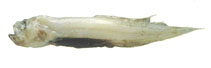
Dorsale zachte stralen (totaal) : 62 - 78; Anale zachte stralen: 46 - 59; Wervels: 68 - 75. Barathronus bicolor differs from the other five species of the genus with dark-pigmented peritoneum by the following combination of characters: D 62-78, A 46-59, pectoral-fin rays 22-27, anterior gill arch with 28-35 long rakers; vertebrae, precaudal 31-36, total 68-75; vomer with 1-5 fangs; paired bulbs at basis of penis not developed; no ventral flexure of anteriormost vertebrae; penis in ripe specimens long (up to 15% SL) and slender; fresh specimens light brownish with dark-blue peritoneum; otolith almost circular three times as long as thick and centrally placed sulcus 3-4 times in length of otolith (Ref. 121928).
Cross section: compressed.
Common species (Ref. 34024).
Levenscyclus en paargedrag
Maturiteit | Voortplanting | Paaien | Eieren | Fecunditeit | Larven
Nielsen, J.G., 2019. Revision of the circumglobal genus Barathronus (Ophidiiformes, Bythitidae) with a new species from the eastern North Atlantic Ocean. Zootaxa 4679(2):231-256. (Ref. 121928)
Status op de Rode Lijst van het IUCN (Ref. 130435: Version 2025-1)
Gevaar voor de mens
Harmless
Gebruik door de mens
Visserij: van geen belang
Tools
Speciale rapporten
Download XML
Internetbronnen
Estimates based on models
Preferred temperature (Ref.
123201): 4.8 - 10.4, mean 6.3 °C (based on 143 cells).
Fylogenetische diversiteitsindex (Ref.
82804): PD
50 = 0.5005 [Uniqueness, from 0.5 = low to 2.0 = high].
Bayesian length-weight: a=0.00447 (0.00172 - 0.01163), b=3.10 (2.87 - 3.33), in cm total length, based on LWR estimates for this (Sub)family-body shape (Ref.
93245).
Trofisch niveau (Ref.
69278): 3.4 ±0.5 se; based on size and trophs of closest relatives
Weerstandsvermogen (Ref.
120179): Hoog, minimale populatieverdubbelingstijd minder dan 15 maanden (Preliminary K or Fecundity.).
Fishing Vulnerability (Ref.
59153): Low vulnerability (10 of 100).
🛈