



Добавить Ваши наблюдения в Fish Watcher
| Native range | All suitable habitat | Point map | Year 2050 |

|
| This map was computer-generated and has not yet been reviewed. |
| Hypanus marianae AquaMaps Data sources: GBIF OBIS |
Загрузить свой Фото и Видео
изображения | Изображение на Google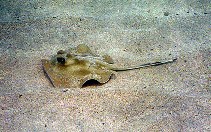 Hypanus marianae
Изображение сделано Sazima, I.
изображения | Изображение на Google
Изображение сделано Sazima, I.
Классификация / Имена народные названия | синонимы | Catalog of Fishes(род, виды) | ITIS | CoL | WoRMS | Cloffa
Пластиножаберные (акулы и скаты) (sharks and rays) > Myliobatiformes (Stingrays) > Dasyatidae (Stingrays) > Dasyatinae
Etymology: marianae: Named for Mariana R. Oliveria, daughter of Otto B.F. Gadig.
Eponymy: Mariana Ramos de Oliveira Gadig is the daughter of Otto Gadig, the third author. She works as a microbiologist at Prefeitura Municipal de Santos, Brazil. She is also a psychologist in private practice. [Sketch modified on the request of M. Ramos herself]. (Ref. 128868), visit book page.
Etymology: marianae: Named for Mariana R. Oliveria, daughter of Otto B.F. Gadig.
Eponymy: Mariana Ramos de Oliveira Gadig is the daughter of Otto Gadig, the third author. She works as a microbiologist at Prefeitura Municipal de Santos, Brazil. She is also a psychologist in private practice. [Sketch modified on the request of M. Ramos herself]. (Ref. 128868), visit book page.
Окружающая среда: среда / климатическая зона / пределы глубины / диапазон распространения экология
морской демерсальный; пределы глубины 2 - 15 m (Ref. 36974). Tropical; 0°S - 19°S, 38°W - 45°W (Ref. 36974)
распространение Территории | регионы FAO | Экосистемы | места находок | карта точек | интродукции | Faunafri
Southwest Atlantic: along the northeastern Brazilian coast, from the state of Maranhão to southern Bahia.
Размер / Вес / Возраст
Краткое описание определительные ключи | морфология | морфометрия
This medium-sized species of Dasyatis is distinguished by the following characters: horizontal diameter of eye nearly equal to interorbital width and spiracle length; its tail is relatively short, less than two times disk width, distally filiform, with dorsal and ventral finfolds, ending approximately on same vertical line; height of dorsal finfold 1.5-2 in height of ventral finfold; the dorsal surface of disc is yellowish brown, with dark blotch between spiracles and two pairs of dark scapular and precaudal blotches; margins of disc and pelvic fins are blue dorsally; the ventral surface of disc white, with two symmetrical pairs of dark markings in adults (Ref. 36974).
Body shape (shape guide): other; Cross section: flattened.
Body shape (shape guide): other; Cross section: flattened.
Apparently associated with coral or sandstone reefs of the northeastern Brazilian continental shelf. Two female specimens were collected from the stomach of Rachycentron canadum (Ref. 36974). Juveniles also occurred in sandy beaches and estuaries. Ovoviviparous (Ref. 50449).
Жизненный цикл и брачное поведение половая зрелость | размножение | нерест | икра | Плодовитость | личинки
Exhibit ovoviparity (aplacental viviparity), with embryos feeding initially on yolk, then receiving additional nourishment from the mother by indirect absorption of uterine fluid enriched with mucus, fat or protein through specialised structures (Ref. 50449). Distinct pairing with embrace (Ref. 205). A gravid female aborted one fully formed embryo (Ref. 36974).
Основная ссылка
Загрузите свои рекомендации | ссылки | координатор : McEachran, John | соавторы
Gomes, U.L., R.S. Rosa and O.B.F. Gadig, 2000. Dasyatis marianae sp. n.: a new species of stingray (Chondrichthyes: Dasyatidae) from the southwestern Atlantic. Copeia 2000(2):510-515. (Ref. 36974)
Статус Красного Списка МСОП (Ref. 130435: Version 2025-2 (Global))
Под угрозой исчезновения (EN) (A2cd); Date assessed: 01 July 2019
CITES
Not Evaluated
Угроза для людей
Harmless
Использование человеком
FAO - Publication: search | FishSource |
дополнительная информация
Трофическая экология
Пищевые предметы (добыча)
состав пищи
потребление пищи
Продовольственные пайки
хищники
Пищевые предметы (добыча)
состав пищи
потребление пищи
Продовольственные пайки
хищники
экология
экология
экология
Динамика численности населения
Параметры роста
Макс. возраст / размер
Отношение длины к весу.
Отношение длины к длине.
Размерный состав
Преобразование массы
пополнение
численность
Параметры роста
Макс. возраст / размер
Отношение длины к весу.
Отношение длины к длине.
Размерный состав
Преобразование массы
пополнение
численность
Жизненный цикл
размножение
половая зрелость
Зрелость/Жиры относительно.
Плодовитость
нерест
Нерестовые скопления
икра
Развитие икры
личинки
динамика численности личинок
размножение
половая зрелость
Зрелость/Жиры относительно.
Плодовитость
нерест
Нерестовые скопления
икра
Развитие икры
личинки
динамика численности личинок
Анатомия
жаберная область
Мозг
Отолит
жаберная область
Мозг
Отолит
Физиология
Состав тела
Питательные вещества
Потребление кислорода
Тип плавания
Скорость плавания
Зрительные пигменты
Звук рыбы
Болезни и паразиты
Токсичность (LC50s)
Состав тела
Питательные вещества
Потребление кислорода
Тип плавания
Скорость плавания
Зрительные пигменты
Звук рыбы
Болезни и паразиты
Токсичность (LC50s)
генетика
Геном
генетика
Гетерозиготность
наследуемость
Генетическое разнообразие
Геном
генетика
Гетерозиготность
наследуемость
Генетическое разнообразие
Связанные с человеком
Системы аквакультуры
особенности рыбоводства
степень растяжения
Случаи заболевания сигуатерой
Марки, монеты и прочее.
Системы аквакультуры
особенности рыбоводства
степень растяжения
Случаи заболевания сигуатерой
Марки, монеты и прочее.
инструменты
Специальные отчеты
Проверить содержание в аквариумах | Проверить опубликованные видовые данные | Проверить опубликованные данные по аквакультуре
Скачать в формате XML
ресурсы в Интернет
AFORO (otoliths) | Aquatic Commons | BHL | Cloffa | Websites from users | Проверить FishWatcher | CISTI | Catalog of Fishes: род, виды | DiscoverLife | ECOTOX | FAO - Publication: search | Faunafri | Fishipedia | Fishtrace | GloBI | Google Books | Google Scholar | Google | IGFA World Record | OneZoom | Open Tree of Life | Otolith Atlas of Taiwan Fishes | PubMed | Reef Life Survey | Socotra Atlas | TreeBase | Tree of Life | Wikipedia: Вперёд, поиск | World Records Freshwater Fishing | Зоологическая летопись
Оценки, основанные на моделях
|
Индекс филогенетического разнообразия (ссылка 82804) |
PD50 = 0.5005 [Uniqueness, from 0.5 = low to 2.0 = high]. |
| Bayesian length-weight | a=0.01023 (0.00623 - 0.01681), b=3.15 (3.01 - 3.29), in cm total length, based on LWR estimates for this species & (Sub)family-body (Ref. 93245). |
|
Трофический уровень (ссылка 69278) |
3.6 ±0.4 se; based on size and trophs of closest relatives |
|
устойчивость к внешним воздействиям (ссылка 120179) |
очень низкий, минимальное время удвоения популяции более 14 лет (Fec=2). |
|
Уязвимость рыбной ловли (Ref. 59153) |
Very high vulnerability (90 of 100). 🛈 |