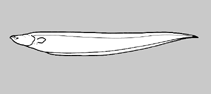
Classification / Names
आम नाम | उपशब्द | Catalog of Fishes(वर्ग, प्रजाति) | ITIS | CoL | WoRMS | Cloffa
>
Gymnotiformes (Knifefishes) >
Gymnotidae (Naked-back knifefishes) > Gymnotinae
Etymology: Gymnotus: Greek, gymnos = naked (Ref. 45335); diamantinensis: Named for the municipality of Diamantino (Mato Grosso State, Brazil).
Environment: milieu / climate zone / गहराई सीमा / distribution range
पारिस्थितिकी
; स्वच्छ जल, अलवण जल पिलाजिक. Tropical
South America: Tapajós River basin in Brazil.
आकार / वज़न / Age
परिपक्व अवधि: Lm ? range ? - ? cm
Max length : 12.5 cm TL पुल्लिंग / अलिंग; (Ref. 42925)
Short description
पहचान कुंजी | आकृति विज्ञान | मौरफोमैटरिक्स
ऐनल सौफट रेज़: 194 - 211. Branched anal-fin rays posterior to ray 18 or 19 with an additional bifurcation at posterior branch; small to moderate irregular or rounded dark blotches scattered over a brownish to gray background found on the anterior half of body, with alternate transverse dark and light bands mainly extending through posterior third of body length (Ref. 42925).
Facultative air-breathing in the genus (Ref. 126274)
Life cycle and mating behavior
परिपक्व अवधि | पुनरुत्पत्ति | मछलीऔ का अंडे देना | अंडे | Fecundity | लार्वा
Campos-da-Paz, R., 2002. Gymnotus diamantinensis, a new species of electric knifefish from upper rio Arinos basin, Brazil (Ostariophysi: Gymnotidae). Ichthyol. Explor. Freshwat. 13(2):185-192. (Ref. 42925)
IUCN Red List Status (Ref. 130435: Version 2025-1)
Threat to humans
Harmless
Human uses
साधन
Special reports
Download XML
इंटरनेट स्रोत
Estimates based on models
Phylogenetic diversity index (संदर्भ
82804): PD
50 = 0.5000 [Uniqueness, from 0.5 = low to 2.0 = high].
Bayesian length-weight: a=0.01000 (0.00244 - 0.04107), b=3.04 (2.81 - 3.27), in cm total length, based on all LWR estimates for this body shape (Ref.
93245).
Trophic level (संदर्भ
69278): 3.2 ±0.4 se; based on size and trophs of closest relatives
लौटाव (संदर्भ
120179): ऊंचा, न्यूनतम जनसंख्या दुगनी समय अवलागत 15 महीने। (Preliminary K or Fecundity.).
Fishing Vulnerability (Ref.
59153): Low vulnerability (10 of 100).
🛈