



Polypterus teugelsi Britz, 2004
アップロード 写真 そして ビデオ
画像 | グーグルの画像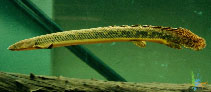 Polypterus teugelsi
画像によって van Uitert, K.
画像 | グーグルの画像
画像によって van Uitert, K.
分類 / 名前 共通名の | 類義語 | Catalog of Fishes(部類, 種) | ITIS | CoL | WoRMS | Cloffa
> Polypteriformes (Bichirs) > Polypteridae (Bichirs)
Etymology: Polypterus: Greek, poly = a lot of + Greek, pteron = wing, fin (Ref. 45335); teugelsi: Named after Guy Teugels, curator of fishes at the Royal Museum for Central Africa (MRAC), in honor of his myriad influential contributions to the systematics of African freshwater fishes (Ref. 51884).
Eponymy: Dr Guy G Teugels (1954–2003) was a Belgian ichthyologist. [...] (Ref. 128868), visit book page.
Etymology: Polypterus: Greek, poly = a lot of + Greek, pteron = wing, fin (Ref. 45335); teugelsi: Named after Guy Teugels, curator of fishes at the Royal Museum for Central Africa (MRAC), in honor of his myriad influential contributions to the systematics of African freshwater fishes (Ref. 51884).
Eponymy: Dr Guy G Teugels (1954–2003) was a Belgian ichthyologist. [...] (Ref. 128868), visit book page.
環境:環境 / 気候帯 / 深さの範囲 / 分布範囲 生態学
; 新鮮な水 底生の; pH range: 7.4 - 7.5; dH range: ? - 1. Tropical; 25°C - 27°C (Ref. 51884)
分布 領土 | 国連食糧農業機関の区域 | エコシステム | 事件 | 目的のマップ | 導入 | Faunafri
サイズ / 重さ / 年齢
簡単な記述 検索表 | 形態学 | 形態計測学
背面の脊椎 (合計) : 7 - 9; 脊つい: 63 - 65. Diagnosis: Polypterus teugelsi is distinguished from all congeners by its unique live colouration comprising a network of black marks on an olive background on the dorsal and dorsolateral surface of the body, black pectoral fins, and an orange belly (Ref. 51884). It is further distinguished from species of the Polypterus bichir group by having the dorsal spines not extending anteriorly to the vertical through the posterior margin of the pectoral fin vs. extending to that point, 28-33 predorsal scales vs. 11-16, 7-9 dorsal spines vs. 11-18, and 37-40 scales around the body vs. 42-52 (Ref. 51884). It differs from all remaining Polypterus species, except P. ornatipinnis, by having more scales in the lateral line, 63-65 vs. 51-61 (Ref. 51884). It is distinguished from P. ornatipinnis in having 7-9 dorsal spines vs. 9-11, 28-33 predorsal scales vs. 22-27, 37-40 scales around the body vs. 40-42, and a very different colour pattern (Ref. 51884). It is distinguished from the similar Polypterus retropinnis in having a longer predorsal portion of the body, the predorsal length 46,7-54,8% of standard length vs. 55,7-63,2% and distance between pectoral fin and dorsal fin 18,3-25,2% of standard length vs. 30,2-42,6%; more prepelvic scales, 48-51 vs. 44-46; fewer predorsal scales, 28-33 vs. 33-36; more pectoral-fin rays, 40-42 vs. 26-32; more vertebrae, 63-65 vs. 57-58; in the absence of the distinct black blotch on the pectoral fin base vs. presence; and in the clour pattern of the dorsal and dorsolateral portions of the body, irregular dark marks forming a network vs. large dorsal black blotches (Ref. 51884).
Body shape (shape guide): elongated.
Body shape (shape guide): elongated.
Facultative air-breathing in the genus (Ref. 126274); Most abundant in densely shaded rainforest streams (Ref. 51884).
ライフサイクルと交尾行動 成熟 | 繁殖 | 放精 | 卵 | 生産力 | 幼生
主な参考文献
参考文献のアップロード | 参考文献 | コーディネーター | 協力者
Britz, R., 2004. Polypterus teugelsi, a new species of bichir from the Upper Cross River system in Cameroon (Actinopterygii: Cladistia: Polypteridae). Ichthyol. Explor. Freshwat. 15(2):179-186. (Ref. 51884)
CITES
Not Evaluated
人間に対する脅威
Harmless
人間の用途
FAO - Publication: search | FishSource |
より多くの情報
ライフサイクル
繁殖
成熟
成熟度/エラ
生産力
放精
産卵群
卵
卵の開発
幼生
幼生の動力
繁殖
成熟
成熟度/エラ
生産力
放精
産卵群
卵
卵の開発
幼生
幼生の動力
解剖学
カマ
脳
オトリス
カマ
脳
オトリス
生理学
体組成
栄養素
酸素消費
水泳タイプ
泳ぐ速さ
視覚色素
フィッシュ・サウンド
病気と寄生虫
毒性(LC50)
体組成
栄養素
酸素消費
水泳タイプ
泳ぐ速さ
視覚色素
フィッシュ・サウンド
病気と寄生虫
毒性(LC50)
遺伝子の
ゲノム
遺伝子の
ヘテロ接合性
遺伝
遺伝的多様性
ゲノム
遺伝子の
ヘテロ接合性
遺伝
遺伝的多様性
用具
特記事項
XMLをダウンロードして下さい
インターネットの情報源
AFORO (otoliths) | Aquatic Commons | BHL | Cloffa | Websites from users | Check FishWatcher | CISTI | Catalog of Fishes: 部類, 種 | DiscoverLife | ECOTOX | FAO - Publication: search | Faunafri | Fishipedia | Fishtrace | GloBI | Google Books | Google Scholar | Google | IGFA World Record | OneZoom | Open Tree of Life | Otolith Atlas of Taiwan Fishes | PubMed | Reef Life Survey | Socotra Atlas | TreeBase | 生命の木 | Wikipedia: 行く, 検索する | World Records Freshwater Fishing | Zoobank | 動物に関する記録
モデルに基づく推定値
系統多様性指数 (参照 82804): PD50 = 0.5003 [Uniqueness, from 0.5 = low to 2.0 = high].
Bayesian length-weight: a=0.00457 (0.00194 - 0.01077), b=3.05 (2.85 - 3.25), in cm total length, based on LWR estimates for this (Sub)family-body shape (Ref. 93245).
栄養段階 (参照 69278): 3.3 ±0.5 se; based on size and trophs of closest relatives
回復力 (参照 120179): 高い, 15か月以下の倍増期間の最小個体群 (Preliminary K or Fecundity.).