



अपना अपलोड करें तस्वीरें और वीडियो
तस्वीरे | Google image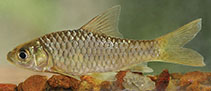 Puntius kamalika
चित्र स्रोत: AP Gunasekara, S.
तस्वीरे | Google image
चित्र स्रोत: AP Gunasekara, S.
वर्गीकरण / नाम आम नाम | उपशब्द | Catalog of Fishes(वर्ग, प्रजाति) | ITIS | CoL | WoRMS | Cloffa
> Cypriniformes (Carps) > Cyprinidae (Minnows or carps) > Smiliogastrinae
Etymology: Puntius: Lantin, punctum = point, the point of the sword (Ref. 45335); kamalika: Named for Kamalika Abeyaratne (22 June 1934-11 December 2004), formed as a noun in apposition. Puntius kamalika has previously been known in Sri Lanka by the vernacular names Ipilli kadeya and Mada ipilla (Deraniyagala 1930).
Eponymy: Dr Kamalika ‘Kami’ Abeyaratne (1934–2004) was a Sri Lankan pediatrician who became an AIDS activist (1997) after she contracted HIV through a contaminated blood transfusion, administered following a near-fatal traffic accident (1995). (Ref. 128868), visit book page.
Etymology: Puntius: Lantin, punctum = point, the point of the sword (Ref. 45335); kamalika: Named for Kamalika Abeyaratne (22 June 1934-11 December 2004), formed as a noun in apposition. Puntius kamalika has previously been known in Sri Lanka by the vernacular names Ipilli kadeya and Mada ipilla (Deraniyagala 1930).
Eponymy: Dr Kamalika ‘Kami’ Abeyaratne (1934–2004) was a Sri Lankan pediatrician who became an AIDS activist (1997) after she contracted HIV through a contaminated blood transfusion, administered following a near-fatal traffic accident (1995). (Ref. 128868), visit book page.
पर्यावरण: पर्यावरण / जलवायु क्षेत्र / गहराई सीमा / वितरण सीमा पारिस्थितिकी
; स्वच्छ जल, अलवण जल बेनथोपिलाजिक. Tropical; 7°N - 6°N
वितरण प्रदेशों | ऐफ ऐ ओ क्षेत्र | पारिस्थितिकी प्रणालियों | संयोग | बिन्दु नक्शा | भूमिका | Faunafri
Asia: Sri Lanka: widely distributed in the wet-zone lowlands of Sri Lanka (rainfall >2,500 mm yr-1), where it occurs in streams, rivers and marshes between the Kelani-River basin draining to the island’s west, and the Gin River basin to the south.
आकार / वज़न / आयु
संक्षिप्त वर्णन पहचान कुंजी | आकृति विज्ञान | मौरफोमैटरिक्स
Can be distinguished from all Sri Lankan and peninsular-Indian congeners by having ½4/1/2½ scales in transverse line between mid-dorsal scale row and pelvic-fin origin and lacking any prominent markings on fins and body in both living and preserved examples. Additionally, it is distinguished from the Sri Lankan and peninsular Indian species of Puntius that most closely resemble it as follows: from P. amphibius sensu stricto by having the head length 28.8-31.2% (vs. 26.4-28.3%) SL; eye diameter 7.7-10.2% (vs. 6.6-7.3%) SL; maxillary barbel 3.7-5.3% (vs. 3.1%) SL; and 16+14 vertebrae (vs. 17+14); from P. dorsalis by its smaller size (maximum standard length 72 mm, vs. 133 mm); and lacking any prominent markings on fins and body (vs. black blotches on base of dorsal and caudal fins); and from P. mahecola by its smaller maximum size (up to 73 mm SL, vs. 89 mm SL in P. mahecola), and by lacking a black blotch, larger than eye, across about 3½ scales of the caudal peduncle (Ref. 77057).
Body shape (shape guide): fusiform / normal.
Body shape (shape guide): fusiform / normal.
जीवन चक्र और संभोग व्यवहार परिपक्व अवधि | पुनरुत्पत्ति | मछलीऔ का अंडे देना | अंडे | उपजाऊपन | लार्वा
मुख्य संदर्भ
अपने संदर्भ अपलोड करें | संदर्भ | संयोजक | सहयोगीयो
Silva, A., K. Maduwage and R. Pethiyagoda, 2008. Puntius kamalika, a new species of barb from Sri Lanka (Teleostei: Cyprinidae). Zootaxa 1824:55-64. (Ref. 77057)
आईयूसीएन रेड लिस्ट स्थिति (Ref. 130435: Version 2025-2 (Global))
Endangered (EN) (B1ab(iii)+2ab(iii)); Date assessed: 29 July 2019
CITES
Not Evaluated
मनुष्यों के लिए ख़तरा
Harmless
मानव उपयोग
मात्स्यिकी: कोई रुचि बग़ैर
FAO - Publication: search | FishSource |
अधिक जानकारी
ट्रॉफिक पारिस्थितिकी
खाद्य पदार्थ (शिकार)
संघटक आहार
आहार खपत
खाद्यान्न राशन
परभक्षी
खाद्य पदार्थ (शिकार)
संघटक आहार
आहार खपत
खाद्यान्न राशन
परभक्षी
पारिस्थितिकी
पारिस्थितिकी
पारिस्थितिकी
जनसंख्या गतिशीलता
विकास मापदंड
अधिकतम आयु/आकार
लंबाई-वजन संबंध
लंबाई-लंबाई संबंध
लंबाई-आवृत्तियाँ
सामूहिक रूपांतरण
भर्ती
बहुतायत
विकास मापदंड
अधिकतम आयु/आकार
लंबाई-वजन संबंध
लंबाई-लंबाई संबंध
लंबाई-आवृत्तियाँ
सामूहिक रूपांतरण
भर्ती
बहुतायत
जीवन चक्र
पुनरुत्पत्ति
परिपक्व अवधि
परिपक्वता/गिल्स संबंध
उपजाऊपन
मछलीऔ का अंडे देना
स्पॉनिंग एकत्रीकरण
अंडे
अंडे का विकास
लार्वा
लारवल गतिकी
पुनरुत्पत्ति
परिपक्व अवधि
परिपक्वता/गिल्स संबंध
उपजाऊपन
मछलीऔ का अंडे देना
स्पॉनिंग एकत्रीकरण
अंडे
अंडे का विकास
लार्वा
लारवल गतिकी
शरीर रचना
गिल क्षेत्र
दिमाग
ओटोलिथ
गिल क्षेत्र
दिमाग
ओटोलिथ
फिजियोलॉजी
शारीरिक संरचना
पोषक तत्व
प्राणवायु की खपत
तैराकी का प्रकार
तैराकी की गति
दृश्य वर्णक
मछली की आवाज
रोग एवं परजीवी
विषाक्तता (LC50s)
शारीरिक संरचना
पोषक तत्व
प्राणवायु की खपत
तैराकी का प्रकार
तैराकी की गति
दृश्य वर्णक
मछली की आवाज
रोग एवं परजीवी
विषाक्तता (LC50s)
आनुवंशिकी
जीनोम
आनुवंशिकी
विषमयुग्मजी
हैरेटिबिलटी
आनुवंशिक विविधता
जीनोम
आनुवंशिकी
विषमयुग्मजी
हैरेटिबिलटी
आनुवंशिक विविधता
साधन
ई-पुस्तक | कार्यक्षेत्र पथप्रदर्शक | लंबाई आवृति इंद्रजालिक | जीवन-इतिहास उपकरण | बिन्दु नक्शा |
कैच-एमएसवाई |
विशेष रिपोर्ट
एक्वेरियम के रखरखाव की जांच करें | प्रजातियों के तथ्य पत्रक की जाँच करें | जलीय कृषि तथ्य पत्रक की जाँच करें
XML डाउनलोड करें
सारांश पृष्ठ | बिंदु डेटा | आम नाम | तस्वीरें
इंटरनेट स्रोत
AFORO (otoliths) | Aquatic Commons | BHL | Cloffa | Websites from users | Check FishWatcher | CISTI | Catalog of Fishes: वर्ग, प्रजाति | DiscoverLife | ECOTOX | FAO - Publication: search | Faunafri | Fishipedia | Fishtrace | GloBI | Google Books | Google Scholar | Google | IGFA World Record | OneZoom | Open Tree of Life | Otolith Atlas of Taiwan Fishes | PubMed | Reef Life Survey | Socotra Atlas | TreeBase | Tree of Life | Wikipedia: Go, खोज | World Records Freshwater Fishing | Zoobank | प्राणीशास्त्रीय अभिलेख
मॉडल पर आधारित अनुमान
जातिवृति विविधता सूचकांक (संदर्भ 82804): PD50 = 0.5000 [Uniqueness, from 0.5 = low to 2.0 = high].
Bayesian length-weight: a=0.01259 (0.00566 - 0.02798), b=3.02 (2.85 - 3.19), in cm total length, based on LWR estimates for this Genus-body shape (Ref. 93245).
ट्रॉफिक स्तर (संदर्भ 69278): 2.7 ±0.1 se; based on size and trophs of closest relatives
लौटाव (संदर्भ 120179): ऊंचा, न्यूनतम जनसंख्या दुगनी समय अवलागत 15 महीने। (Preliminary K or Fecundity.).