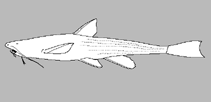
Classificação / Nomes
Nomes comuns | Sinônimos | Catalog of Fishes(Gênero, Espécies) | ITIS | CoL | WoRMS | Cloffa
>
Siluriformes (Catfishes) >
Aspredinidae (Banjo catfishes) > Pseudobunocephalinae
Etymology: Pseudobunocephalus: The generic name is a combination of the Greek word pseudes, meaning false or deceptive, plus the aspredinid genus Bunocephalus. It alludes to the fact that members of this genus have previously been mistaken for juveniles of other species; lundbergi: The generic name is a combination of the Greek word pseudes, meaning false or deceptive, plus the aspredinid genus Bunocephalus. It alludes to the fact that members of this genus have previously been mistaken for juveniles of other species.
Eponymy: Dr John Graham Lundberg (d: 1942) is an American ichthyologist. [...] (Ref. 128868), visit book page.
Environment: milieu / Zona climática / intervalo de profundidade / distribution range
Ecologia
; Água doce bentopelágico. Tropical; 7°N - 3°N, 65°W - 73°W
South America: Colombia and Venezuela. Currently
known from just a few localities in the lower río Caura (type locality), upper río Apure, and río Meta, but is likely more widely distributed within the río Orinoco basin of Colombia and Venezuela (Ref. 78999).
Tamanho / Peso / Idade
Maturidade: Lm ? range ? - ? cm
Max length : 2.9 cm SL macho/indeterminado; (Ref. 78999)
Descrição suscinta
Chaves de identificação | Morfologia | Morfometria
Pseudobunocephalus lundbergi can be distinguished from all congeners by having the following unique characters within the genus: dorsal surface of skull ornamented with numerous bony knobs of equal size; distinct anterior and posterior cranial fontanels separated by a bony epiphyseal bar formed between the frontals; infraorbital canal exits from the sphenotic and extendsanteriorly past eye, bearing up to four pores; premaxilla without a posterolateral limb; and fifth centra with posteriorly directed processes that articulate with skeletal elements of the dorsal fin (Ref. 78999).
Ciclo de vida ou comportamento de acasalamento
Maturidade | Reprodução | Desova | Ovos | Fecundidade | Larvas
Friel, J.P., 2008. Pseudobunocephalus, a new genus of banjo catfish with the description of a new species from the Orinoco River system of Colombia and Venezuela (Siluriformes: Aspredinidae). Neotrop. Ichthyol. 6(3):293-300. (Ref. 78999)
Status na Lista Vermelha da UICN (Ref. 130435: Version 2025-1)
Ameaça para os humanos
Harmless
Uso pelos humanos
Ferramentas
Relatórios especiais
Baixar XML
Fontes da internet
Estimates based on models
Índice de diversidade filogenética (Ref.
82804): PD
50 = 0.5078 [Uniqueness, from 0.5 = low to 2.0 = high].
Bayesian length-weight: a=0.01000 (0.00244 - 0.04107), b=3.04 (2.81 - 3.27), in cm total length, based on all LWR estimates for this body shape (Ref.
93245).
Nível Trófico (Ref.
69278): 3.1 ±0.3 se; based on size and trophs of closest relatives
Fishing Vulnerability (Ref.
59153): Low vulnerability (10 of 100).
🛈