>
Lophiiformes (Anglerfishes) >
Brachionichthyidae (Handfishes)
Etymology: Brachiopsilus: Name from Latin 'brachium' (arm) and Greek 'psilos' (bare or smooth), referring to the smooth surfaces of their body and arm-like pectoral fins; dianthus: Epithet based on the New Latin dianthus (carnation, pink) in allusion to its striking body
coloration (Ref. 82446).
More on authors: Last & Gledhill.
Environment: milieu / Klimaatzone / Diepte / distribution range
Ecologie
marien demersaal; diepte ? - 38 m (Ref. 82446). Temperate; 43°S - 44°S
Eastern Indian Ocean: Australia: Tasmania.
Grootte / Gewicht / Leeftijd
Maturiteit: Lm ? range ? - ? cm
Max length : 10.0 cm SL mannelijk / geslacht onbekend; (Ref. )
Korte beschrijving
Determinatiesleutels | Morfologie | Morfometrie
Dorsale stekels (totaal) : 19 - 21; Anale stekels: 9 - 10. Member of the genus Brachiopsilus with a combination of the following characters: esca of
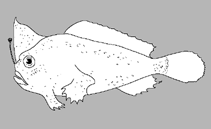
medium size, 29–38% of illicium length; illicium smooth, thin, not exceedingly fleshy, length 15–16% SL, 3–3.5 times in head length, 2.0–2.3 times in length of second dorsal-fin spine; with illicium adpressed, apex of esca situated above posterior half of eye; esca much wider than illicial stem, covered with dense, short, filaments; head slightly compressed; moderate-sized eye (horizontal diameter 6–7% SL); mouth narrow; lips fleshy with irregular folds; body and fins entirely naked in adults (except for scales associated with pores of the acoustico-lateralis system); 5 sensory pores above eye; long first dorsal-fin base (length 26–30% SL); second dorsal-fin rays 17–18, fin base 73–76% SL; length of second dorsal-fin spine 1.3–1.5 times length of longest ray of second dorsal fin; 9–10 anal-fin rays, length of anal-fin base 38–39% SL; 9–10 pectoral-fin rays; very short caudal peduncle (length 1–2% SL); caudal fin of medium size, its length much longer than fin rays of pectoral fin, length 3.2–4.0 times caudal peduncle depth; body pinkish red, darker reddish brown markings along dorsal fin margins remnant in preservative.
Body shape (shape guide): elongated; Cross section: compressed.
Attains at least 99.5 mm SL (ca. 136 mm TL); smallest specimen examined 68.5 mm SL (Ref. 82446).
Levenscyclus en paargedrag
Maturiteit | Voortplanting | Paaien | Eieren | Fecunditeit | Larven
Last, P. and D.C. Gledhill, 2009. A revision of the Australian handfishes (Lophiiformes: Brachionichthyidae), with descriptions of three new genera and nine new species. Zootaxa 2252:1-77. (Ref. 82446)
Status op de Rode Lijst van het IUCN (Ref. 130435: Version 2025-1)
Gevaar voor de mens
Harmless
Gebruik door de mens
Tools
Speciale rapporten
Download XML
Internetbronnen
Estimates based on models
Fylogenetische diversiteitsindex (Ref.
82804): PD
50 = 0.6251 [Uniqueness, from 0.5 = low to 2.0 = high].
Bayesian length-weight: a=0.00389 (0.00180 - 0.00842), b=3.12 (2.94 - 3.30), in cm total length, based on all LWR estimates for this body shape (Ref.
93245).
Trofisch niveau (Ref.
69278): 3.8 ±0.6 se; based on size and trophs of closest relatives
Fishing Vulnerability (Ref.
59153): Low vulnerability (10 of 100).
🛈