



Margariscus nachtriebi (Cox, 1896)
Northern pearl dace
Uploaden van uw Foto's en video's
Google afbeelding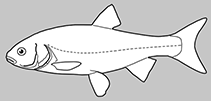 No image available for this species;
drawing shows typical species in Leuciscidae.
Google afbeelding
drawing shows typical species in Leuciscidae.
Classificatie / Namen Lokale namen | Synoniemen | Catalog of Fishes(Genus, Soort(en)) | ITIS | CoL | WoRMS | Cloffa
> Cypriniformes (Carps) > Leuciscidae (Minnows) > Plagopterinae
Etymology: Margariscus: Greek, margariskos = pearl (Ref. 45335).
Eponymy: Henry Francis Nachtrieb (1859–1942) was state zoologist of Minnesota, USA. [...] (Ref. 128868), visit book page.
Etymology: Margariscus: Greek, margariskos = pearl (Ref. 45335).
Eponymy: Henry Francis Nachtrieb (1859–1942) was state zoologist of Minnesota, USA. [...] (Ref. 128868), visit book page.
Milieu: milieu / Klimaatzone / Diepte / verspreidingsgebied Ecologie
; zoet water benthopelagisch. Temperate
Verspreiding Gebieden | FAO regio's | Ecosystemen | Voorkomen | Verspreidingskaart | Introducties | Faunafri
North America: Atlantic, Hudson Bay, Great Lakes, and Mississippi River basins in south Canada and north USA from Atlantic Coast to south Northwest Territories, east British Columbia, and Montana; south to New York, Wisconsin and Iowa. Isolated population in upper Missouri River basin in South Dakota, Nebraska and Wyoming.
Grootte / Gewicht / Leeftijd
Korte beschrijving Determinatiesleutels | Morfologie | Morfometrie
Dorsale zachte stralen (totaal) : 8; Anale zachte stralen: 8. <>Margariscus nachtriebi can be distinguished by the possession of the following characters: usually complete lateral line; 60-75 small lateral scales; short head; fairly deep caudal peduncle; flaplike barbel in groove above mouth (often missing on 1 or both side); almost cylindrical body; rounded snout; small, slightly subterminal mouth (seldom reaching front of eye); origin of dorsal fin behind origin of pelvic fin; 8 dorsal rays; 8 anal rays; and pharyngeal teeth 2,5-4,2. Body dark olive gray above, often with black herringbone lines, dark stripe along back; many small black and brown specks (absent in western populations) on silver side; white, yellow or red below; black stripe along side, black caudal spot on young; stripe vague on adult. Breeding male has bright orange-red lower side, pale yellow stripe along belly and many small tubercles on head (Ref. 86798).
Body shape (shape guide): elongated.
Body shape (shape guide): elongated.
Inhabits pools of creeks and small rivers, ponds and lakes. Usually found over sand or gravel (Ref. 86798).
Levenscyclus en paargedrag Maturiteit | Voortplanting | Paaien | Eieren | Fecunditeit | Larven
Hoofdreferentie
Upload uw referenties | Referenties | Coördinator | Medewerkers
Page, L.M. and B.M. Burr, 2011. A field guide to freshwater fishes of North America north of Mexico. Boston : Houghton Mifflin Harcourt, 663p. (Ref. 86798)
Status op de Rode Lijst van het IUCN (Ref. 130435: Version 2025-2 (Global))
Niet bedreigd (LC) ; Date assessed: 01 March 2012
CITES
Not Evaluated
Gevaar voor de mens
Harmless
Gebruik door de mens
FAO - Publication: search | FishSource |
Meer informatie
Trofische ecologie
Voedsel (prooien)
Dieetsamenstelling
Voedselconsumptie
Voedselrantsoenen
Predatoren
Voedsel (prooien)
Dieetsamenstelling
Voedselconsumptie
Voedselrantsoenen
Predatoren
Populatiedynamica
Groeiparameters
Max. leeftijden / maten
Lengte-gewicht rel.
Lengte-lengte rel.
Lengtefrequenties
Massaconversie
Rekrutering
Abundantie
Groeiparameters
Max. leeftijden / maten
Lengte-gewicht rel.
Lengte-lengte rel.
Lengtefrequenties
Massaconversie
Rekrutering
Abundantie
Levenscyclus
Voortplanting
Maturiteit
Rijpheid/kieuwen rel.
Fecunditeit
Paaien
Paaibestanden
Eieren
Ontwikkeling van de eieren
Larven
Larvale populatiedynamiek
Voortplanting
Maturiteit
Rijpheid/kieuwen rel.
Fecunditeit
Paaien
Paaibestanden
Eieren
Ontwikkeling van de eieren
Larven
Larvale populatiedynamiek
Anatomie
Kieuwoppervlak
Hersenen
Otoliet
Kieuwoppervlak
Hersenen
Otoliet
Fysiologie
Lichaamssamenstelling
Voedingsstoffen
Zuurstofverbruik
Type zwemmen
Zwemsnelheid
Visuele pigmenten
Vis geluid
Ziekten en parasieten
Toxiciteit (LC50)
Lichaamssamenstelling
Voedingsstoffen
Zuurstofverbruik
Type zwemmen
Zwemsnelheid
Visuele pigmenten
Vis geluid
Ziekten en parasieten
Toxiciteit (LC50)
Genetica
genoom
Genetica
Heterozygositeit
Erfelijkheid
Genetische diversiteit
genoom
Genetica
Heterozygositeit
Erfelijkheid
Genetische diversiteit
Menselijk gerelateerd
Aquacultuursystemen
Aquacultuurprofielen
Kweeklijnen
Ciguatera gevallen
Postzegels, munten, diversen.
Aquacultuursystemen
Aquacultuurprofielen
Kweeklijnen
Ciguatera gevallen
Postzegels, munten, diversen.
Tools
Speciale rapporten
Bekijk gegevens voor het houden in een aquarium | Bekijk Fact Sheets voor de soort | Bekijk Aquacultuur Fact Sheets
Download XML
Internetbronnen
AFORO (otoliths) | Aquatic Commons | BHL | Cloffa | Websites from users | Bekijk FishWatcher | CISTI | Catalog of Fishes: Genus, Soort(en) | DiscoverLife | ECOTOX | FAO - Publication: search | Faunafri | Fishipedia | Fishtrace | GloBI | Google Books | Google Scholar | Google | IGFA World Record | OneZoom | Open Tree of Life | Otolith Atlas of Taiwan Fishes | PubMed | Reef Life Survey | Socotra Atlas | TreeBase | Tree of Life | Wikipedia: ga naar, zoek | World Records Freshwater Fishing | Zoological Record
Schattingen op basis van modellen
Fylogenetische diversiteitsindex (Ref. 82804): PD50 = 0.7500 [Uniqueness, from 0.5 = low to 2.0 = high].
Bayesian length-weight: a=0.00617 (0.00251 - 0.01514), b=3.05 (2.83 - 3.27), in cm total length, based on LWR estimates for this (Sub)family-body shape (Ref. 93245).
Trofisch niveau (Ref. 69278): 3.3 ±0.5 se; based on size and trophs of closest relatives
Weerstandsvermogen (Ref. 120179): Gemiddeld, minimale populatieverdubbelingstijd 1,4-4,4 jaar (Preliminary K or Fecundity.).