



Diancistrus typhlops Nielsen, Schwarzhans & Hadiaty, 2009
アップロード 写真 そして ビデオ
画像 | グーグルの画像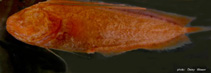 Diancistrus typhlops
画像によって Hadiaty, R.K.
画像 | グーグルの画像
画像によって Hadiaty, R.K.
分類 / 名前 共通名の | 類義語 | Catalog of Fishes(部類, 種) | ITIS | CoL | WoRMS | Cloffa
> Ophidiiformes (Cusk eels) > Dinematichthyidae (Viviparous brotula)
Etymology: Diancistrus: Greek, di = two + Greek, agkistron = hook (Ref. 45335); typhlops: Specific name means blind.
More on authors: Nielsen, Schwarzhans & Hadiaty.
Etymology: Diancistrus: Greek, di = two + Greek, agkistron = hook (Ref. 45335); typhlops: Specific name means blind.
More on authors: Nielsen, Schwarzhans & Hadiaty.
環境:環境 / 気候帯 / 深さの範囲 / 分布範囲 生態学
; 新鮮な水 底生の. Tropical
分布 領土 | 国連食糧農業機関の区域 | エコシステム | 事件 | 目的のマップ | 導入 | Faunafri
Asia: Indonesia. Muna Island, southeast of Sulawesi (Ref. 83398).
サイズ / 重さ / 年齢
簡単な記述 検索表 | 形態学 | 形態計測学
This species is distinct within the genus by being eyeless, with dorsal fin rays (78-81) and head length (30.5-32.5%). Further distinguished by the following, vertebrae 11-12 + 29-30; anal fin rays 63-65; long gill rakers 3-4; pseudobranchial filaments absent; scales on cheek in a narrow patch, none on the opercle; pointed outer pseudoclasper only slightly longer than inner pseudoclasper, the pseudoclaspers are connected anteriorly; color in life red (Ref. 83398).
Body shape (shape guide): elongated.
Body shape (shape guide): elongated.
This species is easily caught y hand nets for these kept close to the rocks often upside down. An interesting nocturnal migration was observed in Moko Morete as dozens of fish from the lightless parts of the cave appeared in the blue hole after dark. There was much more food available in the blue hole than in the oligotrophic cave habitat as the blue hole was exposed to daylight all day long. It was also risky to stay in the blue hole as many specimens were eaten by snakes. The salinity in the caves vary, 5-10 ppm in the surface layers and about 30 ppm in the bottom layers with a sharp halocline at 15-20 m depth. The absence of eyes indicates that the species has evolved under dark cave conditions. The presence of long, retrorse fangs also indicate that they can take relatively large prey. The only identifiable stomach content, judged from radiographs, is two 2 mm long gastropods. Two females have eggs up to 0.8 mm in diameter, but no embryos were found. The 6.2 cm SL female had about 250 eggs 0.6-0.8 mm in diameter. Four males have a well-developed intromittent organ and histological sections of the testes of one of these (MNHN 2009-0154) show numerous spermatophores in the testicular duct (Ref. 83398).
ライフサイクルと交尾行動 成熟 | 繁殖 | 放精 | 卵 | 生産力 | 幼生
主な参考文献
参考文献のアップロード | 参考文献 | コーディネーター | 協力者
Nielsen, J.G., W. Schwarzhans and R.K. Hadiaty, 2009. A blind, new species of Diancistrus (Teleostei, Bythitidae) from three caves on Muna Island, southeast of Sulawesi, Indonesia. Cybium 33(3):241-245. (Ref. 83398)
CITES
Not Evaluated
人間に対する脅威
Harmless
人間の用途
FAO - Publication: search | FishSource |
より多くの情報
養殖生態
食料品(獲物)
餌の構成
摂食量
食料配給
捕食動物
食料品(獲物)
餌の構成
摂食量
食料配給
捕食動物
生態学
生態学
生態学
人口動態
成長のパラメーター
最大年齢/サイズ
長さ-重量比。
長短関係。
体長組成
質量変換
補充
豊度
成長のパラメーター
最大年齢/サイズ
長さ-重量比。
長短関係。
体長組成
質量変換
補充
豊度
ライフサイクル
繁殖
成熟
成熟度/エラ
生産力
放精
産卵群
卵
卵の開発
幼生
幼生の動力
繁殖
成熟
成熟度/エラ
生産力
放精
産卵群
卵
卵の開発
幼生
幼生の動力
解剖学
カマ
脳
オトリス
カマ
脳
オトリス
生理学
体組成
栄養素
酸素消費
水泳タイプ
泳ぐ速さ
視覚色素
フィッシュ・サウンド
病気と寄生虫
毒性(LC50)
体組成
栄養素
酸素消費
水泳タイプ
泳ぐ速さ
視覚色素
フィッシュ・サウンド
病気と寄生虫
毒性(LC50)
遺伝子の
ゲノム
遺伝子の
ヘテロ接合性
遺伝
遺伝的多様性
ゲノム
遺伝子の
ヘテロ接合性
遺伝
遺伝的多様性
用具
特記事項
XMLをダウンロードして下さい
インターネットの情報源
AFORO (otoliths) | Aquatic Commons | BHL | Cloffa | Websites from users | Check FishWatcher | CISTI | Catalog of Fishes: 部類, 種 | DiscoverLife | ECOTOX | FAO - Publication: search | Faunafri | Fishipedia | Fishtrace | GloBI | Google Books | Google Scholar | Google | IGFA World Record | OneZoom | Open Tree of Life | Otolith Atlas of Taiwan Fishes | PubMed | Reef Life Survey | Socotra Atlas | TreeBase | 生命の木 | Wikipedia: 行く, 検索する | World Records Freshwater Fishing | Zoobank | 動物に関する記録
モデルに基づく推定値
系統多様性指数 (参照 82804): PD50 = 0.5000 [Uniqueness, from 0.5 = low to 2.0 = high].
Bayesian length-weight: a=0.00389 (0.00180 - 0.00842), b=3.12 (2.94 - 3.30), in cm total length, based on all LWR estimates for this body shape (Ref. 93245).
栄養段階 (参照 69278): 3.3 ±0.5 se; based on size and trophs of closest relatives