This website uses cookies to enhance your browsing experience and ensure the functionality of our site. For more detailed information about the types of cookies we use and how we protect your privacy, please visit our Privacy Information page.
×
Cookie Settings
This website uses different types of cookies to enhance your experience. Please select your preferences below:
ဆူးေတာင္ေပ်ာ့ပါရွိေသာ(ငါးမန္းနွင့္ငါးလိပ္ေက်ာက္မ်ားအုပ္စု) (sharks and rays) > Myliobatiformes (Stingrays) > Aetobatidae (Pacific eagle rays)
Etymology: Aetobatus:Greek, aetos = eagle + Greek, batis, batidos = a ray (Raja sp.) (Ref. 45335); narutobiei:Named for its common name in the Japanese waters ‘Naru tobi-ei’ (pronounced ‘Nar-oo-tobee-ay’), Naru’ referring to Naru Island and ‘Tobi-ei’ the Japanese name used for eagle rays which translates to black kite (a bird); noun in apposition. Eponymy: Though it looks as if it could be an eponym, the binomial combines ‘Naru’ (Naru Island, Japan) with ‘tobi-ei’ – the Japanese name for eagle rays. (Ref. 128868), visit book page.
Northwest Pacific: eastern Vietnam, Hong Kong, China, Korea and southern Japan.
အရြယ္အစား / အေလးခ်ိန္ / အသက္အရြယ္
မိ်ဳးပြားရန္အရြယ္ေရာက္ျပီ: Lm? range ? - 80 cm Max length : 100.0 cm WD အထီး/လိြင္ခြဲျခားျခင္းမျပဳနုိင္ေသာ; (Ref. 94821); 150.0 cm WD (female); အမ်ားဆံုး ပံုနွိပ္ထုတ္ေ၀ထားေသာ အေလးခ်ိန္: 14.4 kg (Ref. 94821); အမ်ားဆံုး ပံုနွိပ္ထုတ္ေ၀ထားေသာ အေလးခ်ိန္: 14.4 kg
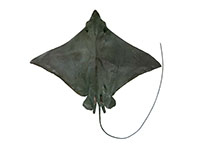
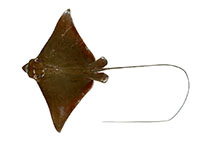
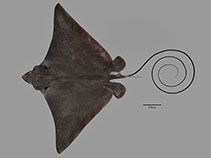
This medium to large-sized Aetobatus (reaching 150 cm DW) possess the following diagnostic characters: uniformly greenish grey to brownish dorsal surfaces, without pale spots or ocelli; long head, ventral length 27.4-31.9% DW; long to very long rostral lobe (longest in adult males) and narrow, tapering evenly to tip; single row of teeth plates, those in lower jaw chevron-shaped; width of lower tooth plate about 2.4 times its width and in about 18 series; 100-104 pectoral-fin radials (excluding propterygial radials anterior of eyes); 88-90 total vertebral centra (including synarcual); pelvic-fin radials 1 (with 2-5 fused elements) +17-18; males mature by about 80 cm DW; born at 33.4-35.2 cm DW (Ref. 94821). Body shape (shape guide): other (see remarks); Cross section: flattened.
Found in shallow waters at water temperature above 15-17°C; in winter months, the species leave the shallower bays for nearby sea where water temperature is above 15°C brought by the Kuroshio current-derived warm waters (Ref. 94821).
White, W.T., K. Furumitsu and A. Yamaguchi, 2013. A new species of Eagle ray Aetobatus narutobiei from the Northwest Pacific: an example of the critical role taxonomy plays in fisheries and ecological sciences. Plos One 8(12)e83785:1-12. (Ref. 94821)
စိုးရိမ္ဖြယ္အေျခအေနသို႔ေရာက္ရွိေန ေသာမ်ိဳးသုဥ္းရွားပါးေတာ့မည့္မ်ိဳးစိတ္မ်ား၏အဆင့္အတန္း (Ref. 130435: Version 2025-2 (Global))
Phylogenetic diversity အညွှန်းကိန်း (က်မ္းကိုးစာရင္း 82804): PD50 = 0.5625 [Uniqueness, from 0.5 = low to 2.0 = high].
Bayesian length-weight: a=0.01000 (0.00244 - 0.04107), b=3.04 (2.81 - 3.27), in cm total length, based on all LWR estimates for this body shape (Ref. 93245).
အစာရရွိမႈကြင္းဆက္နွင့္ အစာစားေသာအေလ့အက်င့္ (က်မ္းကိုးစာရင္း 69278): 3.6 ±0.5 se; based on size and trophs of closest relatives
ငါးဖမ်းခြင်း အားနည်းချက် (Ref. 59153): Very high vulnerability (83 of 100). 🛈