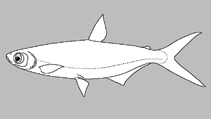
التصنيف / Names
الأسماء الشائعة | مرادفات | Catalog of Fishes(جنس, الانواع) | ITIS | CoL | WoRMS | Cloffa
Environment: milieu / climate zone / نطاق العمق / distribution range
البيئة
; المياه العذبة قاعية التغذية و المعيشة. Tropical
Africa: Epulu River and its affluents (Aruwimi drainage, middle Congo River basin) in Democratic Republic of the Congo (Ref. 113515).
الحجم / وزن / العمر
النضج: Lm ? range ? - ? cm
Max length : 11.0 cm SL ذكر/ مختلط الجنس; (Ref. 113515)
وصف مختصر
مفاتيح التعريف | الوصف الخارجي | قياسات المظهر الخارجي
الأشواك الظهرية (المجموع) : 0; الأشعة الظهرية الناعمة (المجموع) : 10; شوكة شرجية: 0; أشعه شرجية لينه: 15 - 18; فقرات: 33 - 34. Diagnosis: Brycinus epuluensis is distinguished from all species belonging to the macrolepidotus group by having a short snout, more than 3 times in head length vs. less than 3 times, and fewer premaxillary teeth, 6-7 vs. 8-11; it is distinguished from all species belonging to the longipinnis group by the absence of a fronto-parietal fontanelle in adults vs. fronto-parietal fontanelle always present, fewer lateral line scales, 18-22 vs. 25-36, and generally fewer anal-fin rays, iii,12-15 vs. iii,14-25; it is distinguished from aal species of the nurse group by having 6 or exceptionally 7 premaxillary teeth vs. 8-10, exceptionally 7 (Ref. 113515). The species is most similar to Brycinus imberi, from which it is mainly distinguished by fewer premaxillary teeth, 6-7 vs. 7-8, fewer lateral line scales, 18-22 vs. 21-31, and the presence of a black mid-lateral band (Ref. 113515).
Body shape (shape guide): fusiform / normal.
Life cycle and mating behavior
النضج | التكاثر | وضع البيض | بيض | الخصوبة | Larvae
Decru, E., E. Vreven, O. Sadio and J. Snoeks, 2016. Brycinus epuluensis, a new species from the Epulu River (Congo basin), Africa (Teleostei: Alestidae). Ichthyol. Explor. Freshwat. 27(1):49-60. (Ref. 113515)
IUCN Red List Status (Ref. 130435: Version 2025-1)
استخدامات بشرية
أدوات
تقارير خاصة
Download XML
مصادر علي الأنترنت
Estimates based on models
Phylogenetic diversity index (مرجع
82804): PD
50 = 0.5000 [Uniqueness, from 0.5 = low to 2.0 = high].
Bayesian length-weight: a=0.01000 (0.00244 - 0.04107), b=3.04 (2.81 - 3.27), in cm total length, based on all LWR estimates for this body shape (Ref.
93245).
مستوى غذائي (مرجع
69278): 3.2 ±0.4 se; based on size and trophs of closest relatives
المرونه (مرجع
120179): عالي, الحد الزمني الأدني لتضاعف عدد أفراد المجتمع أقل من 15 شهر (Preliminary K or Fecundity.).
Fishing Vulnerability (Ref.
59153): Low vulnerability (10 of 100).
🛈