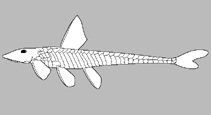
Classification / Names
Nomi Comuni | Sinonimi | Catalog of Fishes(Genere, Specie) | ITIS | CoL | WoRMS | Cloffa
>
Siluriformes (Catfishes) >
Loricariidae (Armored catfishes) > Hypoptopomatinae
Etymology: Pseudotothyris: Greek, pseudes = false + Greek, ous, otis = ear + Greek, thyris, -idos = little door (Ref. 45335); ignota: Derived from the Latin ignotus, meaning unknown or ignored, because this species has been identified as Pseudotothyris obtusa since the description of the older species in 1911.
Environment: milieu / climate zone / distribuzione batimetrica / distribution range
Ecologia
; acqua dolce demersale. Tropical
South America: coastal drainages from Iguape in São Paulo state to São João do Rio Vermelho in Santa Catarina state, Brazil.
Size / Peso / Age
Maturità: Lm ? range ? - ? cm
Max length : 3.3 cm SL maschio/sesso non determinato; (Ref. 116384)
Short description
Chiavi di identificazione | Morfologia | Morfometria
Raggi dorsali molli (totale) : 8 - 9; Raggi anali molli: 6; Vertebre: 28 - 29. Pseudotothyris ignota is distinguished from all congeners by possessing the anterior margin of snout with an odontode-free band (vs. anterior margin of snout completely covered by odontodes). It can be further differentiated from Pseudotothyris obtusa by having 32-47 teeth on the upper pharyngeal toothplate (vs. 20-30); 15-31 teeth on ceratobranchial 5 (vs. 12-15); first anal-fin pterygiophore contacting the 13th vertebra (vs. 12th); and metapterygoid-hyomandibula suture complete, the bones contacting each other dorsally to the suture (vs. metapterygoid-hyomandibula suture reduced, the bones not contacting each other dorsally to the suture. It can be further distinguished from Pseudotothyris janeirensis by the presence of three transverse dark saddles on the dorsum (vs. absence); absence of spinelet (vs. presence); generally presence of subocular cheek plate (vs. always absence); and odontodes on lateral plates randomly distributed (vs. odontodes aligned in well-defined series) (Ref. 116384).
Body shape (shape guide): elongated.
Inhabits coastal drainages from Iguape in São Paulo state to São João do Rio Vermelho in Santa
Catarina state, Brazil. Occurs sympatrically with Pseudotothyris obtusa in small coastal drainages in Iguape, Cananéia, and Ilha Comprida, which are adjacent to Ribeira de Iguape basin (Ref. 116384).
Life cycle and mating behavior
Maturità | Riproduzione | Deposizione | Uova | Fecundity | Larve
Martins, F.O., H.A. Britski and F. Langeani, 2014. Systematics of Pseudotothyris (Loricariidae: Hypoptopomatinae). Zool. J. Linn. Soc. 170:822-874. (Ref. 116384)
IUCN Red List Status (Ref. 130435: Version 2025-1)
Threat to humans
Harmless
Human uses
Strumenti
Special reports
Download XML
Fonti Internet
Estimates based on models
Phylogenetic diversity index (Fonte Biblio.
82804): PD
50 = 0.6250 [Uniqueness, from 0.5 = low to 2.0 = high].
Bayesian length-weight: a=0.00851 (0.00374 - 0.01935), b=3.09 (2.90 - 3.28), in cm total length, based on LWR estimates for this (Sub)family-body shape (Ref.
93245).
Trophic level (Fonte Biblio.
69278): 2.4 ±0.1 se; based on size and trophs of closest relatives
Resilienza (Fonte Biblio.
120179): Alto, tempo minimo di raddoppiamento della popolazione meno di 15 mesi (Preliminary K or Fecundity.).
Fishing Vulnerability (Ref.
59153): Low vulnerability (10 of 100).
🛈