



Barbonymus altus (Günther, 1868)
Red tailed tinfoil
アップロード 写真 そして ビデオ
画像 | 切手、コイン、その他 | グーグルの画像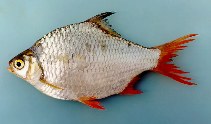 Barbonymus altus
画像によって Warren, T.
画像 | 切手、コイン、その他 | グーグルの画像
画像によって Warren, T.
分類 / 名前 共通名の | 類義語 | Catalog of Fishes(部類, 種) | ITIS | CoL | WoRMS | Cloffa
環境:環境 / 気候帯 / 深さの範囲 / 分布範囲 生態学
分布 領土 | 国連食糧農業機関の区域 | エコシステム | 事件 | 目的のマップ | 導入 | Faunafri
Asia: Mekong and Chao Phraya basins (Ref. 27732). Recorded from the Maeklong, Peninsular and Southeast Thailand river systems (Ref. 26336).
サイズ / 重さ / 年齢
成熟: Lm ? range ? - ? cm
Max length : 25.0 cm TL オス/雌雄の選別がない; (Ref. 85454); common length : 15.0 cm SL オス/雌雄の選別がない; (Ref. 12693)
Max length : 25.0 cm TL オス/雌雄の選別がない; (Ref. 85454); common length : 15.0 cm SL オス/雌雄の選別がない; (Ref. 12693)
簡単な記述 検索表 | 形態学 | 形態計測学
Broad red distal margin with no black submarginal stripe along each lobe of the caudal fin; red pelvic and anal fins; a black distal blotch on the dorsal fin; the body depth 1.8-2.2 times in standard length (Ref. 27732).
Body shape (shape guide): fusiform / normal.
Body shape (shape guide): fusiform / normal.
Occurs at midwater depths in large and medium-sized rivers and floodplains. Feeds on various plant and animal matter. Commonly found near villages where it feeds on organic detritus disposed of by humans (Ref. 12693). Reported to be occasionally poisonous, causing vomiting, due the fruits it eats (Ref. 12369). Colonizes inundated forests and adults migrate back to the river in October. Young of the year follow thereafter when the water levels recede. Large-sized fish are marketed fresh while smaller ones are used to make prahoc and nuoc mam (Ref. 12693). Popular fish in the aquarium trade where it is sold under the name of "tinfoil barb" (Ref. 12693). Captured from the wild for the ornamental fish trade in Thailand (Ref. 6459). Cultured in floating cages in Viet Nam (Ref. 12693).
ライフサイクルと交尾行動 成熟 | 繁殖 | 放精 | 卵 | 生産力 | 幼生
主な参考文献
参考文献のアップロード | 参考文献 | コーディネーター | 協力者
Kottelat, M., 1998. Fishes of the Nam Theun and Xe Bangfai basins, Laos, with diagnoses of twenty-two new species (Teleostei: Cyprinidae, Balitoridae, Cobitidae, Coiidae and Odontobutidae). Ichthyol. Explor. Freshwat. 9(1):1-128. (Ref. 27732)
CITES
Not Evaluated
人間に対する脅威
Harmless
人間の用途
水産業: 少数商業の; 水産養殖: 商業; 水族館・水槽: 商業
FAO - Publication: search | FishSource |
より多くの情報
解剖学
カマ
脳
オトリス
カマ
脳
オトリス
用具
特記事項
XMLをダウンロードして下さい
インターネットの情報源
AFORO (otoliths) | Aquatic Commons | BHL | Cloffa | Websites from users | Check FishWatcher | CISTI | Catalog of Fishes: 部類, 種 | DiscoverLife | ECOTOX | FAO - Publication: search | Faunafri | Fishipedia | Fishtrace | GloBI | Google Books | Google Scholar | Google | IGFA World Record | OneZoom | Open Tree of Life | Otolith Atlas of Taiwan Fishes | PubMed | Reef Life Survey | Socotra Atlas | TreeBase | 生命の木 | Wikipedia: 行く, 検索する | World Records Freshwater Fishing | 動物に関する記録
モデルに基づく推定値
系統多様性指数 (参照 82804): PD50 = 0.5156 [Uniqueness, from 0.5 = low to 2.0 = high].
Bayesian length-weight: a=0.01072 (0.00646 - 0.01776), b=3.04 (2.90 - 3.18), in cm total length, based on LWR estimates for this species & (Sub)family-body (Ref. 93245).
栄養段階 (参照 69278): 2.4 ±0.17 se; based on food items.
回復力 (参照 120179): 手段, 1.4年~4.4年の倍増期間の最小個体群 (Preliminary K or Fecundity.).
栄養素 (Ref. 124155): Calcium = 348 [174, 883] mg/100g; Iron = 1.03 [0.58, 1.97] mg/100g; Protein = 16.5 [15.2, 17.8] %; Omega3 = 0.513 [0.226, 1.176] g/100g; Selenium = 62.8 [27.8, 140.3] μg/100g; VitaminA = 38.1 [12.8, 121.8] μg/100g; Zinc = 1.53 [0.87, 2.36] mg/100g (wet weight); based on nutrient studies.