



Adicionar sua observação em Fish Watcher
| Native range | All suitable habitat | Point map | Year 2050 |

|
| This map was computer-generated and has not yet been reviewed. |
| Rexea solandri AquaMaps Data sources: GBIF OBIS |
Carregue seu(sua) Fotos e vídeos
Fotos | Imagem do Google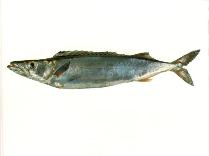 Rexea solandri
Foto de SeaFIC
Fotos | Imagem do Google
Foto de SeaFIC
Classificação / Nomes Nomes comuns | Sinônimos | Catalog of Fishes(Gênero, Espécies) | ITIS | CoL | WoRMS | Cloffa
> Scombriformes (Mackerels) > Gempylidae (Snake mackerels)
Etymology: Rexea: Latin, rex, rego = king.
Eponymy: Daniel Carl [Karl] Solander (1733–1782) was a Swedish naturalist and explorer who was one of Linnaeus’s pupils at Uppsala. [...] (Ref. 128868), visit book page.
More on author: Cuvier.
Etymology: Rexea: Latin, rex, rego = king.
Eponymy: Daniel Carl [Karl] Solander (1733–1782) was a Swedish naturalist and explorer who was one of Linnaeus’s pupils at Uppsala. [...] (Ref. 128868), visit book page.
More on author: Cuvier.
Meio ambiente: milieu / Zona climática / intervalo de profundidade / faixa de distribuição Ecologia
marinhas bentopelágico; oceanódromo (Ref. 51243); intervalo de profundidade 100 - 800 m (Ref. 6181), usually 300 - 450 m (Ref. 28786). Deep-water; 25°S - 48°S, 109°E - 173°W (Ref. 6181)
Distribuição Territórios | Áreas da FAO | Ecossistemas | Ocorrências | Mapa de pontos | Introduções | Faunafri
Southwest Pacific: off southern, southwestern and southeastern Australia, Tasmania and New Zealand. Occurrence records from Madagascar and Japan need to be verified.
Comprimento de primeira maturação / Tamanho / Peso / Idade
Maturidade: Lm 65.0, range 60 - 70 cm
Max length : 110 cm SL macho/indeterminado; (Ref. 6181); peso máx. publicado: 16.0 kg (Ref. 28838); idade máx. registrada: 16 anos (Ref. 28789)
Max length : 110 cm SL macho/indeterminado; (Ref. 6181); peso máx. publicado: 16.0 kg (Ref. 28838); idade máx. registrada: 16 anos (Ref. 28789)
Descrição suscinta Chaves de identificação | Morfologia | Morfometria
Espinhos dorsais (total) : 18 - 19; Raios dorsais (total) : 16 - 19; Espinhos anais: 2; Raios anais : 13 - 16; Vértebras: 36. Body entirely scaled at over 25 cm SL. Lateral line branching below the 5th to the 6th spine of the first dorsal fin. The upper branch reaches beyond the origin of the second dorsal fin, usually ending between the 8th to the 12th soft ray. The lower branch runs mid laterally, undulating above the anal-fin base. Body is bluish above, silvery below, a black blotch distally on two anterior membranes of the first dorsal fin, the rest of the fin is grayish.
Body shape (shape guide): elongated; Cross section: compressed.
Body shape (shape guide): elongated; Cross section: compressed.
Found in schools on continental shelf and slope. They are normally caught close to the sea bed but probably move into midwater at times (Ref. 28786). Juveniles are pelagic, adults also occur near the surface off Tasmania and New Zealand. Dense schools of pre-spawners migrate along the continental slope at about 400 m during winter (Ref. 9563). Feed on fish, squid and crustaceans. The flesh is of good edible quality and especially tasty when smoked. In Australia, the eastern gemfish stock has been subjected to a prolonged period of poor recruitment which started in 1989 (Ref. 28843, 28786). This event resulted in a very significant decline in the gemfish resource. In Australia, efforts are now being channeled towards the recovery of the fishery.
Ciclo de vida ou comportamento de acasalamento Maturidade | Reprodução | Desova | Ovos | Fecundidade | Larvas
Larvae are caught in inshore waters which may indicate that gemfish move onto the shelf to spawn, or currents carry larvae in from offshore spawning grounds (Ref. 28786).
Referência principal
Carregar suas referências | Referências | Coordenador : Parin, Nikolay V. | Colaboradores
Nakamura, I. and N.V. Parin, 1993. FAO Species Catalogue. Vol. 15. Snake mackerels and cutlassfishes of the world (families Gempylidae and Trichiuridae). An annotated and illustrated catalogue of the snake mackerels, snoeks, escolars, gemfishes, sackfishes, domine, oilfish, cutlassfishes,. scabbardfishes, hairtails, and frostfishes known to date. FAO Fish. Synop. 125(15):136 p. (Ref. 6181)
CITES
Not Evaluated
Ameaça para os humanos
Harmless
Uso pelos humanos
Pescarias: espécies comerciais
FAO - pescarias: desembarques; Publication: search | FIRMS - Stock assessments | FishSource | Sea Around Us
Mais informação
Ecologia Trófica
Itens alimentares (presas)
Composição da dieta
Consumo alimentar
Rações alimentares
Predadores
Itens alimentares (presas)
Composição da dieta
Consumo alimentar
Rações alimentares
Predadores
Dinâmica populacional
Parâmetros de crescimento
Idade máxima / tamanhos
Relação comprimento-peso.
Relação comprimento-comprimento.
Frequências de comprimento
Conversão de massa
Recrutamento
Abundância
Parâmetros de crescimento
Idade máxima / tamanhos
Relação comprimento-peso.
Relação comprimento-comprimento.
Frequências de comprimento
Conversão de massa
Recrutamento
Abundância
Ciclo de vida
Reprodução
Maturidade
Maturidade/Rel. das guelras
Fecundidade
Desova
Agregações de desova
Ovos
Desenvolvimento dos ovos
Larvas
Dinâmica larval
Reprodução
Maturidade
Maturidade/Rel. das guelras
Fecundidade
Desova
Agregações de desova
Ovos
Desenvolvimento dos ovos
Larvas
Dinâmica larval
Anatomia
Área branquial
Cérebro
Otólito
Área branquial
Cérebro
Otólito
Fisiologia
Composição corporal
Nutrientes
Consumo de oxigênio
Tipo de natação
Velocidade de natação
Pigmentos visuais
Som de peixe
Doenças e Parasitas
Toxicidade (LC50s)
Composição corporal
Nutrientes
Consumo de oxigênio
Tipo de natação
Velocidade de natação
Pigmentos visuais
Som de peixe
Doenças e Parasitas
Toxicidade (LC50s)
Relacionado a humanos
Sistemas de aquicultura
Perfis para aquacultura
Estirpes
Casos de Ciguatera
Selos, moedas, diversos.
Sistemas de aquicultura
Perfis para aquacultura
Estirpes
Casos de Ciguatera
Selos, moedas, diversos.
Ferramentas
Livro eletrônico | Guia de campo | Chaves de identificação | Ferramenta auxiliar de frequências de comprimento | Ferramenta sobre a história de vida | Mapa de pontos |
Catch-MSY |
Relatórios especiais
Checar Manutenção em Aquário | Checar Planilhas de Fatos sobre as Espécies | Checar Planilhas de Fatos sobre Aquicultura
Baixar XML
Fontes da internet
AFORO (otoliths) | Aquatic Commons | BHL | Cloffa | Websites from users | Checar Observador de Peixes (FishWatcher) | CISTI | Catalog of Fishes: Gênero, Espécies | DiscoverLife | ECOTOX | FAO - pescarias: desembarques; Publication: search | Faunafri | Fishipedia | Fishtrace | GloBI | Google Books | Google Scholar | Google | IGFA World Record | OneZoom | Open Tree of Life | Otolith Atlas of Taiwan Fishes | PubMed | Reef Life Survey | Socotra Atlas | TreeBase | Árvore da vida | Wikipedia: Ir para, procura | World Records Freshwater Fishing | Registro zoológico
Estimativas baseadas em modelos
Temperatura preferida (Ref. 123201): 8.4 - 13.6, mean 10.4 °C (based on 52 cells).
Índice de diversidade filogenética (Ref. 82804): PD50 = 0.5078 [Uniqueness, from 0.5 = low to 2.0 = high].
Bayesian length-weight: a=0.00347 (0.00194 - 0.00621), b=3.14 (2.98 - 3.30), in cm total length, based on LWR estimates for this species & (Sub)family-body (Ref. 93245).
Nível Trófico (Ref. 69278): 4.3 ±0.66 se; based on food items.
Generation time: 5.4 (4.5 - 6.6) years. Estimated as median ln(3)/K based on 14 growth studies.
Resiliência (Ref. 120179): Baixo, tempo mínimo de duplicação da população 4,5 - 14 anos (K=0.11-0.21; tm=3-6; tmax=16; Fec=500,000).
Prior r = 0.43, 95% CL = 0.28 - 0.64, Based on 2 full stock assessments.
Nutrientes (Ref. 124155): Calcium = 11 [4, 29] mg/100g; Iron = 0.306 [0.113, 0.902] mg/100g; Protein = 15.6 [13.2, 18.3] %; Omega3 = 0.228 [0.114, 0.465] g/100g; Selenium = 25.8 [10.5, 61.4] μg/100g; VitaminA = 15.4 [3.4, 72.8] μg/100g; Zinc = 0.291 [0.195, 0.444] mg/100g (wet weight); based on nutrient studies.